
Fonderie de Moulage de Précision pour Aubes Directrices de Tuyère en Alliages à Base de Cobalt Nimon...
Introduction
Le Nimonic 90 est un alliage nickel-chrome-cobalt à haute résistance spécifiquement conçu pour offrir une résistance exceptionnelle aux hautes températures, une résistance au fluage et une résistance à l'oxydation jusqu'à 950°C. Avec une résistance à la traction d'environ 1000 MPa et une durée de vie en fatigue exceptionnelle, c'est le choix privilégié pour la fabrication des aubes directrices de tuyère utilisées dans les turbines à gaz et les systèmes de propulsion aérospatiale.
Chez Neway AeroTech, nous sommes spécialisés dans la production d'aubes directrices de tuyère en Nimonic 90 grâce au moulage de précision sous vide, atteignant des tolérances dimensionnelles précises, des finitions de surface fines et des microstructures optimisées pour des performances de turbine supérieures et une durée de vie prolongée des composants.
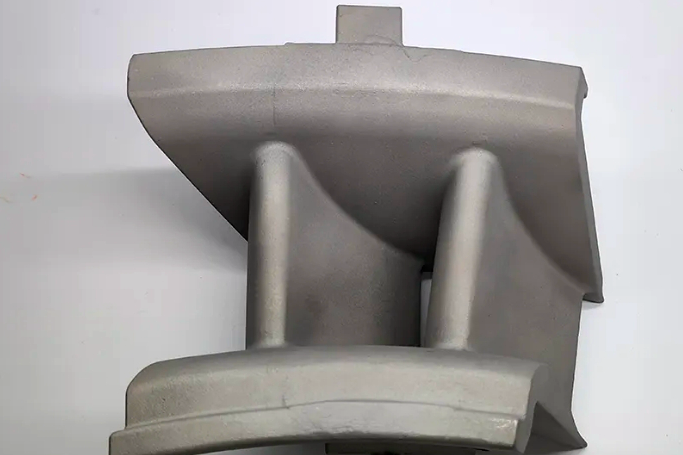
Principaux Défis de Fabrication pour les Aubes Directrices de Tuyère en Nimonic 90
Contrôle précis de la composition de l'alliage (Ni ≥55%, Cr ~19,5%, Co ~18%, Ti ~2,5%, Al ~1,4%) pour la stabilité mécanique et thermique.
Contrôle strict de la vitesse de refroidissement (~4–6°C/min) pour former des grains équiaxes fins et prévenir la microségrégation.
Atteindre des tolérances serrées (±0,05 mm) pour assurer la cohérence du flux aérodynamique.
Finition de surface de haute qualité (Ra ≤1,6 µm) est cruciale pour minimiser les perturbations du flux d'air.
Processus de Moulage de Précision pour les Aubes Directrices en Nimonic 90
Le processus de production comprend :
Fabrication du Modèle en Cire : Modèles de cire de précision moulés par injection avec une répétabilité dimensionnelle de ±0,1%.
Construction de la Coquille : Application de multiples couches fines de barbotine céramique et de sables réfractaires pour des coquilles de moule robustes.
Décire : Autoclavage à la vapeur à ~150°C assure l'élimination propre de la cire sans fissuration de la coquille.
Fusion et Coulée sous Vide : Alliage Nimonic 90 fondu et coulé à ~1420°C sous vide (<10⁻³ Pa) pour éviter l'oxydation.
Solidification Contrôlée : Refroidissement lent permet d'obtenir une structure à grains fins optimale, améliorant la résistance au fluage et à la fatigue.
Retrait de la Coquille et Finition : Retrait de la coquille, usinage de précision CNC et polissage pour répondre aux spécifications aérodynamiques finales.
Analyse Comparative des Méthodes de Moulage pour les Aubes Directrices de Tuyère
Procédé | Qualité de Finition de Surface | Précision Dimensionnelle | Résistance Mécanique | Résistance aux Hautes Températures | Niveau de Coût |
|---|---|---|---|---|---|
Moulage de Précision sous Vide | Excellente (Ra ≤1,6 µm) | Très Élevée (±0,05 mm) | Supérieure (~1000 MPa) | Exceptionnelle (~950°C) | Modéré |
Moulage à Cristaux Équiaxes | Bonne (Ra ~3 µm) | Élevée (±0,05 mm) | Très Bonne (~980 MPa) | Élevée (~900°C) | Modéré |
Moulage en Sable | Modérée (Ra ~12 µm) | Modérée (±0,5 mm) | Bonne (~850 MPa) | Modérée (~800°C) | Faible |
Usinage CNC à partir d'une Bille | Excellente (Ra ≤0,8 µm) | Très Élevée (±0,01 mm) | Supérieure (~1000 MPa) | Exceptionnelle (~950°C) | Élevé |
Stratégie de Fabrication Optimale pour les Aubes Directrices de Tuyère en Nimonic 90
Moulage de précision sous vide : Idéal pour les composants critiques de turbine nécessitant Ra ≤1,6 µm et des tolérances de ±0,05 mm avec une haute résistance à 950°C.
Moulage à cristaux équiaxes : Adapté aux applications secondaires de turbine à haute résistance où des économies de coût mineures sont acceptables.
Moulage en sable : Limité aux pièces de turbine non aérodynamiques et à faible contrainte.
Usinage CNC à partir d'une bille : Appliqué pour finaliser les zones critiques de précision telles que les surfaces d'étanchéité et aérodynamiques.
Aperçu des Performances de l'Alliage Nimonic 90
Propriété | Valeur | Pertinence pour l'Application |
|---|---|---|
Résistance à la Traction | ~1000 MPa | Résistance supérieure sous charges thermiques et mécaniques élevées |
Température Maximale de Fonctionnement | ~950°C | Performance stable sous cyclage thermique continu |
Résistance au Fluage | Exceptionnelle | Prolonge la durée de vie de l'aube sous contrainte élevée |
Résistance à l'Oxydation | Excellente | Protège les surfaces dans des environnements de gaz chauds agressifs |
Coefficient de Dilatation Thermique | ~13,5 µm/m·°C | Assure la stabilité dimensionnelle lors d'un chauffage rapide |
Avantages de l'Utilisation du Nimonic 90 pour les Aubes Directrices de Tuyère
Résistance aux hautes températures et au fluage maintient l'intégrité de l'aube à des températures de service allant jusqu'à 950°C.
Excellente résistance à la fatigue prévient les défaillances sous chargement thermomécanique cyclique.
Résistance exceptionnelle à l'oxydation prolonge la durée de vie en service dans des environnements de turbine agressifs.
Bonne coulabilité permet la fabrication de profils d'aubes aérodynamiques complexes et précis.
Techniques de Post-Traitement pour les Aubes en Nimonic 90
Pressage Isostatique à Chaud (HIP) : Densifie le matériau, améliorant la résistance à la fatigue et au fluage de 15 à 20%.
Revêtement Barrière Thermique (TBC) : Applique un revêtement céramique d'environ 250 µm, réduisant la température de surface jusqu'à 150°C.
Usinage de Précision CNC : L'usinage final atteint Ra ≤0,8 µm et des tolérances inférieures à ±0,01 mm pour les performances aérodynamiques.
Contrôle Non Destructif (CND) : Garantit une qualité sans défaut grâce à l'analyse par ultrasons, par ressuage et métallographique.
Inspection et Assurance Qualité pour les Aubes Directrices de Tuyère
Machine à Mesurer Tridimensionnelle (MMT) : Mesure les profils d'aubes et les surfaces critiques avec une précision de ±0,05 mm.
Contrôle par Ultrasons (UT) : Identifie les défauts internes de manière non destructive.
Contrôle par Ressuage (PT) : Détecte les discontinuités de surface fines jusqu'à 0,002 mm.
Analyse Métallographique : Confirme que la microstructure et la qualité des grains répondent aux normes aérospatiales.
Applications Industrielles et Étude de Cas
Les aubes directrices de tuyère en Nimonic 90 fabriquées par Neway AeroTech sont largement déployées dans les moteurs aérospatiaux, les turbines à gaz industrielles et les turbomachines haute performance. Dans un programme de turbine aérospatiale de premier plan, les aubes en Nimonic 90 ont démontré une durée de vie en service 32% plus longue que les alliages de nickel traditionnels sous fonctionnement continu à 930°C, prolongeant considérablement les intervalles de maintenance des moteurs et améliorant l'efficacité globale.
FAQ
Quelles tolérances dimensionnelles Neway AeroTech atteint-il pour les aubes directrices de tuyère en Nimonic 90 ?
Pourquoi le moulage de précision sous vide est-il la meilleure méthode pour fabriquer les pièces de turbine en Nimonic 90 ?
Comment le Nimonic 90 surpasse-t-il les autres alliages de nickel dans les applications de turbine ?
Quelles industries utilisent principalement les aubes directrices de tuyère en Nimonic 90 ?
Comment Neway AeroTech assure-t-il l'intégrité structurelle et la fiabilité des pièces moulées en Nimonic 90 ?
