
Ti-13V-11Cr-3Al (TC11) Titan LENS Laser-Auftragschweißen (LMD) 3D-Druck
Einführung in die additive Fertigung von TC11-Titan mittels LMD
Ti-13V-11Cr-3Al (TC11) ist eine nahe-β-Titanlegierung, die für ihr hervorragendes Verhältnis von Festigkeit zu Gewicht, ihre gute Härtbarkeit und ihre überlegene thermische Stabilität bekannt ist. LENS (Laser Engineered Net Shaping), ein Laser-Auftragschweißverfahren (LMD), ermöglicht die effiziente Herstellung und Reparatur großformatiger TC11-Bauteile mit hoher Maßhaltigkeit.
Bei Neway Aerotech unterstützen unsere 3D-Druckdienste für Titan die fortschrittliche LMD-Fertigung für TC11-Anwendungen in der Luft- und Raumfahrt, der Energiebranche und im Werkzeugbau, die strukturelle Haltbarkeit und Hochtemperaturbeständigkeit erfordern.
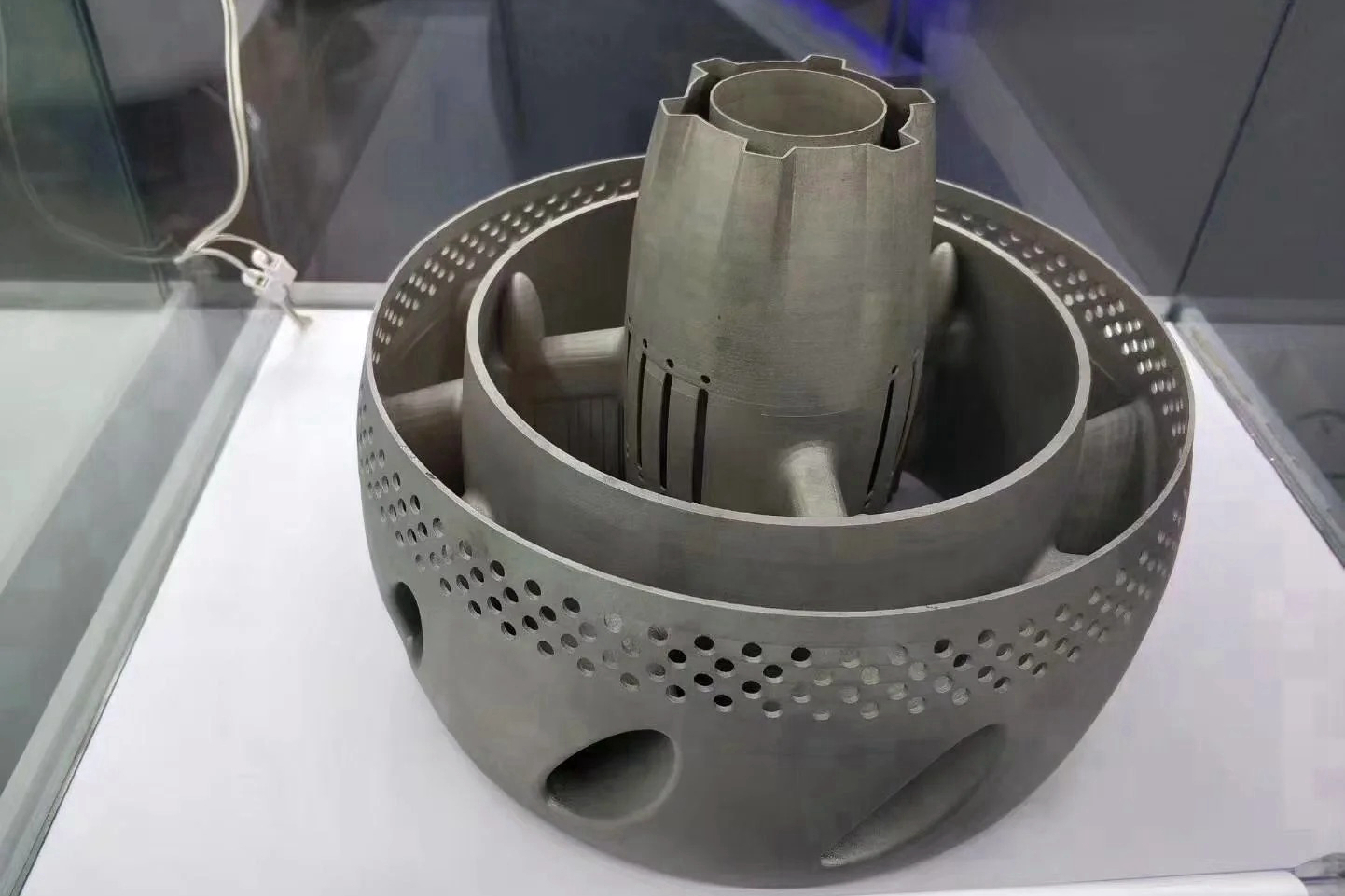
Laser-Auftragschweißen für die Titanlegierung TC11
Fähigkeiten des LMD-Prozesses
Parameter | Wert | Beschreibung |
|---|---|---|
Schichtdicke | 300–800 µm | Geeignet für hohe Auftragsraten und große Geometrien |
Auftragsrate | 10–30 cm³/h | Effizient für den Aufbau von Strukturen und die Bauteilreparatur |
Laserleistungsbereich | 500–2000 W | Anpassbar basierend auf Wandstärke und Merkmalsgröße |
Atmosphäre | Inertes Argon oder Stickstoff | Verhindert Oxidation während der Schmelzbadbildung |
Pulverpartikelgröße | 45–105 µm | Ideale Fließfähigkeit für koaxiale Pulverzuführsysteme |
Materialeigenschaften und Merkmale von TC11
Eigenschaft | Wert | Nutzen für die Anwendung |
|---|---|---|
Zugfestigkeit | 1150–1250 MPa | Lasttragende Halterungen für Luft- und Raumfahrt sowie Triebwerke |
Streckgrenze | ~1050 MPa | Hohe strukturelle Steifigkeit unter statischen Lasten |
Bruchdehnung | 10–15 % | Erhält die Duktilität für kritische Beschläge in der Luft- und Raumfahrt |
Betriebstemperatur | Bis zu 500 °C | Verwendung in Flugzeugzellen und turbinennahen Teilen |
Härtbarkeit | Ausgezeichnet durch β-Phasen-Gefüge | Zuverlässig beim Aufbau dicker Querschnitte |
Warum TC11 ideal für LMD-Anwendungen ist
TC11 weist eine hervorragende Schweißbarkeit und Reaktion auf thermische Prozesse auf, was es kompatibel mit LENS/LMD-Systemen sowohl für die Bauteilfertigung als auch für die Komponentenreparatur macht.
Im Vergleich zu α+β-Legierungen wie Ti-6Al-4V bietet TC11 bei erhöhten Temperaturen eine überlegene Festigkeit und Kriechbeständigkeit.
Die Stabilität der Legierung im LMD-Prozess vermeidet häufige thermische Rissbildung, die bei weniger duktilen Materialien auftritt.
Fallstudie: LMD-Reparatur einer TC11-Triebwerksgondel-Komponente für die Luft- und Raumfahrt
Projekthintergrund
Ein Kunde aus der Luftfahrtwartung benötigte eine strukturelle Reparatur einer geschmiedeten TC11-Triebwerksgondel-Halterung, die unter Reibermüdung und Oberflächenabtragung in der Nähe von Befestigungsbossen litt. Die Geometrie wies hohe Krümmungen und ermüdungsempfindliche Zonen auf, die eine verzugarme Bearbeitung erforderten.
Fertigungsablauf
Pulverrohstoff: TC11-Titanpulver, gaszerstäubt, D50 = 70 μm, Durchflussrate 10 g/min.
System: 1,2 kW LENS-System mit koaxialer Pulverzufuhr und 4-Achs-Tisch.
Reparaturstrategie: Beschädigte Zone gescannt, Modell rekonstruiert; Werkzeugpfad generiert, um 8 mm Dicke wiederherzustellen.
Auftrag: 4 Schichten à 500 μm, Zwischenschichttemperatur bei 200–250 °C gehalten.
Wärmebehandlung: Lösungsglühen bei 90 °C + Auslagern bei 560 °C für 6 Stunden zur Wiederherstellung der Festigkeit.
Nachbearbeitung und Prüfung
Bearbeitung: Oberfläche gefräst auf ±0,02 mm Planheit und ±0,05 mm Bohrungsalignment.
Röntgen-ZfP: Keine Bindefehler oder Poren im aufgetragenen Material.
Ultraschallprüfung: Integrität der Grenzfläche und des Grundmaterials verifiziert.
KMG: Alle wiederhergestellten Maße innerhalb einer Genauigkeit von ±0,03 mm bestätigt.
Ergebnisse und Verifizierung
Die reparierte TC11-Halterung bestand den Schwingermüdungstest unter voller Triebwerkslastsimulation für 1 Million Zyklen. Mechanische Tests zeigten eine ultimative Festigkeit von 1220 MPa und eine gleichmäßige Härte über die Auftragszone hinweg. Die LMD-Lösung stellte die Einsatzfähigkeit wieder her und verlängerte die Lebensdauer des Teils um über 300 %.
Häufig gestellte Fragen (FAQs)
Wie vergleicht sich TC11 mit Ti-6Al-4V in LMD-Anwendungen?
Welche Pulveranforderungen gelten für den LMD-Druck von Titanlegierungen?
Kann TC11-LMD für die nahezu formgenaue Herstellung kompletter Bauteile verwendet werden?
Welche Nachbearbeitung ist nach der Laser-Abscheidung von TC11 erforderlich?
Wie wird der Verzug während der LMD-Reparatur an Titanbaugruppen kontrolliert?
