
Schweißtechniken für Superlegierungen für Hochtemperatur-Legierungskomponenten
Präzisionsfügen für anspruchsvolle thermische und strukturelle Anwendungen
Superlegierungskomponenten, die in Turbinentriebwerken, Abgassystemen, Druckbehältern und Energieinfrastruktur eingesetzt werden, erfordern oft zuverlässiges Schweißen während der Fertigung oder Reparatur. Das Schweißen dieser Hochtemperaturlegierungen – wie Inconel, Rene, CMSX und Hastelloy – erfordert eine präzise Kontrolle der Wärmezufuhr, der Zusatzwerkstoffchemie und der Nachschweißbehandlung, um Heißrisse, Porosität und Korngrenzendegradation zu vermeiden.
Neway AeroTech bietet spezialisierte Superlegierungsschweißdienstleistungen für Luft- und Raumfahrt, Energie und industrielle Anwendungen. Unsere zertifizierten Prozesse umfassen WIG-, Laser- und Hybridschweißlösungen, gepaart mit Nachschweißwärmebehandlung und Prüfmethoden, um leistungskritische Standards zu erfüllen.
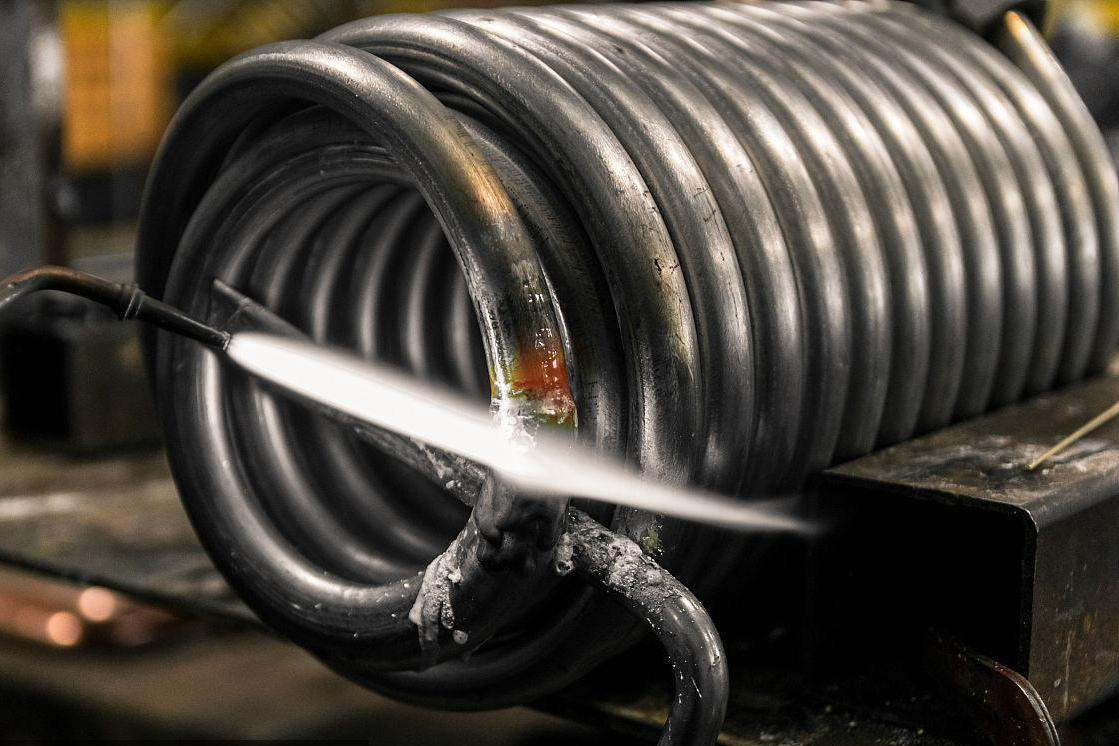
Kernschweißprozesse für Superlegierungskomponenten
Das Schweißen von Hochleistungslegierungen erfordert die Abstimmung der mechanischen Eigenschaften, thermischen Stabilität und Korrosionsbeständigkeit über die Schweißnaht hinweg.
WIG-Schweißen für vollständige Durchschweißungen und präzise Spitzenaufbau
Laserschweißen für lokalisierte, verzerrungsarme Verbindungen in dünnwandigen Abschnitten
Hybrid-WIG-Laser-Schweißen für tiefe Einbrandtiefe und enge Wärmeeinflusszonen-Kontrolle
Vakuum- und Inertgaskammern für oxidationsempfindliche Legierungen
Alle Schweißarbeiten sind gemäß AWS D17.1, AMS 2694 und NADCAP-Sonderprozessanforderungen qualifiziert.
Häufig geschweißte Superlegierungssorten
Legierung | Max. Temp. (°C) | Typische Komponenten | Schweißprozess |
|---|---|---|---|
704 | Gehäuse, Rotoren | WIG, Laser | |
980 | Düsen, Leitschaufeln | WIG | |
1140 | Tragflächen, Auskleidungen | WIG + HIP | |
1175 | Flansche, Kanäle | Laser, Plasma |
Die Schweißbarkeit variiert je nach Legierungsmikrostruktur – Gamma-Prime, Karbide und Kornorientierung müssen alle berücksichtigt werden.
Fallstudie: WIG-Schweißen eines Rene 88 Düsensegments
Projekthintergrund
Ein Kunde benötigte eine WIG-Schweißreparatur von Rissen an der Hinterkante in Rene 88 gleichachsigen Gussdüsen. Der Schweißzusatz stimmte chemisch überein. Vorwärmung auf 400°C minimierte thermische Schocks. Nachschweiß-Wärmebehandlung bei 980°C stellte die Mikrostruktur wieder her. REM bestätigte eine rissfreie Wärmeeinflusszone und kontinuierliche Korngrenzen.
Typische geschweißte Komponenten und Branchen
Komponente | Legierung | Schweißtyp | Branche |
|---|---|---|---|
Turbinenschaufelspitze | Inconel 718 | WIG-Aufbau | |
Düsensegment | Rene 88 | Mehrlagiges WIG | |
Brennkammerauskleidung | Hastelloy X | Lasernahtschweißen | |
Innengehäuseflansch | CMSX-4 | WIG + HIP-Reparatur |
Präzisionsschweißen stellt die Bauteilgeometrie und Ermüdungsleistung in thermisch belasteten Anwendungen wieder her.
Schweißherausforderungen bei Hochtemperatur-Superlegierungen
Heißrissrisiko aufgrund von Gamma-Prime-Segregation an Korngrenzen über 950°C während der Schweißerstarrung
Verlust der Duktilität in der Wärmeeinflusszone ohne kontrollierte Abkühlung und Alterungsbehandlung
Porositätskontrolle bei WIG-Schweißungen hängt von der Gasreinheit und Nahtreinheit ab
Nachschweißoxidation in Nickellegierungen erfordert Inertgasabschirmung oder Vakuumverarbeitung
Maßverzug in dünnen Wänden oder großen Gehäusen ohne Vorrichtung und thermische Modellierung
Fortschrittliche Schweißlösungen für Hochtemperatur-Legierungsbaugruppen
Vorwärmung (350–450°C) zur Reduzierung des Temperaturgradienten und Vermeidung von Mikrorissen in ausscheidungshärtenden Legierungen
Laserschweißnähte ≤ 0,8 mm breit ermöglichen präzise Reparaturen mit minimaler Wärmeeinflusszone in dünnen Abschnitten
Nachschweiß-HIP bei 1030°C, 100 MPa zum Schließen von Mikroporosität und Wiederherstellen der Dichte
Spannungsarmglühen bei 870–980°C stabilisiert Korngrenzen und mechanische Eigenschaften
CMM und Röntgenprüfung gewährleisten dimensionale und interne Schweißnahtqualität
Ergebnisse und Verifizierung
Schweißausführung
Die Nahtvorbereitung umfasste Anfasen und Reinigung nach Luftfahrtnorm. Schweißungen wurden mit kontrollierter Zwischenlagentemperatur und passenden Inconel- oder Rene-Zusatzstäben ausgeführt.
Nachschweißbearbeitung
Alle Teile unterzogen sich einer Wärmebehandlung und HIP-Verarbeitung wo erforderlich. Die bearbeiteten Maße wurden nach dem Schweißen für OEM-Konformität wiederhergestellt.
Prüfung und Validierung
Röntgentest verifizierte den Einbrand. CMM bestätigte die Toleranz. REM zeigte Mikrostrukturintegrität und rissfreie Wärmeeinflusszone.
FAQs
Welche Schweißmethoden eignen sich am besten für Inconel- und Rene-Legierungen?
Können einkristalline CMSX-Komponenten geschweißt werden?
Wie werden Heißrisse in Superlegierungsschweißungen verhindert?
Welche Nachschweißbehandlungen sind für ermüdungskritische Teile erforderlich?
Wie werden interne Schweißfehler erkannt und repariert?
