
Funkenerosive Bearbeitung von kundenspezifischen Werkzeugkomponenten aus Superlegierungen
Einführung in die Funkenerosion für kundenspezifische Werkzeugkomponenten
Die funkenerosive Bearbeitung, auch bekannt als Electrical Discharge Machining (EDM), ist ein präzises Verfahren zur Herstellung komplexer kundenspezifischer Werkzeugkomponenten aus Superlegierungen mit extreßer Maßhaltigkeit. Dieses berührungslose Verfahren eliminiert mechanische Spannungen während der Bearbeitung und ist daher ideal für komplexe Geometrien geeignet.
Bei Neway Aerotech unterstützen unsere EDM-Bearbeitungsdienste für Superlegierungen Werkzeug- und Formenhersteller bei der Produktion von hochtemperatur- und hochharten Teilen für Anwendungen in der Luft- und Raumfahrt, Energieerzeugung und industriellen Zerspanung.
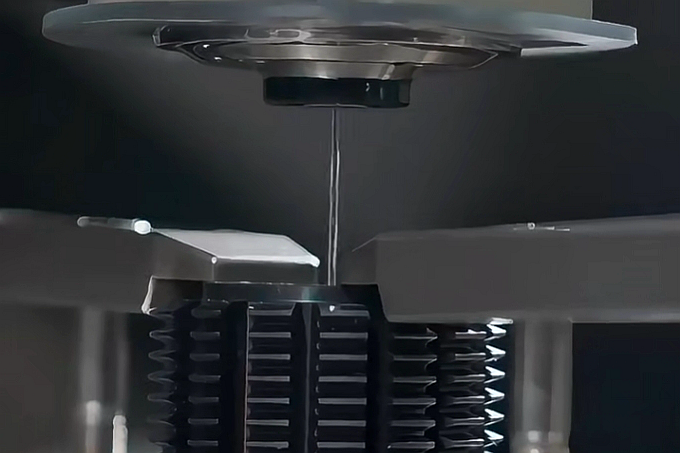
Überblick über die EDM-Bearbeitungstechnologie
Klassifizierung der EDM-Bearbeitung
EDM-Prozess | Oberflächenrauheit (Ra, μm) | Maßtoleranz (mm) | Seitenverhältnis | Wärmeeinflusszone (WEZ, μm) | Minimale Merkmalsgröße (mm) |
|---|---|---|---|---|---|
Drahterodieren | 0,3–1,2 | ±0,002–±0,01 | Bis zu 20:1 | 2–5 μm | ~0,1 |
Sinkerodieren | 0,4–2,5 | ±0,005–±0,02 | Bis zu 10:1 | 5–10 μm | ~0,2 |
Bohrerodieren | 0,5–3,0 | ±0,02–±0,05 | Bis zu 30:1 | 10–15 μm | ~0,1 |
Mikro-EDM | 0,1–0,4 | ±0,001–±0,005 | Bis zu 15:1 | <2 μm | <0,05 |
Hinweis: Die WEZ-Werte hängen von der Entladeenergie, der Impulsdauer und den Eigenschaften des Dielektrikums ab.
Strategie zur Auswahl der EDM-Bearbeitung
Drahterodieren: Wird für die feine Konturbearbeitung von Präzisionsstempeln, Matrizen und verschleißfesten Werkzeugeinsätzen verwendet.
Sinkerodieren: Ideal für die Bildung von 3D-Hohlräumen in Schmiedewerkzeugen und komplexen kundenspezifischen Formengeometrien.
Bohrerodieren: Anwendung für interne Kühl- oder Auswerferstiftbohrungen in gehärteten Werkzeugstählen und Superlegierungen.
Mikro-EDM: Entwickelt für ultrafeine Merkmale beim Feinstanzen und bei Miniatur-Stufenwerkzeugen.
Materialüberlegungen
Typische Materialien für kundenspezifische Werkzeugkomponenten
Material | Härte (HRC) | Verschleißfestigkeit | Thermische Stabilität (°C) | Zerspanbarkeit | Hauptanwendungen |
|---|---|---|---|---|---|
40–45 | Ausgezeichnet | 870 | Schlecht | Hochschlagfeste, verschleißfeste Schmiede- oder Schneidwerkzeuge | |
35–40 | Hoch | 980 | Schwierig | Matrizenblöcke und Umformwerkzeuge für die Luft- und Raumfahrt | |
36–42 | Mäßig | 704 | Befriedigend | Werkzeuge für Hochtemperaturpressen und Formensockel | |
35–40 | Hoch | 920 | Befriedigend | Schneidwerkzeuge für hohe Belastungen und Matrizen für Befestigungselemente in der Luft- und Raumfahrt | |
30–35 | Ausgezeichnet | 1040 | Schlecht | Werkzeugeinsätze für korrosive Umgebungen |
Strategie zur Materialauswahl
Stellite 6B: Ausgezeichnet für abrasive Werkzeuge, die Zähigkeit und eine Verschleißlebensdauer von über 10.000 Zyklen unter Schlagbelastung erfordern.
Rene 41: Für Matrizen, die thermischen Belastungen von >900 °C ausgesetzt sind und über verlängerte Umformzyklen hinweg Maßhaltigkeit erfordern.
Inconel 718: Optimal für Strukturmatrizen, die gute Festigkeit, Zerspanbarkeit und Oxidationsbeständigkeit bis zu 700 °C benötigen.
Nimonic 90: Bevorzugt in Werkzeugen für die Warmumformung von Luft- und Raumfahrtteilen mit intermittierender Stoßbelastung und zyklischer thermischer Beanspruchung.
Hastelloy C-22: Am besten für Werkzeuge in korrosiven Medien geeignet, wie z. B. Strangpressmatrizen und Werkzeuge zur Formgebung von Dichtungsnuten.
Fallstudie: Funkenerosive Bearbeitung eines kundenspezifischen Schneidmatrizeneinsatzes
Projekthintergrund
Ein Kunde aus dem Bereich Luft- und Raumfahrtwerkzeuge benötigte einen Satz verschleißfester Umformeinsätze für eine Produktionslinie für Turbinenkomponenten. Die Matrizen mussten Toleranzen unter 900 °C und wiederholte mechanische Stoßbelastungen über 100.000 Zyklen einhalten.
Fertigungsablauf
Materialvorbereitung: Rene 41-Rohling, Ø60 mm × 25 mm, lösungsgeglüht bei 1065 °C, 8 Stunden bei 760 °C ausgelagert.
CNC-Vorbearbeitung: 0,5 mm Zugabe verbleibt für die finale Funkenerosion an kritischen Kanten- und Hohlraumoberflächen.
Sinkerodierprozess: 3D-Hohlraum geformt mit Graphitelektroden; Impulsein 100 μs, FunkenSpalt 0,1 mm.
Mikro-EDM: Verwendet für Entlüftungsbohrungen und feines Fasen; 0,2 mm Merkmalsauflösung, Seitenverhältnis 5:1.
Nachbearbeitung
Spannungsarmglühen bei 925 °C für 2 Stunden zur Reduzierung von Eigenspannungen
HIP bei 1200 °C/100 MPa für 4 Stunden zum Schließen von Unterflächenporosität
Kugelstrahlen für 150 % Oberflächenabdeckung, Verbesserung der Ermüdungslebensdauer um 30 %
Oberflächenfinish
Präzisionspolitur auf Ra ≤ 0,4 μm an Arbeitsflächen unter Verwendung von Diamantpaste
Passivierung zum Korrosionsschutz
Kantenrundung innerhalb von ±0,01 mm gemäß Spezifikation des Eckenradius eingehalten
Inspektion
KMG-Prüfung an 35 kritischen Punkten, alle innerhalb der Toleranz von ±0,003 mm
Röntgen-ZfP zeigte keine inneren Defekte
REM bestätigte die mikrostrukturelle Homogenität und saubere Erosionszonen
Ultraschallprüfung verifizierte die Fehlerfreiheit des gesamten Volumens
Ergebnisse und Verifizierung
Die Maßprüfung bestätigte, dass die Profilabweichung über die Hohlraumgeometrie hinweg innerhalb von ±0,003 mm lag und die Ebenheit an den Fügeflächen 2 μm betrug.
Die HIP-Behandlung führte zu einer 100-prozentigen Porenschließung ohne beobachtbare Defekte bei 10-facher Radiographie oder Ultraschall-Tauchprüfung.
Das Oberflächenfinish erfüllte die Anforderung von Ra ≤ 0,4 μm, und die Kanten behielten nach dem Kugelstrahlen und Nachpolieren ihre volle Definition.
REM-Aufnahmen zeigten keine Aufschmelzschicht oder Mikrorisse; die funkenerodierten Zonen waren metallurgisch stabil und sauber.
Alle Testmatrizen überschritten in der Feldvalidierung 120.000 Zyklen, wobei während der Lebensdauer kein Kantverschleiß oder Bruch beobachtet wurde.
Häufig gestellte Fragen (FAQs)
Welche Elektrodenmaterialien eignen sich am besten für die Funkenerosion von Werkzeugkomponenten aus Superlegierungen?
Kann die Funkenerosion zur Fertigbearbeitung von gehärteten Werkzeugstählen über 50 HRC verwendet werden?
Wie gewährleisten Sie die Wiederholgenauigkeit bei Sinkerodieroperationen in tiefen Hohlräumen?
Welche Nachbehandlung wird für funkenerodierte Umformmatrizen empfohlen?
Wie kontrollieren Sie die Wärmeeinflusszone (WEZ) bei der Bearbeitung wärmeempfindlicher Werkzeugeinsätze?
