
Laserauftragschweißen (LC) von Inconel 718 Superlegierung, 3D-gedrucktem Turbolader mit CNC-Bearbeit...
Einführung in das Laserauftragschweißen und die CNC-Bearbeitung von Turboladerbauteilen aus Inconel 718
Das Laserauftragschweißen (LC), eine Form der gerichteten Energieabscheidung (DED), wird verwendet, um Turboladerkomponenten aus Inconel 718 mit hoher Thermomüdigkeits- und Verschleißfestigkeit aufzubauen oder zu reparieren. Dieses Verfahren ist ideal zur Verlängerung der Lebensdauer oder zur Herstellung von nahezu endkonturnahen Hochleistungsbauteilen.
Bei Neway Aerotech kombinieren wir die additive Fertigung von Inconel 718 mit der präzisen CNC-Bearbeitung**, um fertige Turboladergehäuse, Spiralen und Laufräder mit enger Maßhaltigkeit und extremer Temperaturbeständigkeit herzustellen.
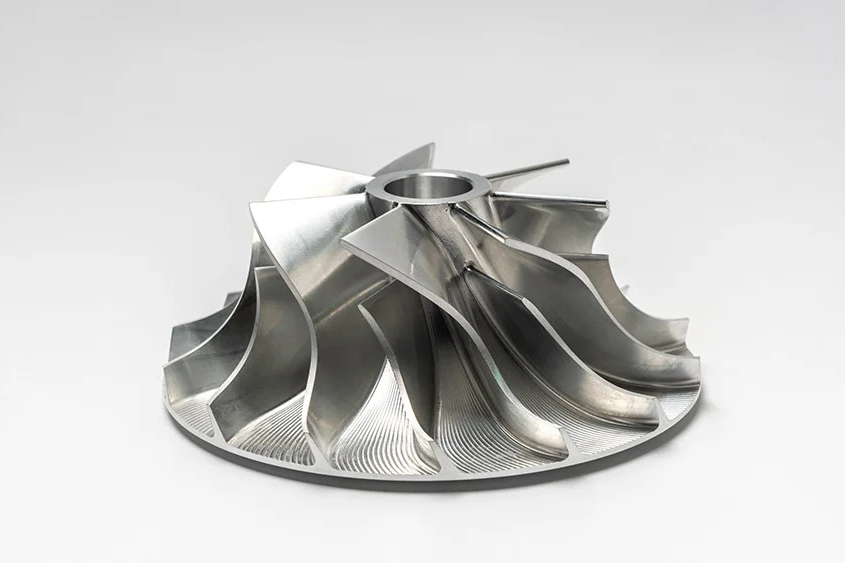
Laserauftragschweißtechnologie für Turbobauteile aus Inconel 718
LC-Prozessparameter und Vorteile
Parameter | Wert | Beschreibung |
|---|---|---|
Schichthöhe des Auftrags | 0,3–1,0 mm | Kontrollierter Schichtaufbau |
Abscheidungsrate | 5–20 cm³/min | Schnelle Verarbeitung für mittelgroße bis große Bauteile |
Laserleistung | 1–3 kW | Abgestimmt auf den Verdünnungsbereich und die Merkmalsgröße |
Schutzgas | Argon (>99,99 %) | Gewährleistet ein sauberes Schmelzbad und eine sichere Grenzflächenbindung |
Typischer Bauraum | Bis zu 60 × 600 × 500 mm | Unterstützt Turbinengehäuse, Flansche und Spiralwände |
Das Laserauftragschweißen gewährleistet eine metallurgische Bindung an das Substrat und ist ideal sowohl für die Reparatur als auch für die additive Fertigung von Komponenten aus Inconel 718.
Leistungsvorteile von Inconel 718 in Turboladern
Eigenschaft | Wert | Rolle in Turboanwendungen |
|---|---|---|
Streckgrenze @ 700 °C | ≥ 720 MPa | Strukturelle Stabilität unter Heißgasstrom |
Ermüdungslebensdauer | >10⁸ Zyklen @ 650 MPa | Widerstand gegen Vibrationen und thermische Wechselbelastung |
Oxidationsbeständigkeit | Bis zu 980 °C | Beständig gegen Abgasexposition und hohe Ladelufttemperaturen |
Wärmeausdehnungskoeffizient | 13 µm/m·°C | Erhaltung der Grenzflächengeometrie bei Temperaturschwankungen |
Kriechbeständigkeit | >1000 h @ 704 °C | Dauerhafte Belastbarkeit im Hochdrehzahlbetrieb |
Strategie zur CNC-Nachbearbeitung
Nach dem Auftragschweißen oder der nahezu endkonturnahen Laserabscheidung werden die Bauteile auf die finale Geometrie und Toleranz fertig bearbeitet.
Bearbeitungsmerkmale: Flanschflächen, Montageansätze, Spiraleinlässe/-auslässe, Turbinenbohrungen.
Erreichte Toleranzen: ±0,01 mm an Dichtflächen; <0,02 mm Bohrungskonzentrizität.
Werkzeugstrategie: CBN- oder Keramikwendeschneidplatten für gehärtete Inconel-Oberflächen; Hochdruckkühlschmierung empfohlen.
CNC-Dienstleistungen: Die Mehrachsen-Fertigbearbeitung ensures präzise Passform mit Turbinenkernbaugruppen.
Fallstudie: Wiederaufbau einer Turboladerspirale aus Inconel 718 durch Laserauftragschweißen und CNC-Fertigbearbeitung
Projekthintergrund
Ein kommerzieller Turbolader eines marinen Gasmotors wies Wanddünnung und Erosion im Spiralbereich auf. Der Kunde forderte eine Wiederherstellung mit einer Leistung, die einem neuen Gehäuse entspricht, jedoch zu reduzierten Kosten und kürzerer Lieferzeit.
Fertigungsablauf
Materialbasis: Geschmiedetes Gehäuse aus Inconel 718 mit Schäden im inneren Voluten- und Gaseinlassbereich.
Vorbereitung: Der verschlissene Bereich wurde zu einem einheitlichen Hohlraum bearbeitet; Vorwärmung auf 200 °C zur Spannungsreduzierung.
Laserauftragschweißen: Inconel 718-Pulver, 45–105 μm, abgeschieden mit 12 cm³/min bei 2,2 kW Faserlaser.
Zwischenlagen-Temperatur: Gehalten bei 250–300 °C; insgesamt 6 Schichten, finale Wandstärke von 8 mm aufgebaut.
Wärmebehandlung nach dem Auftragen: HIP bei 1180 °C / 100 MPa, gefolgt von Auslagerung bei 720 °C für 8 h + 620 °C für 8 h.
CNC-Fertigbearbeitung: Bohrung auf ±0,015 mm wiederhergestellt, Flächen gefräst und Flansche neu gebohrt.
Inspektion und Validierung
Die KMG-Inspektion bestätigte die Ausrichtung innerhalb der Spezifikation.
Das Röntgenverfahren zeigte keine Bindefehler oder inneren Defekte.
Die Ultraschallprüfung validierte die Dichte im wiederaufgebauten Bereich.
Die Strömungssimulation bestand bei 1850 l/min mit einer Druckverlustabweichung von <2 % gegenüber dem neuen OEM-Teil.
Ergebnisse und Verifizierung
Der wiederaufgebaute Turbolader-Spiralbereich übertraf die Erwartungen hinsichtlich Druck-, Temperatur- und Strömungsleistung. Mechanische Tests bestätigten eine Streckgrenze von ≥720 MPa und eine Mikrohärte von 340 HV. Das Bauteil absolvierte einen 1200-Stunden-Prüfstand-Dauertest bei 940 °C ohne Ermüdungs- oder Verschleißversagen.
Häufig gestellte Fragen (FAQs)
Was ist die maximale wandstärke, die beim Laserauftragschweißen für Inconel 718 aufgebaut werden kann?
Können Turbobauteile aus Inconel mittels LC repariert werden, anstatt sie vollständig zu ersetzen?
Wie wird die CNC-Toleranz nach der Laserabscheidung auf Superlegierungen verwaltet?
Welche Wärmebehandlung ist nach dem LC bei Inconel 718 erforderlich?
Erfüllen mittels LC restaurierte Turbobauteile die OEM-Spezifikationen für Gasfluss und Druck?
