
IN713LC Superlegierung Gleichachsige Kristallguss Gasturbinenteile
Einführung
Gasturbinenkomponenten müssen kontinuierlich hohen Verbrennungstemperaturen, mechanischen Belastungen und Oxidation standhalten. Um diesen Herausforderungen gerecht zu werden, wird IN713LC – eine aushärtbare Nickelbasis-Superlegierung – häufig für Gasturbinenteile wie Schaufeln, Leitschaufeln, Schürzen und Düsensegmente eingesetzt. Mittels gleichachsigem Kristallguss hergestellte IN713LC-Teile bieten gleichmäßige mechanische Eigenschaften, eine stabile Mikrostruktur und zuverlässige Langzeitleistung.
Neway AeroTech bietet Vakuum-Feinguß von IN713LC Gasturbinenteilen unter Verwendung von gleichachsiger Erstarrung nach AS9100-zertifizierten Prozessen. Unsere Gussteile unterstützen Luft- und Raumfahrt, Energieerzeugung, Marine und Verteidigungs-Turbinenanwendungen.
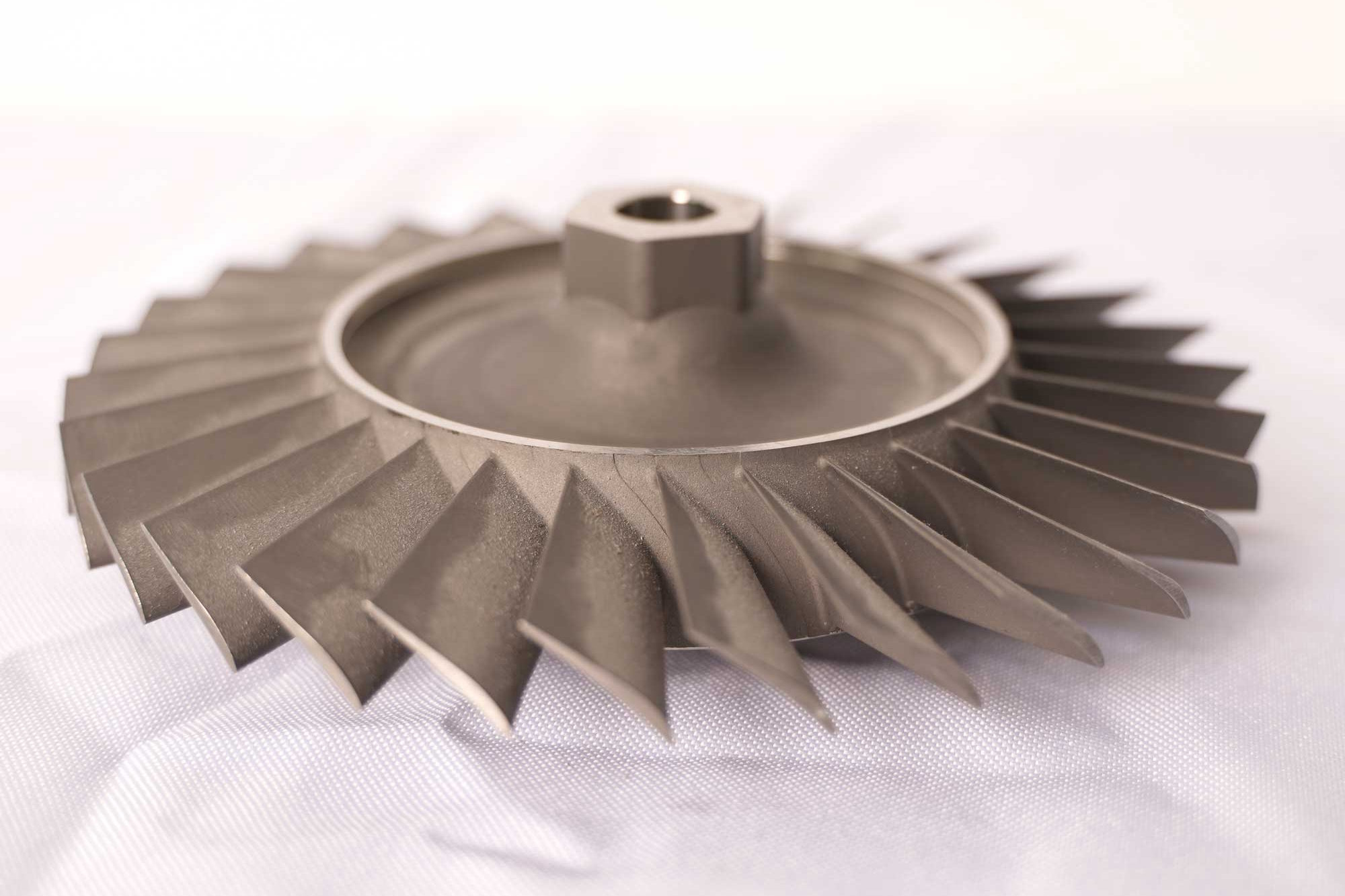
Kerntechnologie des IN713LC Gleichachsigen Kristallgusses
Wachsmodellherstellung Hochpräzise Wachsmodelle replizieren komplexe Geometrien innerhalb einer Toleranz von ±0,05 mm, geeignet für Turbinenschaufeln, Leitschaufeln und Segmente.
Keramikschalenkonstruktion Mehrschichtige Keramikschalen (6–8 mm dick) werden unter Verwendung von feuerfester Schlicker- und Stuckaturpaste geformt, mit ausgezeichneter Thermoschockbeständigkeit.
Entwachsung und Schalenbrand Schalen werden per Autoklav bei 150°C entwachst und bei ~1050°C gesintert, um Festigkeit während des Metallgusses zu gewährleisten.
Vakuuminduktionsschmelzen Die IN713LC-Legierung wird im Vakuum bei ~1450°C (≤10⁻³ Pa) geschmolzen, um Oxide zu minimieren und eine gleichmäßige chemische Zusammensetzung sicherzustellen.
Gleichachsige Erstarrung Die geschmolzene Legierung füllt vorgewärmte Formen und kühlt unter kontrollierten Bedingungen ab, wodurch gleichachsige Körner mit Größen zwischen 0,5–2 mm entstehen.
Schalenentfernung und Oberflächenreinigung Die Schalenentfernung erfolgt durch Vibration und Hochdruckstrahlen, ohne die präzisionsgegossenen Merkmale zu beschädigen.
Wärmebehandlung Lösungsglühen und Ausscheidungshärtung werden angewendet, um die γ′-Phasenverteilung zu verfeinern und die Kriechbeständigkeit zu erhöhen.
Endbearbeitung und Prüfung CNC-Bearbeitung und EDM erreichen Maßgenauigkeit; CMM und Röntgen stellen die Konformität sicher.
IN713LC Materialeigenschaften für Gasturbinenteile
Betriebstemperatur: Bis zu 982°C (1800°F)
Zugfestigkeit: ≥1034 MPa
Streckgrenze: ≥862 MPa
Kriechbruchfestigkeit: ≥200 MPa bei 760°C für 1000 Stunden
Oxidationsbeständigkeit: Hervorragend unter zyklischen Heißgasumgebungen
Korngröße (ASTM): 5–7, gleichmäßig über dicke und dünne Querschnitte
Fallstudie: IN713LC Turbinenkomponenten für die Energieerzeugung
Projekthintergrund
Ein globaler Turbinenhersteller beauftragte Neway AeroTech mit der Herstellung von gleichachsig gegossenen IN713LC-Schaufeln, Leitschaufeln und Schürzen für eine 70 MW Gasturbine, die kontinuierlich bei 950°C betrieben wird. Der Kunde forderte minimale Verzug, hohe Kriechbeständigkeit und Maßstabilität für alle Heißzonenteile.
Typische Gasturbinenteile
Turbinenschaufeln sind hohen Zentrifugal- und thermischen Spannungen ausgesetzt und erfordern eine feine gleichachsige Mikrostruktur und Oxidationsbeständigkeit.
Düsenleitschaufeln Leiten Verbrennungsgase durch die Turbinenstufen; erfordern enge geometrische Kontrolle und Thermoschwingfestigkeit.
Schaufelkopfschürzen der ersten Stufe Dichten rotierende Schaufelspitzen ab und halten extremen thermischen Zyklen und Gaserosion stand.
Brennringsegmente: Statische Bogenkomponenten, die Strahlungswärme und schwankenden Temperaturen ausgesetzt sind.
Herstellungsprozess für gleichachsige IN713LC Turbinenteile
Anguss- und Formdesign Gießsysteme werden durch CFD-Analyse optimiert, um gerichteten Fluss zu fördern und Hotspots zu eliminieren.
Durchführung des Vakuum-Feingusses Die IN713LC-Legierung wird unter Vakuum in Formen gegossen, unter gleichachsigen Bedingungen erstarrt und gekühlt, um Eigenspannungen zu minimieren.
Wärmebehandlung Wärmebehandlungszyklen stabilisieren die Mikrostruktur und erhöhen die Kriechlebensdauer durch gleichmäßige γ′-Phasenausscheidung.
Nachguss-Nachbearbeitung Die Bearbeitung von Befestigungsflächen, Löchern und Kühlmerkmalen erfolgt mittels CNC und EDM, um enge Toleranzen zu erreichen.
Prüfung und ZfP Alle Teile werden mittels Röntgenprüfung, Ultraschallprüfung und CMM-Messung auf Maßgenauigkeit und strukturelle Integrität überprüft.
Kernherausforderungen bei gleichachsig gegossenen Turbinenteilen
Vermeidung von Mikroseigerung in dickwandigen Teilen
Erzielung einer konsistenten Korngröße in variablen Querschnittsgeometrien
Beibehaltung der Maßstabilität nach der Wärmebehandlung
Verhinderung von Oxidation und Rissbildung während thermischer Zyklen
Ergebnisse und Verifizierung
Korngröße ASTM 6–7 in allen Schaufel- und Leitschaufelbereichen erreicht
Zugeigenschaften übertrafen 1034 MPa mit konsistenter Chargenqualität
100% fehlerfreier Status durch Röntgen- und Ultraschallprüfung bestätigt
Maßabweichung innerhalb von ±0,03 mm nach der Bearbeitung erreicht
FAQs
Welche Vorteile bietet der gleichachsige Guss für Gasturbinenkomponenten?
Wie schneidet IN713LC im Vergleich zu anderen turbinentauglichen Superlegierungen ab?
Welche Prüfmethoden werden zur Überprüfung der Gussintegrität verwendet?
Können IN713LC gleichachsige Teile in Schiffsturbinen eingesetzt werden?
Welche Toleranzen sind mit CNC- und EDM-Nachbearbeitung erreichbar?
