
Heißisostatisches Pressen (HIP) zur Verbesserung von Hochtemperaturlegierungsteilen
Optimierung der inneren Dichte für thermische und strukturelle Leistung
Hochtemperaturlegierungsbauteile, die in der Luft- und Raumfahrt, in Turbinen, in der Kerntechnik und in Energiesystemen eingesetzt werden, sind extremen thermischen Belastungen und Ermüdung ausgesetzt. Innere Porosität, die oft während des Vakuum-Feingießens oder der Pulvermetallurgie entsteht, beeinträchtigt die mechanische Integrität und das Kriechverhalten. Heißisostatisches Pressen (HIP) ist ein kritischer Nachbearbeitungsschritt, der innere Poren eliminiert, Gefügestrukturen verfeinert und die Ermüdungslebensdauer von Superlegierungsteilen verbessert.
Neway AeroTech bietet HIP-Behandlungen für komplexe Bauteile aus Inconel, Rene, CMSX und Hastelloy-Legierungen an und gewährleistet so überlegene Wärme-, Kriech- und Druckbeständigkeit.
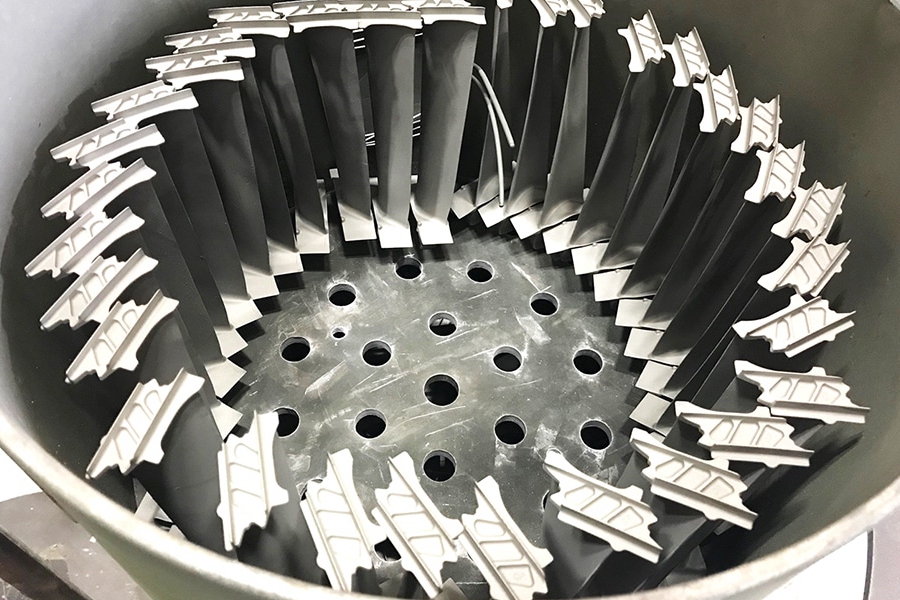
Überblick und Parameter des HIP-Prozesses
HIP wendet gleichzeitig hohe Temperaturen und isostatischen Druck an, um Porosität zu entfernen und die Isotropie in Hochleistungslegierungsbauteilen zu verbessern.
Temperaturbereich: 900–1260 °C, abhängig von der Legierung
Druckbereich: 100–200 MPa mittels inertem Argongas
Dauer: 2–4 Stunden für typische Turbinen- oder Strukturteile
Atmosphäre: Argon in einer vakuumversiegelten Autoklavenkammer
Diese Behandlung stellt den inneren Zusammenhalt wieder her und bereitet Teile auf die nachfolgende Wärmebehandlung oder Beschichtungsverfahren vor.
Legierungen und Bauteile, die häufig mit HIP behandelt werden
Legierung | Max. Temp. (°C) | Behandelte Teile | Industrie |
|---|---|---|---|
704 | Rotor-Naben, Dichtungsgehäuse | ||
980 | Turbinenschaufeln, Düsen | ||
1140 | Leitapparate der ersten Stufe, Tragflächenprofile | ||
1175 | Verbrennungsmäntel, Hülsen |
HIP verbessert die strukturelle Gleichmäßigkeit sowohl für gleichachsige als auch für gerichtet erstarrte Gussteile.
Fallstudie: HIP eines CMSX-4-Turbinenprofils
Projekthintergrund
Ein CMSX-4-Profil wies nach dem Feingießen Porositätswerte von >0,4 % auf. Das Teil wurde einem HIP bei 1190 °C und 170 MPa für 4 Stunden unterzogen. Tests nach dem HIP bestätigten eine Dichte von >99,9 %, eine verbesserte Zugfestigkeit bei 1000 °C und eine um das 2,3-Fache erhöhte Ermüdungslebensdauer unter zyklischer thermischer Belastung.
Typische HIP-behandelte Bauteilmodelle und Anwendungen
Bauteil | Legierung | Prozesstyp | Industrie |
|---|---|---|---|
Turbinendüsensegment | Rene 88 | Guss + HIP | |
Innenring der Brennkammer | Hastelloy X | HIP + TBC | |
Rotorscheibe | Inconel 718 | HIP + Bearbeitung | |
Abdeckblock | CMSX-4 | Guss + HIP |
HIP ermöglicht eine fehlerfreie Bearbeitung und TBC-Applikation an diesen hitzebelasteten Baugruppen.
Technische Vorteile von HIP bei Superlegierungsbauteilen
Innere Dichte >99,9 % eliminiert Schrumpfporen und nichtmetallische Einschlüsse aus Guss- und pulvermetallurgischen Bauteilen
Verbesserte Kriechbeständigkeit verlängert die Lebensdauer der Bauteile bei Temperaturen bis zu 1150 °C in Umgebungen mit zyklischer Belastung
Stellt die Kohäsion der Korngrenzen wieder her in gerichtet erstarrten oder gleichachsigen Kristallstrukturen
Bereitet innere Oberflächen vor für zuverlässiges EDM, Bohren und CNC-Bearbeitung als Nachbearbeitung
Reduziert die Ausschussrate um bis zu 40 % durch Rettung von grenzwertigen oder reparierbaren Gussteilen
HIP + Nachbearbeitungs-Workflow
HIP in Argonatmosphäre bei Nenndruck und Haltezeit
Wärmebehandlung zur Wiederherstellung von Härte und Festigkeit
Optionale CNC-Bearbeitung zur Fertigstellung von Profilen, Gehäusen oder Flanschen
TBC-Beschichtungen zum thermischen Schutz aufgetragen
Abschließende Inspektion einschließlich Röntgenprüfung, KMG- und REM-Validierung
Ergebnisse und Verifizierung
Fertigungsmethoden
HIP wurde in einem Behälter mit 1,1 m Durchmesser mit einer Regelgenauigkeit von ±3 °C und automatischer Gasdruckbeaufschlagung angewendet. Vollständige Rückverfolgbarkeit gewährleistet.
Strukturelle Verbesserung
Porosität auf <0,05 % reduziert. Streckgrenze bei 800 °C um 12 % verbessert. Low-Cycle-Ermüdungstests bestätigten Haltbarkeitsgewinne gegenüber Basisbauteilen.
Oberflächen- und Maßfertigstellung
Alle Teile wurden nach dem HIP fertig bearbeitet und gegebenenfalls beschichtet. Toleranzen innerhalb von ±0,01 mm eingehalten. Oberflächenvorbereitung für TBC-Haftung verifiziert.
Inspektion
KMG bestätigte die Maßhaltigkeit. Röntgeninspektion validierte die interne Konsolidierung. REM bestätigte die Heilung der Korngrenzen und eine oxidfreie Mikrostruktur.
Häufig gestellte Fragen (FAQs)
Welche Legierungen profitieren am meisten von der HIP-Bearbeitung?
Kann HIP sowohl bei gegossenen als auch bei additiv gefertigten Teilen eingesetzt werden?
Wie beeinflusst HIP nachfolgende Bearbeitungs- oder Beschichtungsschritte?
Welcher Druck- und Temperaturbereich wird typischerweise verwendet?
Wie wird die HIP-Qualität nach der Bearbeitung validiert?
