
Hochtemperaturlegierungen CNC-Bearbeitung Turbinenscheiben
Einführung
Die CNC-Bearbeitung von Hochtemperaturlegierungs-Turbinenscheiben liefert Präzisionskomponenten, die extremen thermischen und mechanischen Belastungen in Gasturbinen standhalten können. Diese Scheiben werden typischerweise aus Inconel-, Rene-, Nimonic- und Hastelloy-Legierungen hergestellt, die für Luft- und Raumfahrt, Energieerzeugung und Nuklearenergieanwendungen entwickelt wurden.
Bei Neway AeroTech kombinieren wir 5-Achs-CNC-Bearbeitung, adaptive Werkzeugbahnstrategien und In-situ-Inspektion, um kritische Toleranzen innerhalb von ±0,01 mm für Turbinenscheiben zu erreichen, die über 700°C betrieben werden.
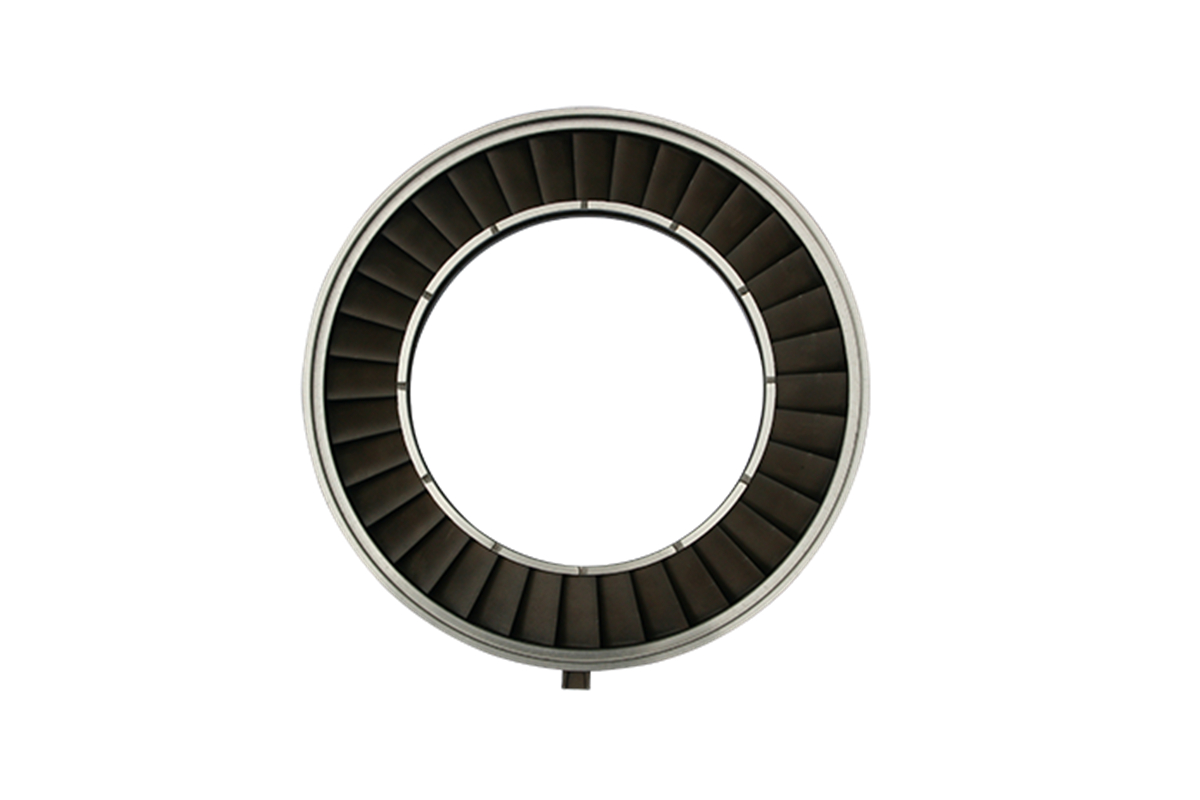
Kern-CNC-Bearbeitungstechnologie für Turbinenscheiben
Materialvorqualifizierung Rohblöcke aus Inconel 718, Rene 95 oder Nimonic 90 werden mit GDMS und ICP-OES auf Zusammensetzungsgenauigkeit analysiert.
Schrupp- und Schlichtbearbeitung Die mehrachsige Bearbeitung entfernt überschüssiges Material mit 400–600 cm³/min (Schruppen) und schließt mit einer Oberfläche von <0,8 µm Ra an Schaufelfüßen und Bohrungen ab.
Adaptive Werkzeugbahnen und Kühlung Benutzerdefinierte CAM-Algorithmen mit Kühlmittel durch die Spindel reduzieren thermische Verformung und Werkzeugverschleiß beim Schneiden gehärteter Superlegierungen.
In-situ-Messung und Verifizierung CMM und 3D-Scannen bestätigen die Maßhaltigkeit und Schaufelsymmetrie über alle Sektoren.
Wärmebehandlung nach der Bearbeitung Die Scheiben werden lösungsgeglüht und ausgelagert, um die mechanische Festigkeit und Mikrostrukturhomogenität nach der Bearbeitung wiederherzustellen.
Fallstudie: CNC-bearbeitete Rene-88-Turbinenscheibe für Flugzeugtriebwerk
Projekthintergrund
Ein Flugzeugtriebwerkshersteller benötigte eine aus Rene 88 bearbeitete Turbinenscheibe, die Dauertemperaturen von 850°C und Drehzahlen über 12.000 U/min bewältigen kann. Die Scheibe musste enge Toleranzen für Schaufelnuten und Bohrungskonzentrizität erfüllen.
Fertigungsstrategie
Verwendetes Material: Rene-88-Schmiedeblock, vorab mit Zugprüfung und Röntgeninspektion getestet
Bearbeitungstoleranz: ±0,01 mm am Naben-Ø, ±0,005 mm an der Tannenwurzel-Nutenteilung
Oberflächenqualität Schlichten: Ra 0,6 µm mit Keramikeinsätzen bei 200 m/min Schnittgeschwindigkeit
Nachbearbeitung: Heißisostatisches Pressen (HIP) und abschließende Spannungsarmglühung bei 980°C für 4 Stunden
Endgültige Verifizierung
Dynamisches Auswuchten: Rotorscheibe erfüllte ISO-1940-G2.5-Auswuchtspezifikation
Thermische Zyklusprüfung: Überstand 20.000 Zyklen von 200°C bis 850°C ohne Risse oder Verzug
Oberflächendefektinspektion: Keine Einschlüsse oder Unterflächenfehler mittels industrieller CT-Abtastung festgestellt
Häufig verwendete Legierungen in der Turbinenscheiben-CNC-Bearbeitung
Legierung | Max. Betriebstemperatur | Streckgrenze | Bemerkenswerte Anwendungsbereiche |
|---|---|---|---|
Inconel 718 | ~700°C | 1030 MPa | Energieerzeugung, Luft- und Raumfahrt |
Rene 88 | ~850°C | 1160 MPa | Düsentriebwerksrotoren |
Nimonic 90 | ~820°C | 1000 MPa | Industrielle Gasturbinen |
Hastelloy X | ~1175°C | 880 MPa | Brennkammerscheibe, Abgas |
Turbinenscheibengeometrie und Bearbeitungsüberlegungen
Scheibendurchmesser: Typischerweise 250 mm bis 600 mm
Nutenprofile: Tannenwurzel-, Schwalbenschwanz- und Einzelhakennuten, mit Formwerkzeugen bearbeitet
Nabenbohrungsgenauigkeit: IT6-Toleranzklasse mit Koaxialität <0,01 mm
Materialabtragsrate: Schruppen: 500–800 cm³/min, Schlichten: 80–120 cm³/min
Qualitätssicherung und endgültige Auslieferung
Maßliche Validierung: Alle kritischen Maße werden mit CMM- und 3D-Scansystemen geprüft.
Mechanische Prüfung: Streckgrenzen-, Zug- und Ermüdungsprüfungen werden durchgeführt, um die Leistung unter zyklischer Belastung sicherzustellen.
Oberflächenintegrität: Endpolieren und Inspektion garantieren keine Mikrorisse oder wärmebeeinflussten Zonen.
Rückverfolgbarkeit: Materialzertifikate, Prozessblätter und Prüfprotokolle werden für die Luftfahrt-Rückverfolgbarkeit archiviert.
FAQs
Wie ist die typische Lieferzeit für CNC-bearbeitete Turbinenscheiben aus Hochtemperaturlegierungen?
Wie wird die Maßstabilität während der Bearbeitung von hitzebeständigen Legierungen aufrechterhalten?
Welche Nachbearbeitungsmethoden verbessern die Ermüdungsbeständigkeit von Turbinenscheiben?
Was sind die häufigsten Ursachen für Werkzeugverschleiß bei der Bearbeitung von Superlegierungsscheiben?
Kann Neway AeroTech Turbinenscheibendesigns basierend auf OEM-Leistungsanforderungen anpassen?
