
Wärmebehandlung für Superlegierungsbauteile: Optimierung der mechanischen Eigenschaften
Thermische Behandlung für Festigkeit, Stabilität und Leistung
Superlegierungen, die in der Luft- und Raumfahrt, Energieerzeugung, Nuklear- und chemischen Industrie eingesetzt werden, müssen Festigkeit und Korrosionsbeständigkeit bei Temperaturen über 800°C beibehalten. Allerdings weisen die Mikrostrukturen im Guss- oder Schmiedezustand oft ungleichmäßige Kornmorphologie, innere Spannungen und unerwünschte Phasen auf. Präzisionsgesteuerte Wärmebehandlung ist entscheidend, um die mechanischen Eigenschaften, Phasenverteilung und Kriechleistung von Superlegierungskomponenten zu optimieren.
Neway AeroTech bietet maßgeschneiderte Wärmebehandlungsprozesse für eine breite Palette von gegossenen und geschmiedeten Superlegierungsbauteilen, einschließlich Inconel, Rene, CMSX, Nimonic und Hastelloy Legierungen.
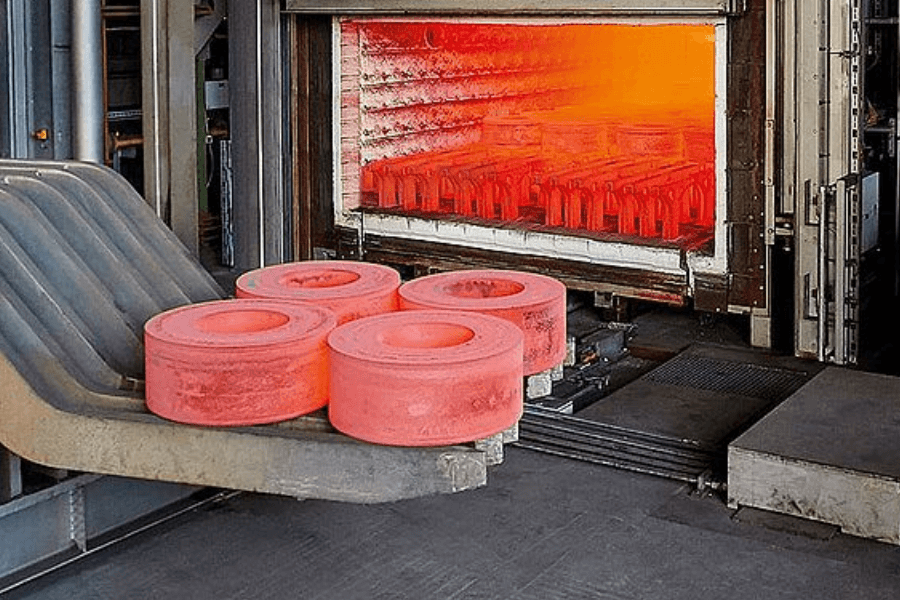
Wärmebehandlungsmethoden für Superlegierungen
Die Wärmebehandlung von Superlegierungen umfasst mehrere Schritte, die darauf ausgelegt sind, die Mikrostruktur zu verfeinern, Sekundärphasen aufzulösen und ausscheidungsgehärtete Zonen zu entwickeln.
Lösungsglühen: 1050–1220°C zur Homogenisierung der γ-Matrix und Auflösung von Karbiden
Ausscheidungshärtung (Aging): 650–870°C für γ′-Ausscheidung und Festigkeitsoptimierung
Spannungsarmglühen: 850–950°C zur Beseitigung von Eigenspannungen nach der Bearbeitung oder Schweißung
Ausscheidungshärtung: Kontrollierte Zeit-Temperatur-Zyklen für Kriechbeständigkeit
Alle Behandlungen sind legierungsspezifisch und werden in Vakuum- oder Inertgasöfen mit einer Präzisionstemperaturregelung von ±2°C durchgeführt.
Häufig wärmebehandelte Superlegierungen
Legierung | Max. Temp. (°C) | Typische Verwendung | Wärmebehandlung |
|---|---|---|---|
704 | Rotorteile, Scheiben | Lösungsglühen + Doppelauslagerung | |
980 | Turbinenschaufeln | Lösungsglühen + Auslagerung | |
1140 | Leitschaufeln der ersten Stufe | Nur Auslagerung | |
920 | Brennkammerkomponenten | Lösungsglühen + Auslagerung | |
1175 | Auskleidungen, Flansche | Spannungsarmglühen |
Die Mikrostruktursteuerung ist der Schlüssel zur Erzielung von Festigkeit, Ermüdungsbeständigkeit und Oxidationsbeständigkeit.
Fallstudie: Doppelauslagerungsbehandlung für Inconel 718 Rotorscheiben
Projekthintergrund
Ein Luft- und Raumfahrtkunde benötigte präzise mechanische Leistung von Inconel 718 Rotorscheiben. Die Wärmebehandlung umfasste Lösungsglühen bei 980°C, gefolgt von Auslagerung bei 718°C (8h) und 621°C (10h). Tests nach der Behandlung zeigten eine Zugfestigkeit von 1245 MPa und eine um 60 % verbesserte Ermüdungslebensdauer gegenüber dem bearbeiteten Zustand.
Typische wärmebehandelte Komponenten und Anwendungen
Komponente | Legierung | Behandlungsart | Branche |
|---|---|---|---|
Turbinenschaufel | Rene 88 | Lösungsglühen + Auslagerung | |
Leitschaufelsegment | CMSX-4 | Auslagerung | |
Brennkammerflansch | Hastelloy X | Spannungsarmglühen | |
Düsenträger | Nimonic 90 | Voller thermischer Zyklus |
Diese Prozesse stellen die mechanische Festigkeit, Maßhaltigkeit und Korrosionsbeständigkeit in Komponenten für extreme Einsätze wieder her.
Herausforderungen bei der Wärmebehandlung von Superlegierungsbauteilen
Enge thermische Fenster ±5°C für γ′-Ausscheidung erfordern eine präzise Ofenregelung
Kornwachstumskontrolle ist bei richtungs erstarrten oder einkristallinen Teilen entscheidend
Geschweißte Zonen können lokalisierte oder gestufte Wärmebehandlung erfordern
Oxidationszunderbildung muss während des Hochtemperatur-Haltens vermieden werden
Bauteilverzug nach der Behandlung erfordert prädiktive Modellierung und Vorrichtungen
Thermische Behandlungsverfahren zur Optimierung von Superlegierungen
Vakuum- oder Argongasöfen gewährleisten oxidationsfreie Umgebungen
Mehrstufige Auslagerungsprofile, abgestimmt auf die legierungsspezifische Ausscheidungskinetik
HIP + Wärmebehandlung Abfolge zur Porenbeseitigung und Festigkeitssteigerung
Vorab-Wärmebehandlungszyklen für Maßhaltigkeit während der Endbearbeitung
Nachbearbeitungsinspektion gewährleistet Eigenschaftskonsistenz
Ergebnisse und Verifizierung
Prozessdurchführung
Alle thermischen Zyklen wurden unter Verwendung legierungsspezifischer Datenbanken programmiert und durch Thermoelement-Kartierung verifiziert. Echtzeitüberwachung gewährleistete eine Gleichmäßigkeit von ±2°C während der Haltezeit.
Mechanische Eigenschaften
Die Festigkeit, Duktilität und Härte nach der Behandlung wurden gemessen, um die Konformität zu überprüfen. CMSX-4-Schaufeln zeigten eine Kriechlebensdauer >3000 h bei 1050°C.
Maßhaltigkeit
Komponenten wurden mittels Koordinatenmessmaschine (CMM) geprüft und zeigten Maßänderungen <0,015 mm. Der Oberflächenzustand wurde durch Inertgasspülung erhalten.
Mikrostrukturelle Analyse
Rasterelektronenmikroskopie (SEM) bestätigte eine gleichmäßige γ′-Phasenverteilung und das Fehlen unerwünschter Karbidnetzwerke. Röntgenbeugung bestätigte die kristallografische Orientierung in richtungs erstarrten Teilen.
Häufig gestellte Fragen (FAQs)
Was ist der typische Temperaturbereich für die Wärmebehandlung von Superlegierungen?
Wie beeinflusst die Wärmebehandlung die Kriechbeständigkeit und Ermüdungslebensdauer?
Welche Atmosphäre wird für Hochtemperatur-Thermalzyklen verwendet?
Kann Wärmebehandlung mit HIP für bessere Ergebnisse kombiniert werden?
Wie werden Mikrostrukturen nach der thermischen Behandlung validiert?
