
PWA 1480 Turbomaschinenschaufel Einkristallguss Hersteller
Einführung
PWA 1480 ist eine Nickelbasis-Einkristall-Superlegierung der ersten Generation, die speziell für überlegene Kriechbeständigkeit, Hochtemperaturstabilität und außergewöhnliche Ermüdungsleistung bei Temperaturen bis zu 1090°C entwickelt wurde. Mit einer Zugfestigkeit von etwa 1350 MPa und hervorragender Oxidationsbeständigkeit ist PWA 1480 das Material der Wahl für die Herstellung kritischer Turbomaschinenschaufeln, die unter extremen thermischen und mechanischen Belastungen arbeiten.
Bei Neway AeroTech sind wir spezialisiert auf die Herstellung von PWA 1480 Turbomaschinenschaufeln durch präzisen Einkristall-Vakuumpräzisionsguss, der fehlerfreie Strukturen, außergewöhnliche mechanische Eigenschaften bei hohen Temperaturen und präzise aerodynamische Profile liefert.
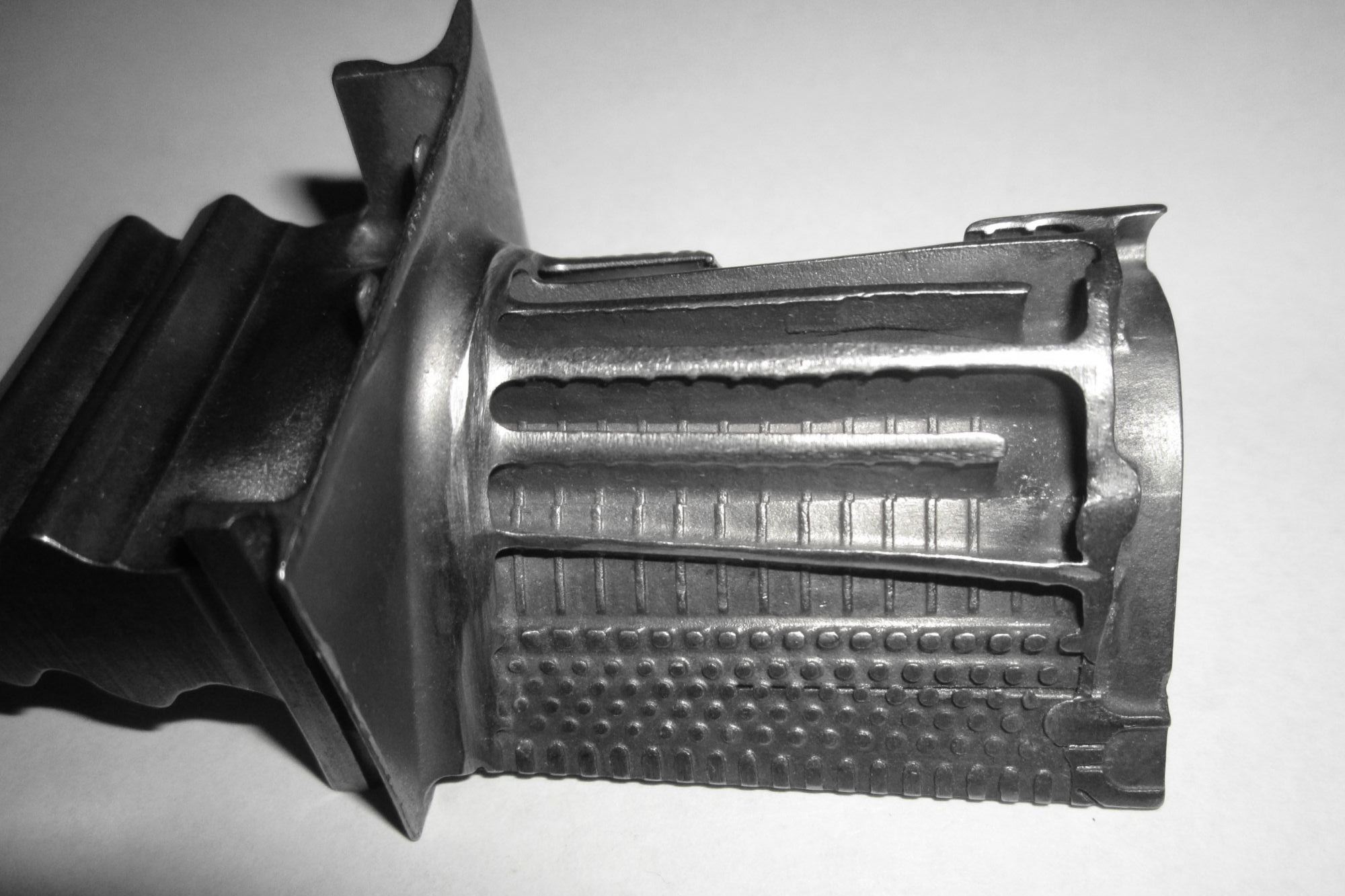
Wesentliche Fertigungsherausforderungen für PWA 1480 Turbomaschinenschaufeln
Einhaltung strenger Legierungszusammensetzung (Ni-Basis, Al ~5 %, Cr ~10 %, Co ~10 %, Ta ~5 %, W ~5 %), um eine stabile γ'-Phasenverteilung sicherzustellen.
Erzielung perfekten Einkristallwachstums durch kontrollierte gerichtete Erstarrung ohne Korngrenzen.
Einhaltung enger Maßtoleranzen (±0,03 mm) für optimale aerodynamische und mechanische Leistung.
Sicherstellung der Oberflächengüte (Ra ≤1,6 µm), die entscheidend für die Reduzierung des Widerstands und die Verbesserung der Ermüdungslebensdauer ist.
Einkristallgussprozess für PWA 1480 Turbomaschinenschaufeln
Der Fertigungsprozess umfasst:
Wachsmodellherstellung: Hochpräzise Wachsmodelle, die eine Maßkonsistenz von ±0,1 % für komplexe Schaufelgeometrien sicherstellen.
Schalenaufbau: Keramikschalen mit Yttrium-stabilisierten Zirkonoxid-Schichten für Hochtemperaturbeständigkeit während des Kristallwachstums.
Entwachsung: Dampfautoklavierung bei ~150°C sorgt für fehlerfreie Kavitätenbildung.
Vakuumschmelzen und -gießen: Legierung wird bei ~1450°C unter Vakuum (<10⁻³ Pa) geschmolzen, um Reinheit zu erhalten und Oxidation zu verhindern.
Einkristallwachstum: Kontrolliertes Ziehen (~3–6 mm/min) über thermische Gradienten, um eine einzelne [001] kristallografische Orientierung sicherzustellen.
Schalenentfernung und CNC-Nachbearbeitung: Schalenentfernung, Präzisionsbearbeitung und Polieren, um aerodynamische Konturen und kritische Maße zu erreichen.
Vergleichende Analyse von Fertigungsmethoden für Turbomaschinenschaufeln
Verfahren | Gefügestruktur | Oberflächengüte | Maßgenauigkeit | Mechanische Festigkeit | Max. Temperaturbeständigkeit |
|---|---|---|---|---|---|
Einkristall-Präzisionsguss | Einkristall | Hervorragend (Ra ≤1,6 µm) | Sehr hoch (±0,03 mm) | Überlegen (~1350 MPa) | Außergewöhnlich (~1090°C) |
Gerichtete Erstarrung | Säulenförmige Körner | Gut (Ra ~3 µm) | Hoch (±0,05 mm) | Ausgezeichnet (~1270 MPa) | Ausgezeichnet (~1020°C) |
Gleichachsiger Guss | Zufällige feine Körner | Mäßig (Ra ~3–5 µm) | Mäßig (±0,1 mm) | Sehr gut (~1240 MPa) | Hoch (~980°C) |
Optimale Fertigungsstrategie für PWA 1480 Turbomaschinenschaufeln
Einkristallguss erreicht eine Oberfläche von Ra ≤1,6 µm, eine Maßgenauigkeit von ±0,03 mm und eliminiert Korngrenzenkriechen für primäre Turbinenschaufeln.
Gerichtete Erstarrung erreicht säulenförmige Kornstrukturen mit ausgezeichneter Kriechfestigkeit, aber geringerer Ermüdungsbeständigkeit im Vergleich zu einkristallinen Teilen.
Gleichachsiger Guss bietet kostengünstige Produktion, ist jedoch durch Korngrenzenkriechen und geringere Hochtemperatur-Ermüdungsleistung eingeschränkt.
PWA 1480 Legierungsleistungsübersicht
Eigenschaft | Wert | Anwendungsrelevanz |
|---|---|---|
Zugfestigkeit | ~1350 MPa | Trägt extreme Zentrifugal- und thermische Lasten |
Streckgrenze | ~1200 MPa | Hohe Maßstabilität unter Dauerlast |
Maximale Betriebstemperatur | ~1090°C | Erhält mechanische Integrität bei Turbineneintrittstemperaturen |
Kriechbeständigkeit | Außergewöhnlich | Verlängert die Betriebsdauer unter lang anhaltenden Hochbelastungsbedingungen |
Ermüdungsfestigkeit | ~680 MPa | Widersteht Rissbildung unter zyklischer Belastung |
Vorteile der Verwendung von PWA 1480 für Turbomaschinenschaufeln
Überlegene Kriech- und Ermüdungsbeständigkeit gewährleistet Haltbarkeit bei Turbineneintrittstemperaturen (~1090°C).
Hervorragende Oxidationsbeständigkeit bewahrt die Schaufeloberflächenintegrität unter Hochgeschwindigkeits-Heißgasströmen.
Einkristallstruktur eliminiert Korngrenzenversagensmechanismen und maximiert die Lebensdauer.
Hohe mechanische Festigkeit gewährleistet minimale Verformung unter hohen Zentrifugal- und thermischen Lasten.
Nachbearbeitungstechniken für PWA 1480 Turbomaschinenschaufeln
Heißisostatisches Pressen (HIP): Verdichtet Gussteile, eliminiert Mikroporosität und verbessert Ermüdungs- und Kriecheigenschaften.
Lösungs- und Auslagerungswärmebehandlung: Entwickelt optimale γ'-Phasenverstärkung für Hochtemperaturfestigkeit und Kriechbeständigkeit.
Präzisions-CNC-Bearbeitung: Erreicht aerodynamische Profile innerhalb einer Toleranz von ±0,01 mm und einer Oberflächengüte von Ra ≤0,8 µm.
Oberflächenveredelung (Polieren/Strahlkugelstrahlen): Verbessert die Ermüdungslebensdauer und steigert die aerodynamische Leistung.
Prüfung und Qualitätssicherung für Turbomaschinenschaufeln
Koordinatenmessmaschine (CMM): Prüft kritische Maße auf eine Toleranz von ±0,03 mm.
Ultraschallprüfung (UT): Erkennt interne Fehler und sichert die Gussintegrität.
Eindringprüfung (PT): Lokalisiert Oberflächendiskontinuitäten bis zu 0,002 mm Größe.
Metallografische Analyse: Überprüft die Einkristallorientierung und die γ'-Phasenverteilung.
Branchenanwendungen und Fallstudie
PWA 1480 Turbomaschinenschaufeln, hergestellt von Neway AeroTech, werden weit verbreitet in Hochleistungs-Flugzeugtriebwerken und industriellen Gasturbinen eingesetzt. In einem kürzlichen Flugzeugtriebwerksprogramm lieferten PWA 1480 Schaufeln über 16.000 Flugstunden bei Turbineneintrittstemperaturen von über 1060°C und erhöhten die Lebensdauer um 35 % im Vergleich zu herkömmlichen polykristallinen Schaufeln.
FAQs
Welche Maßtoleranzen kann Neway AeroTech für PWA 1480 Turbomaschinenschaufeln erreichen?
Warum ist Einkristallguss für die Herstellung von PWA 1480 Turbinenschaufeln wesentlich?
Wie schneidet PWA 1480 im Vergleich zu anderen Superlegierungen unter Turbineneintrittsbedingungen ab?
Welche Branchen verwenden üblicherweise PWA 1480 Turbinenschaufeln?
Wie stellt Neway AeroTech die metallurgische Integrität und Qualität in PWA 1480 Gussteilen sicher?
