中文

Thermal Barrier Coating (TBC) for Enhanced Superalloy Performance

目录
Ceramic Insulation to Maximize Superalloy Durability
TBC System Structure and Materials
Superalloys Commonly Protected with TBCs
Case Study: Plasma-Sprayed YSZ on CMSX-4 Airfoils
Project Background
Typical TBC-Coated Components and Applications
TBC Application Challenges and Solutions
Plasma TBC Solutions for High-Temperature Alloy Components
Results and Verification
Coating Process Execution
Thermal Performance
Surface Finishing
Inspection
FAQs

Ceramic Insulation to Maximize Superalloy Durability

Superalloy components in turbine engines, power systems, and heat exchangers routinely operate at temperatures exceeding 1000°C. Even with excellent oxidation and creep resistance, long-term exposure causes surface degradation and structural fatigue. Thermal Barrier Coatings (TBC) provide critical thermal insulation, reducing metal surface temperatures by up to 150–200°C and significantly extending part life.

Neway AeroTech offers plasma-applied ceramic TBC systems for turbine blades, vanes, combustion liners, and exhaust hardware manufactured from Inconel, Rene, CMSX, and Hastelloy alloys.

thermal-barrier-coating-tbc-for-enhanced-superalloy-performance

TBC System Structure and Materials

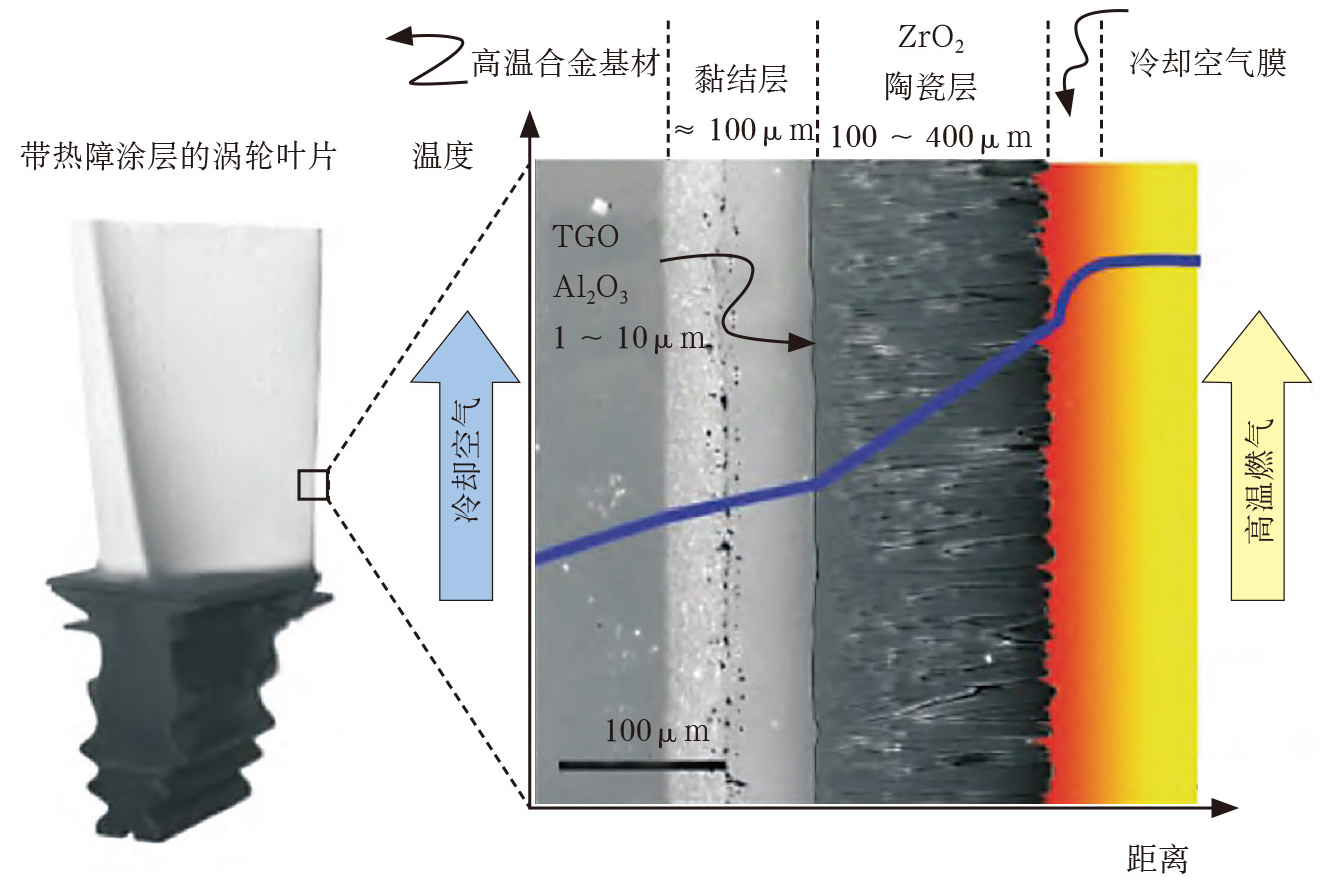
A standard TBC system includes two primary layers applied using plasma spraying or electron beam physical vapor deposition (EB-PVD):

  • Bond Coat (150–250 μm): MCrAlY layer provides adhesion and oxidation resistance

  • Top Coat (80–300 μm): Yttria-stabilized zirconia (YSZ) ceramic for thermal insulation and strain compliance

  • Substrate: Superalloy component cast or machined to spec, grit-blasted prior to coating

Plasma-sprayed coatings deliver 10–15% porosity for strain tolerance. EB-PVD allows feathered structures for turbine airfoil cooling.

Superalloys Commonly Protected with TBCs

Alloy

Max Temp (°C)

Coated Components

Industry

Inconel 738

1050

Stator vanes, exhaust shells

Aerospace

Rene 88

980

HPT nozzle segments

Power Generation

CMSX-4

1140

First-stage blades

Energy

Hastelloy X

1175

Combustor liners

Chemical Processing

TBCs reduce oxidation, delay creep onset, and protect thin sections from heat-induced distortion.

Case Study: Plasma-Sprayed YSZ on CMSX-4 Airfoils

Project Background

A turbine manufacturer required TBC for CMSX-4 airfoils operating at 1100°C. Plasma-sprayed YSZ (8 wt.% Y₂O₃) was applied at 180 μm thickness, over a 200 μm NiCoCrAlY bond coat. The TBC reduced metal surface temperatures by 140°C and increased creep life by 1.8×.

Typical TBC-Coated Components and Applications

Component

Substrate

TBC Thickness

Industry

Rotor Blade

Inconel 738

250 μm

Aerospace

Vane Segment

Rene 88

220 μm

Power Generation

First-Stage Blade

CMSX-4

180 μm

Energy

Combustor Panel

Hastelloy X

200 μm

Chemical Processing

All parts were tested for bond adhesion, porosity, thermal shock, and surface integrity.

TBC Application Challenges and Solutions

  1. Delamination risk when thermal expansion mismatch exceeds 15 × 10⁻⁶/K between substrate and ceramic

  2. Erosion under gas flow >30 m/s reduces topcoat thickness over time—material densification improves durability

  3. Oxide scale formation beneath bond coat if surface prep or environment is uncontrolled

  4. Ra ≤ 5 μm required for sealing surfaces post-TBC and must be achieved by lapping or masking

  5. Thermal fatigue at >1000 cycles requires compliant topcoat porosity and columnar microstructure

Plasma TBC Solutions for High-Temperature Alloy Components

  • Plasma spraying at 45–55 kW for uniform topcoat deposition at 100–250 μm thickness

  • Precision masking ±0.1 mm to protect sealing and threaded features

  • Bond coat grit-blasting to 4–6 Ra μm and NiCoCrAlY application for oxidation control

  • YSZ with 8 wt.% Y₂O₃ stabilized for high thermal cycling resistance up to 1200°C

  • Post-coating verification via CMM, SEM, and X-ray inspection

Results and Verification

Coating Process Execution

Coatings were applied in a vacuum-sealed plasma cell with real-time thermal spray monitoring. Spray parameters adjusted per geometry and substrate.

Thermal Performance

YSZ-coated surfaces showed a 140–160°C reduction in surface temperature under 1100°C gas flow. Parts passed 1000-cycle thermal shock testing.

Surface Finishing

Critical dimensions were retained post-coating with sealing faces ground to Ra 4.5 μm. Coating thickness uniformity maintained within ±10 μm.

Inspection

CMM verified geometry. SEM confirmed porosity 10–12%, with no microcracking. X-ray inspection validated bond line integrity.

FAQs

  1. What is the maximum operating temperature for YSZ-based TBC systems?

  2. Can TBC be reapplied after service exposure or stripping?

  3. What bond coat materials are commonly used for turbine superalloys?

  4. How does TBC thickness affect component life and cooling?

  5. Are TBCs applicable to combustor, nozzle, and vane parts?