中文

Rene 80 Single Crystal Manufacturing Turbine Blades and Vanes

目录
Introduction
Core Technology of Single Crystal Casting for Rene 80 Blades and Vanes
Rene 80 Material Properties in Single Crystal Form
Case Study: Rene 80 Single Crystal Blades and Vanes for Aero Turbines
Project Background
Application Examples
Manufacturing Solution for Rene 80 Single Crystal Turbine Parts
Key Manufacturing Challenges
Results and Verification
FAQs

Introduction

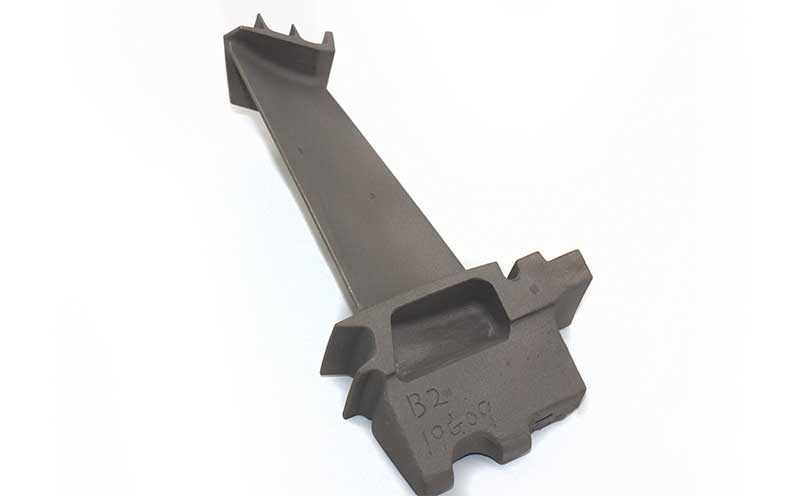
Turbine blades and vanes in high-pressure stages operate in the most extreme environments inside gas turbines—exposed to continuous temperatures above 1000°C, aggressive oxidation, and cyclic thermal-mechanical stresses. Rene 80 is a γ′-strengthened nickel-based superalloy designed for superior creep resistance, thermal stability, and oxidation protection. When manufactured using single crystal casting, Rene 80 components achieve grain boundary-free structures, offering unmatched high-temperature performance and long service life.

Neway AeroTech offers vacuum investment casting of Rene 80 turbine blades and vanes with single crystal structure, utilizing spiral selectors and directional solidification control. Our solutions support aerospace, power generation, marine, and defense turbine platforms.

rene-80-single-crystal-manufacturing-turbine-blades-and-vanes

Core Technology of Single Crystal Casting for Rene 80 Blades and Vanes

  1. Wax Pattern Production High-precision wax patterns (±0.05 mm) replicate complex airfoil and cooling channel geometries for both blades and vanes.

  2. Shell Mold Construction Ceramic molds are constructed layer by layer (6–10 mm thick), designed to withstand withdrawal forces and thermal gradients during solidification.

  3. Spiral Grain Selector Design A helical grain selector is integrated below the part to initiate controlled [001] single crystal growth, eliminating transverse grain boundaries.

  4. Vacuum Induction Melting Rene 80 is melted under vacuum (≤10⁻³ Pa) at ~1450°C to maintain chemical uniformity and prevent gas porosity.

  5. Directional Solidification in Vacuum Furnace Molds are withdrawn through a thermal gradient (2–4 mm/min) to promote uniaxial single crystal formation from base to tip.

  6. Shell Knockout and Cleaning Ceramic shell is removed post-casting via blasting and chemical leaching, preserving airfoil definition and internal passage accuracy.

  7. Hot Isostatic Pressing (HIP) HIP at 1180°C and 150 MPa eliminates internal microvoids, improving fatigue and creep resistance.

  8. Heat Treatment and Aging Solution and aging treatments optimize γ′ precipitation for long-term mechanical performance at elevated temperatures.

Rene 80 Material Properties in Single Crystal Form

  • Operating Temperature: Up to 1090°C

  • Tensile Strength: ≥1200 MPa at 20°C

  • Creep Rupture Strength: ≥230 MPa at 982°C (1000 hours)

  • Gamma Prime Volume Fraction: ~60–65%

  • Oxidation Resistance: Excellent up to 1100°C

  • Microstructure: Single crystal, [001] orientation with <2° deviation

Case Study: Rene 80 Single Crystal Blades and Vanes for Aero Turbines

Project Background

Neway AeroTech manufactured first-stage HPT blades and stator vanes for a commercial jet engine platform operating above 1050°C. The customer required tight tolerance single crystal components with consistent [001] grain orientation, zero porosity, and fatigue reliability over 20,000 cycles.

Application Examples

  • Aerospace Jet Engines (e.g., CFM56, LEAP): High-load, high-speed rotating blades and stator vanes in HPT stages.

  • Marine Gas Turbines (e.g., LM2500+): Blades and vanes exposed to thermal fatigue, oxidation, and salt-laden gases.

  • Power Generation Gas Turbines (e.g., GE Frame 7): Hot-section blades and nozzles used in peaking and baseload applications with 900–1100°C inlet temperatures.

Manufacturing Solution for Rene 80 Single Crystal Turbine Parts

  1. CFD-Optimized Mold Design Airfoil profiles and casting systems are designed with CFD analysis to ensure laminar metal flow and controlled solidification.

  2. Vacuum Casting and Withdrawal Control Vacuum induction melting and thermal gradient withdrawal control ensure defect-free single crystal structure along the [001] axis.

  3. HIP and Heat Treatment Hot isostatic pressing consolidates structure, followed by solution and aging for γ′ phase stabilization.

  4. CNC Machining and EDM Final geometry is achieved using CNC machining and EDM for cooling holes, attachment roots, and interfaces.

  5. Inspection and Validation Components are inspected using X-ray, CMM, and EBSD to confirm crystal orientation, dimensional accuracy, and defect-free structure.

Key Manufacturing Challenges

  • Preventing stray grains in trailing edges and complex blade profiles

  • Controlling withdrawal rates for large-area vanes and twisted blades

  • Managing thermal gradients to avoid hot tears or distortion

  • Maintaining [001] grain orientation in tight curvature regions

Results and Verification

  • Single crystal [001] orientation confirmed via EBSD (deviation <2°)

  • No porosity or inclusions post-HIP across full batch

  • Creep rupture strength exceeded 230 MPa at 982°C

  • Dimensional tolerances maintained within ±0.03 mm after CNC/EDM

  • 100% NDT compliance (X-ray, ultrasonic) for blades and vanes

FAQs

  1. Why is Rene 80 suitable for single crystal turbine blades and vanes?

  2. What’s the difference between equiaxed, directional, and single crystal casting?

  3. How is [001] grain orientation maintained in curved airfoil designs?

  4. What non-destructive testing is used for Rene 80 cast parts?

  5. Can single crystal blades and vanes be machined post-casting?