中文

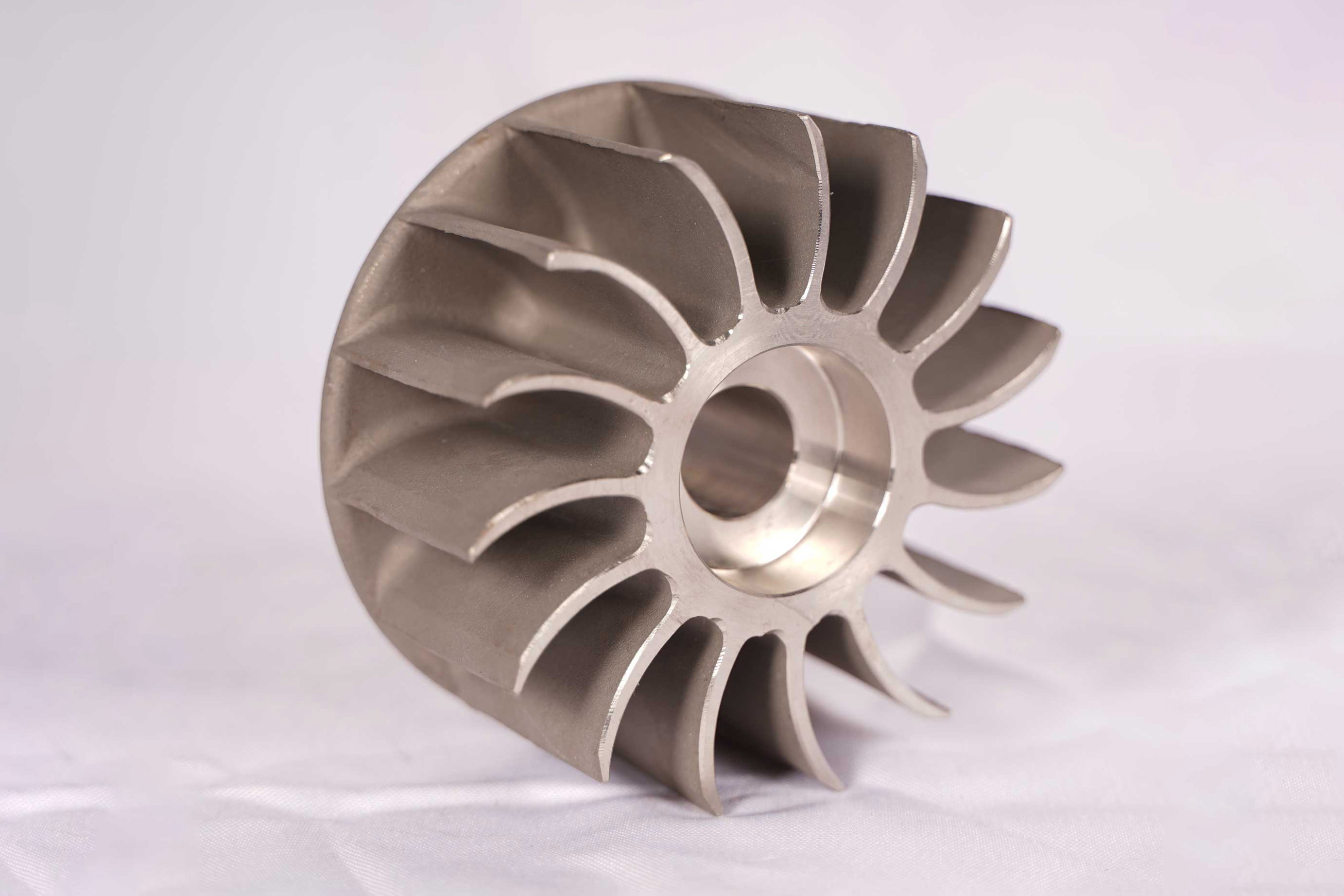
Inconel 738LC Superalloy Equiaxed Crystal Casting Exhaust System Components Workshop

目录
Introduction
Core Technology of Equiaxed Crystal Casting for Inconel 738LC Components
Inconel 738LC Material Properties for Exhaust Components
Case Study: Inconel 738LC Exhaust Diffusers and Rings for Gas Turbines
Project Background
Common Applications
Manufacturing Workflow for Inconel 738LC Exhaust Parts
Key Challenges
Results and Verification
FAQs

Introduction

Exhaust system components in turbines and high-performance engines face constant exposure to extreme heat, high-velocity combustion gases, and thermal cycling. These components must maintain strength, dimensional accuracy, and corrosion resistance under sustained stress. Inconel 738LC, a low-carbon variant of the nickel-based Inconel 738 alloy, offers improved weldability, lower cracking risk, and stable mechanical performance at elevated temperatures. When manufactured using equiaxed crystal casting, Inconel 738LC exhaust parts benefit from uniform mechanical properties and cost-effective production.

Neway AeroTech operates a dedicated workshop for exhaust system components, providing vacuum investment casting, heat treatment, and precision machining for Inconel 738LC components used in aerospace, power generation, and industrial energy applications.

inconel-738lc-superalloy-equiaxed-crystal-casting-exhaust-system-components-workshop

Core Technology of Equiaxed Crystal Casting for Inconel 738LC Components

  1. Wax Pattern Fabrication High-precision wax patterns are produced for elbows, diffusers, rings, and mounts with ±0.05 mm tolerance.

  2. Shell Mold Construction Ceramic shell molds (6–8 mm) are built in layers to accommodate thick-wall geometry and complex flow paths.

  3. Dewaxing and Shell Firing Shells are dewaxed at ~150°C and fired at 1050°C to strengthen the mold for vacuum casting.

  4. Vacuum Induction Melting Inconel 738LC is melted under vacuum (≤10⁻³ Pa) at ~1450°C, ensuring chemical consistency and minimizing inclusion formation.

  5. Equiaxed Solidification Alloy is poured into preheated molds and solidified under controlled thermal gradients, forming uniform equiaxed grains (0.5–2 mm).

  6. Shell Knockout and Cleaning Shells are removed by vibration and high-pressure blasting, preserving critical edge features and wall thickness.

  7. Heat Treatment Solution and aging heat treatment promotes γ′ stability, creep resistance, and dimensional control.

  8. Final Machining Finished via CNC machining and EDM to meet tolerance requirements and assembly specs.

Inconel 738LC Material Properties for Exhaust Components

  • Max Operating Temperature: ~1050°C

  • Tensile Strength: ≥1000 MPa

  • Yield Strength: ≥850 MPa

  • Creep Rupture Strength: ≥200 MPa at 850°C (1000 hrs)

  • Oxidation Resistance: Excellent under continuous thermal exposure

  • Weldability: Improved vs. standard Inconel 738 due to lower carbon content

  • Grain Size: ASTM 5–7 under equiaxed solidification

Case Study: Inconel 738LC Exhaust Diffusers and Rings for Gas Turbines

Project Background

Neway AeroTech supplied equiaxed-cast Inconel 738LC diffuser segments and sealing rings for a 50 MW industrial gas turbine exhaust system. Operating temperatures exceeded 950°C, with fluctuating thermal loads and vibration stresses. Requirements included low distortion, stable grain size, and fatigue-resistant joining surfaces.

Common Applications

  • Turbine Exhaust Diffusers: Expand and redirect hot gases post-combustion, requiring creep and oxidation resistance.

  • Flange Rings and Transition Pieces: Seal gas paths while accommodating thermal expansion and cyclic stress.

  • Mounting Brackets and Supports: Join exhaust hardware to turbine structure; demand weldability and fatigue strength.

  • Combustion Baffles and Outlet Structures: Thin-wall sections requiring oxidation resistance and dimensional control after long-term operation.

Manufacturing Workflow for Inconel 738LC Exhaust Parts

  1. Casting Design and CFD Optimization CFD-assisted gating design ensures uniform metal flow and minimized hot spots.

  2. Vacuum Investment Casting Execution Inconel 738LC alloy is cast under vacuum conditions into preheated ceramic molds, forming equiaxed grains with isotropic properties.

  3. Post-Casting Heat Treatment Heat treatment cycles are applied to relieve residual stress and stabilize the γ′ strengthening phase.

  4. CNC Machining and Finishing Key sealing surfaces, bolt holes, and flow channels are completed via CNC machining and EDM.

  5. Inspection and Quality Assurance All parts undergo X-ray inspection, ultrasonic testing, and CMM measurement to verify conformity to customer specifications.

Key Challenges

  • Maintaining uniform grain size across thick-wall and thin-wall transitions

  • Avoiding hot tearing and porosity in sharp geometric transitions

  • Controlling dimensional distortion during post-casting heat treatment

  • Ensuring high-temperature joint integrity in welding zones

Results and Verification

  • ASTM grain size 6–7 maintained across all casting zones

  • No porosity detected in HIP-processed zones (if applied)

  • Creep resistance and tensile properties exceeded 1000 MPa benchmarks

  • Dimensional accuracy within ±0.03 mm verified via 5-axis CMM

  • 100% NDT clearance for batch X-ray and ultrasonic inspections

FAQs

  1. What makes Inconel 738LC suitable for casting exhaust system parts?

  2. How does equiaxed casting improve mechanical reliability in exhaust components?

  3. Can Inconel 738LC parts be welded or repaired in the field?

  4. What surface treatments are available post-casting?

  5. How are cooling channel tolerances ensured during casting and machining?