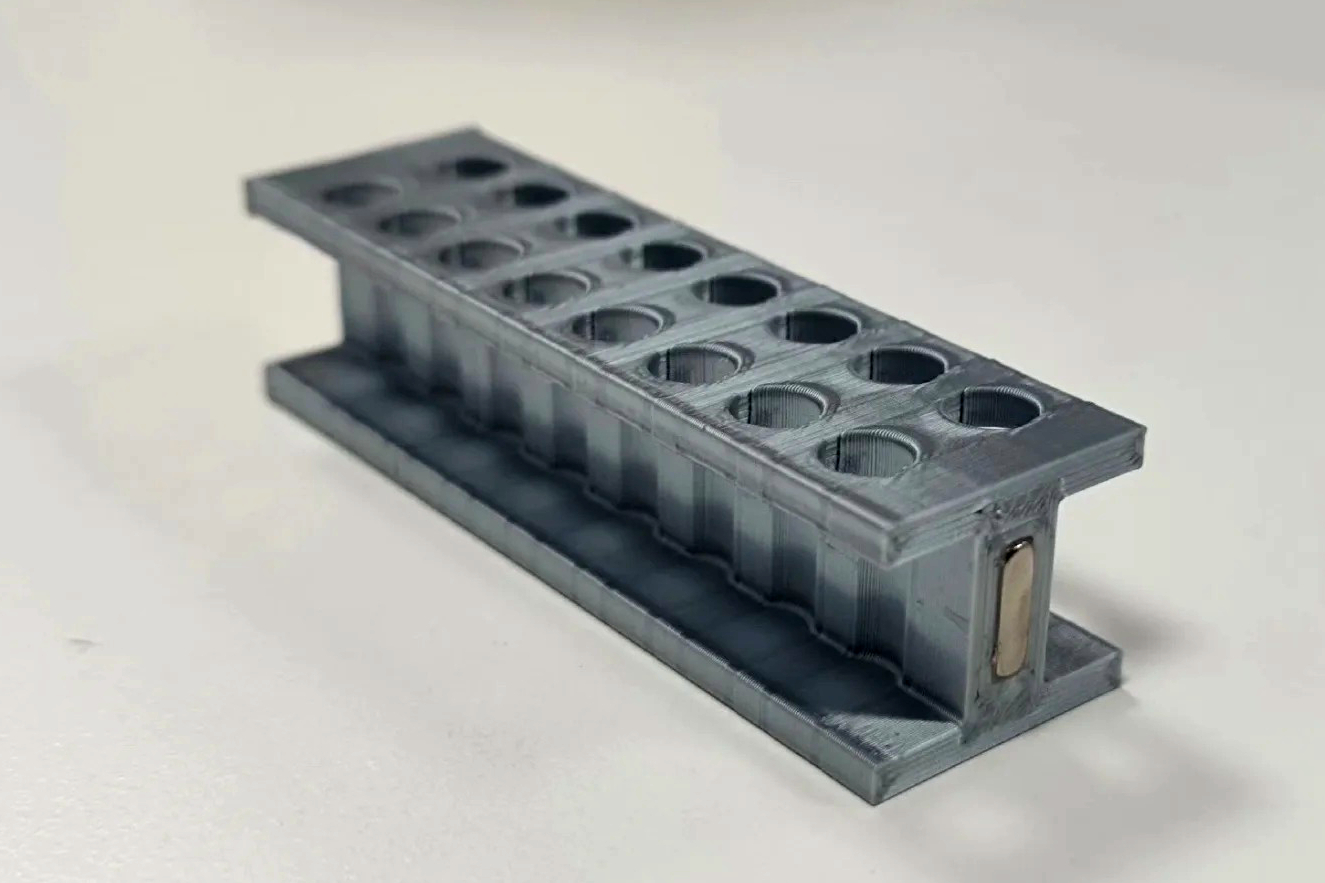
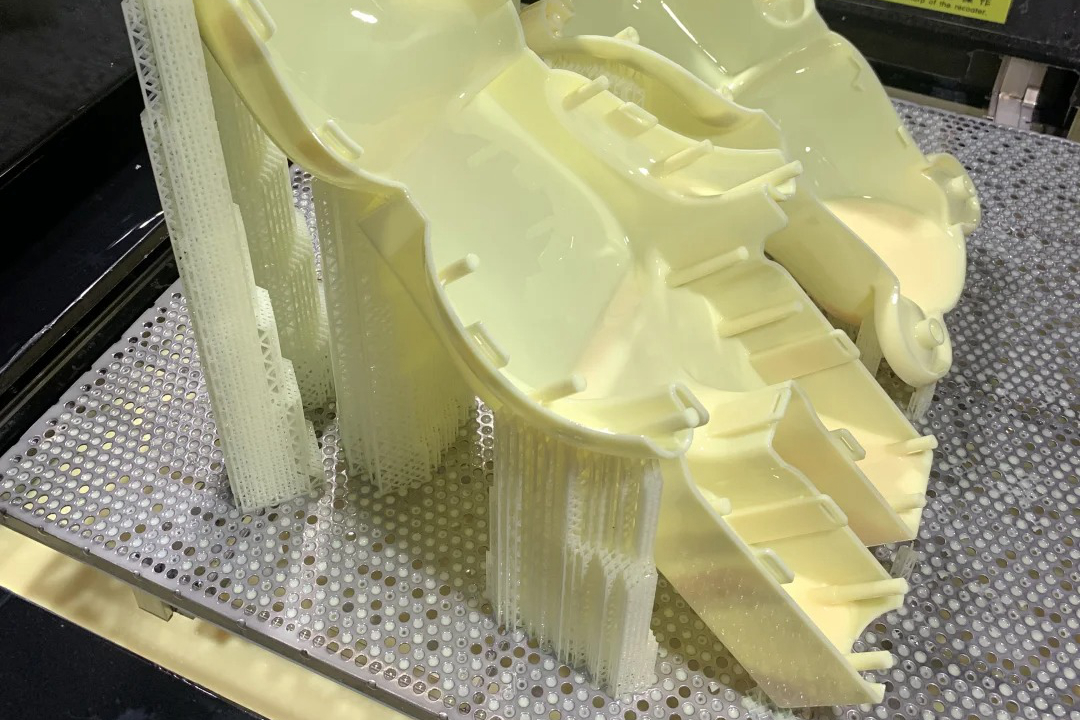
Conductive filament for 3D printing is a specialized thermoplastic composite engineered to enable electrical conductivity while maintaining the processability of standard additive manufacturing materials. These filaments are typically formulated by blending polymers such as PLA, ABS, PETG, or PC with conductive modifiers like carbon black, graphene, carbon nanotubes, or metal powders. Their unique electrical properties allow the creation of functional components, including sensor housings, low-voltage circuits, EMI shielding parts, wearable electronics, and interactive prototypes. When combined with Neway’s industrial plastic 3D printing capabilities, conductive filaments produce precise, dimensionally stable parts suitable for engineering verification, functional testing, and emerging smart-device applications.
When conductive filaments do not meet specific electrical, thermal, or mechanical requirements, several alternative materials can be chosen. For higher structural performance or increased heat resistance, PC or PEEK can be paired with conductive coatings instead of built-in conductivity. For wearable electronics or strain sensors that require flexibility, TPU with conductive additives offers a softer and more elastic solution. For applications requiring improved chemical resistance or mechanical durability, nylon composites with metallic or carbon-based fillers are preferred. When electrical conductivity must be extremely high, post-processing methods such as electroplating on standard resins may outperform conductive filaments. For highly sensitive components or RF applications, metal 3D printing such as superalloy 3D printing offers superior electrical and thermal transport properties.
Country/Region | Typical Designation | Representative Conductive Grades | Notes |
Global | Conductive PLA / ABS / PETG / PC | Carbon black PLA, Graphene PLA, CNT ABS | Most common class for desktop and industrial prototyping. |
USA (ASTM) | ESD-safe filament | ESD PLA, ESD ABS, ESD PC | Specialized for electronics safety and static control. |
Europe (EN) | Conductive polymer composites | Carbon-loaded PA, PC composites | Used for EMI shielding and industrial electronics. |
Japan (JIS) | Antistatic / Conductive polymer | High-purity CNT conductive plastics | Emphasis on uniform conductivity and surface quality. |
China (GB/T) | Conductive functional material | Carbon black PLA, conductive PETG | Growing adoption in electronics prototyping and teaching labs. |
3D Printing Category | Conductive filament | Graphene, CNT, metal-powder loaded filaments | An expanding group with varying electrical performance levels. |
Conductive filament was designed to enable 3D printed parts that combine structural functionality with electrical performance in a single manufacturing step. Its purpose is to allow engineers to prototype or manufacture components that require static dissipation, signal transmission, low-power conduction, or electromagnetic shielding without resorting to multi-material assembly. By incorporating conductive additives directly into the polymer matrix, the material enables rapid iteration of circuits, sensors, and embedded electronic pathways. It also supports custom-shaped housings for IoT devices, integrated conductive channels, and touch-sensitive interfaces. The design intent is to reduce production time, simplify assembly, and unlock new concepts in smart product development.
Component | Description | Typical Level |
Base polymer | PLA, ABS, PETG, PC, nylon, or custom blends | 65–90% |
Carbon black or graphite | Primary conductivity source for ESD filaments | 5–20% |
Graphene or carbon nanotubes | High-efficiency conductive modifier | 1–10% |
Metal powder (optional) | Copper, nickel, or stainless micro-powders | 0–25% |
Processing additives | Improves flow, prevents agglomeration | 0.5–3% |
Property | Typical Value | Notes |
Density | 1.15–1.30 g/cm³ | Higher than standard polymers due to fillers. |
Volume Resistivity | 10²–10⁵ Ω·cm | Depends on filler type and loading. |
Heat Deflection Temperature | 60–120°C | Varies significantly by base polymer. |
Thermal Expansion | 45–110 µm/m·°C | Carbon-filled grades exhibit lower expansion. |
Water Absorption | 0.1–0.8% | Nylon-based conductive filaments absorb more moisture. |
Property | Typical Value (Printed) | Notes |
Tensile Strength | 25–55 MPa | Lower than pure polymers due to fillers. |
Tensile Modulus | 1.2–2.5 GPa | Depends on base polymer stiffness. |
Elongation at Break | 1–8% | Carbon fillers reduce ductility. |
Impact Strength | Moderate | Typically lower than PC or nylon. |
Hardness | Shore D 65–80 | Higher filler content increases surface hardness. |
Provides measurable electrical conductivity for low-voltage circuits, sensors, and ESD-safe components.
Compatible with Neway’s plastic 3D printing systems for accurate functional prototyping.
Enables customized conductive pathways embedded directly into 3D printed geometries.
Suitable for antennas, EMI shielding components, and sensor housings that require conductivity.
Supports wearable electronics, IoT devices, and smart hardware development.
Offers tunable conductivity depending on filler loading and polymer matrix.
Maintains reasonable thermal stability, depending on the base polymer used.
Allows for the rapid testing of circuit concepts without the use of metal wires or soldering.
Can be combined with specialty plastics for hybrid functional structures.
Useful for prototyping switches, capacitive touch interfaces, and resistive sensors.
Fused filament printing of conductive materials requires hardened nozzles due to the abrasive nature of carbon additives.
Print temperatures vary widely based on the base polymer, ranging from 190°C to 290°C.
Flow rate and extrusion settings must be carefully tuned to prevent clogging from filler agglomerations.
For functional conductivity, higher infill percentages and aligned printing directions are beneficial.
Conductive PETG and ABS offer improved layer adhesion compared to conductive PLA.
Moisture-sensitive grades such as nylon-based filaments require thorough drying before printing.
PC-based conductive filaments offer higher heat resistance but require enclosed printers.
Machining of conductive printed parts is possible, although abrasive fillers wear tools more quickly.
Compatible with insert placement, enabling the creation of hybrid electronic structures.
Can be combined with carbon-fiber reinforced filaments to improve stiffness without eliminating conductivity.
Sanding and mechanical finishing improve surface quality but should be done gently to avoid altering conductive paths.
The painting or coating must be selected carefully to avoid insulating the conductive surface, unless this is intentionally desired.
Electroplating on printed conductive parts is possible when enhanced conductivity or a metal appearance is needed.
Heat treatment helps reduce residual stresses and improve dimensional stability.
Conductive adhesives facilitate integration into electronic assemblies without the need for soldering.
Laser marking provides durable identification without affecting electrical performance.
Embedding metal inserts allows mechanically robust electrical connections.
Application of conductive coatings increases surface conductivity for more demanding circuits.
Vapor smoothing is generally not recommended, as it may degrade conductive surfaces.
Electronics and IoT devices: printed circuits, contact points, and housing-integrated conductive features.
Aerospace and aviation: sensor mounts and conductive components for aerospace systems.
Automotive: ESD-safe fixtures and electronic interfaces in the automotive sector.
Energy and industrial equipment: signal transfer pathways within energy and power generation facilities.
Industrial automation: contact pads, conductive grippers, and EMI-shielded components.
Wearable electronics: flexible conductive networks for smart clothing and sensors.
When rapid prototyping of electrical or sensing components is required without metal fabrication.
When building custom-shaped low-voltage circuits, touch sensors, or interactive interfaces.
When developing IoT devices that require integrated conductive pathways and optimized housings.
When static dissipation or ESD safety is needed in assembly fixtures or electronic packaging.
Combining electrical and mechanical functionality reduces assembly time and part count.
When prototyping antennas or EMI shielding components on unconventional geometries.
When needing moderate conductivity but retaining printability similar to standard filaments.
When validating conceptual circuits prior to PCB fabrication or full electronic integration.
When Neway’s 3D printing service is used to iterate quickly on smart-device designs.