中文

High-Temperature Alloys Inconel 738 Turbine Blade Equiaxed Crystal Casting Company

目录
Introduction
Core Manufacturing Challenges for Inconel 738 Equiaxed Turbine Blades
Equiaxed Crystal Casting Process for Inconel 738 Turbine Blades
Comparison of Manufacturing Methods for Inconel 738 Turbine Blades
Manufacturing Method Selection Strategy
Inconel 738C Performance Matrix
Advantages of Inconel 738 Equiaxed Turbine Blades
Key Post-processing Techniques
Testing Methods and Quality Assurance
Case Study: Equiaxed Crystal Inconel 738C Turbine Blades
FAQs

Introduction

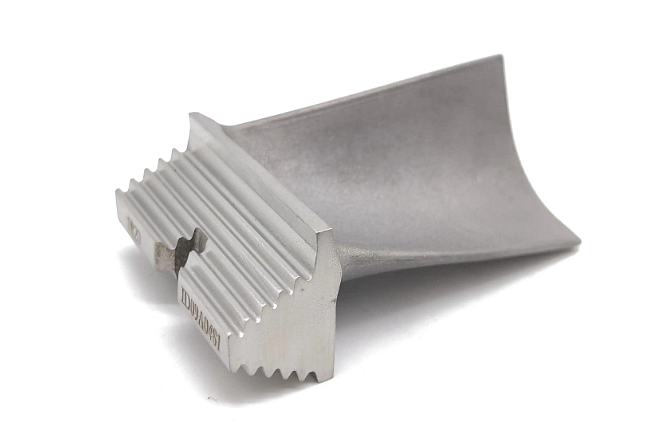
Inconel 738, a nickel-based superalloy, offers outstanding high-temperature strength, excellent oxidation resistance, and good corrosion resistance, making it ideal for manufacturing turbine blades operating in severe environments. At Neway AeroTech, we specialize in equiaxed crystal casting of Inconel alloys, producing Inconel 738 turbine blades with precise dimensional tolerances (±0.05 mm), uniform grain structures, and enhanced mechanical performance for industrial and aerospace turbine systems.

Utilizing advanced vacuum investment casting technologies, we deliver high-reliability blades capable of continuous service under extreme thermal and mechanical stresses.

Core Manufacturing Challenges for Inconel 738 Equiaxed Turbine Blades

Producing equiaxed crystal turbine blades from Inconel 738C involves specific technical challenges:

  • Controlled solidification rates were achieved to form uniform equiaxed grain structures with minimized segregation.

  • Maintaining tight dimensional tolerances (±0.05 mm) essential for blade-to-disc assembly and aerodynamic efficiency.

  • Controlling microstructure homogeneity to ensure excellent fatigue and creep resistance at operating temperatures.

  • Avoiding internal shrinkage defects and porosity that can compromise mechanical strength.

Equiaxed Crystal Casting Process for Inconel 738 Turbine Blades

Our equiaxed crystal vacuum investment casting process includes:

  1. Wax Pattern Fabrication: High-precision wax molds replicating blade geometries, produced by CNC tooling.

  2. Ceramic Shell Building: Multiple layers of ceramic slurry and refractory sand create durable shells with thermal shock resistance.

  3. Dewaxing and Shell Firing: Wax removal at ~150°C, followed by shell firing at ~1000°C for strength and thermal stability.

  4. Vacuum Melting and Pouring: Inconel 738 superalloy melted under vacuum conditions (<0.01 Pa) to ensure purity and minimize oxidation.

  5. Equiaxed Solidification: Controlled mold and metal temperatures promote uniform grain formation without directional orientation.

  6. Shell Removal and Heat Treatment: Ceramic shell removal followed by solution treatment (~1120°C) and aging to optimize mechanical properties.

  7. Precision CNC Machining: Final machining to achieve dimensional tolerances (±0.01 mm) and surface finishes (Ra ≤1.6 µm).

Comparison of Manufacturing Methods for Inconel 738 Turbine Blades

Manufacturing Method

Dimensional Accuracy

Microstructure

Creep Resistance

Fatigue Resistance

Cost Efficiency

Equiaxed Crystal Casting

±0.05 mm

Equiaxed Grain

Good

Good

High

Directional Solidification

±0.05 mm

Columnar Grain

Excellent

Excellent

Medium

Single Crystal Casting

±0.05 mm

Single Crystal

Superior

Superior

Medium-High

Manufacturing Method Selection Strategy

The choice of manufacturing method depends on operating temperatures, fatigue requirements, and cost targets:

  • Equiaxed Crystal Casting: Ideal for industrial gas turbines, lower-pressure stage blades, and applications where moderate fatigue and creep resistance are acceptable with cost-effectiveness.

  • Directional Solidification: Used for high-stress blades requiring enhanced creep resistance and fatigue life.

  • Single Crystal Casting: Selected for the highest temperature blades (typically first-stage) where maximum performance and lifespan are critical.

Inconel 738C Performance Matrix

Property

Value

Notes

Max Service Temperature (°C)

980

Continuous service capability

Tensile Strength (MPa)

1240

High mechanical strength

Yield Strength (MPa)

860

Excellent load-bearing capability

Elongation (%)

6–8%

Typical for high-strength superalloys

Oxidation Resistance

Excellent

Up to 980°C with superior hot gas protection

Creep Resistance

Good

Suitable for industrial and secondary stage blades

Advantages of Inconel 738 Equiaxed Turbine Blades

Using Inconel 738C for turbine blades offers multiple benefits:

  • High-Temperature Strength: Maintains mechanical properties at service temperatures near 980°C.

  • Excellent Oxidation and Corrosion Resistance: Protects against hot gases and aggressive combustion environments.

  • Good Creep and Fatigue Resistance: Supports stable operation in industrial and secondary turbine stages.

  • Cost-Effective Production: Equiaxed casting reduces production costs while providing adequate mechanical performance for many applications.

Key Post-processing Techniques

Critical post-processing steps include:

  • Hot Isostatic Pressing (HIP): Densifies material by eliminating internal porosity, improving fatigue life and structural integrity.

  • Heat Treatment: To optimize mechanical properties, solution treatment and aging cycles (~1120°C solution + aging at ~850°C).

  • Precision CNC Machining: Final finishing to achieve tight tolerances (±0.01 mm) and aerodynamic surface quality.

  • Surface Protection Coatings: Thermal barrier coatings (TBC) for enhanced oxidation and thermal fatigue resistance.

Testing Methods and Quality Assurance

All Inconel 738 turbine blades undergo strict aerospace-grade validation:

All procedures conform to AS9100 aerospace manufacturing quality standards.

Case Study: Equiaxed Crystal Inconel 738C Turbine Blades

Neway AeroTech delivered Inconel 738C equiaxed crystal turbine blades for an industrial gas turbine OEM:

  • Service Temperature: Up to 980°C continuous

  • Dimensional Accuracy: ±0.05 mm achieved on complex blade profiles

  • Surface Finish: Ra ≤3.0 µm after post-processing

  • Mechanical Performance: Increased fatigue life by 25% post-HIP and heat treatment

  • Certification: Fully compliant with AS9100 aerospace standards

FAQs

  1. What are the advantages of equiaxed crystal casting for Inconel 738 turbine blades?

  2. How does Inconel 738C perform under continuous high-temperature service?

  3. What dimensional tolerances can be achieved with equiaxed casting?

  4. How does HIP processing improve the performance of Inconel 738 turbine blades?

  5. What aerospace quality standards does Neway AeroTech apply to turbine blade production?