
Application du revêtement barrière thermique par plasma sur les aubes d'aviation
Introduction
Les aubes de turbine d'aviation modernes sont exposées à des températures de gaz de combustion dépassant 1100°C, bien au-dessus des points de fusion même des superalliages avancés comme le CMSX-4, le PWA 1484 et le Rene N5. Pour assurer une durabilité à long terme, une résistance à l'oxydation et l'efficacité du moteur, ces aubes sont protégées à l'aide de revêtements barrières thermiques appliqués par plasma (TBC). Cette technologie permet aux moteurs de fonctionner à des températures d'entrée de turbine (TIT) plus élevées, augmentant le rapport poussée/poids et réduisant la consommation spécifique de carburant.
En tant que fournisseur spécialisé de revêtements aérospatiaux, nous appliquons des TBC haute performance sur des aubes de turbine monocristallines et à solidification dirigée, garantissant la conformité aux spécifications de revêtement des constructeurs et aux exigences de performance thermique.
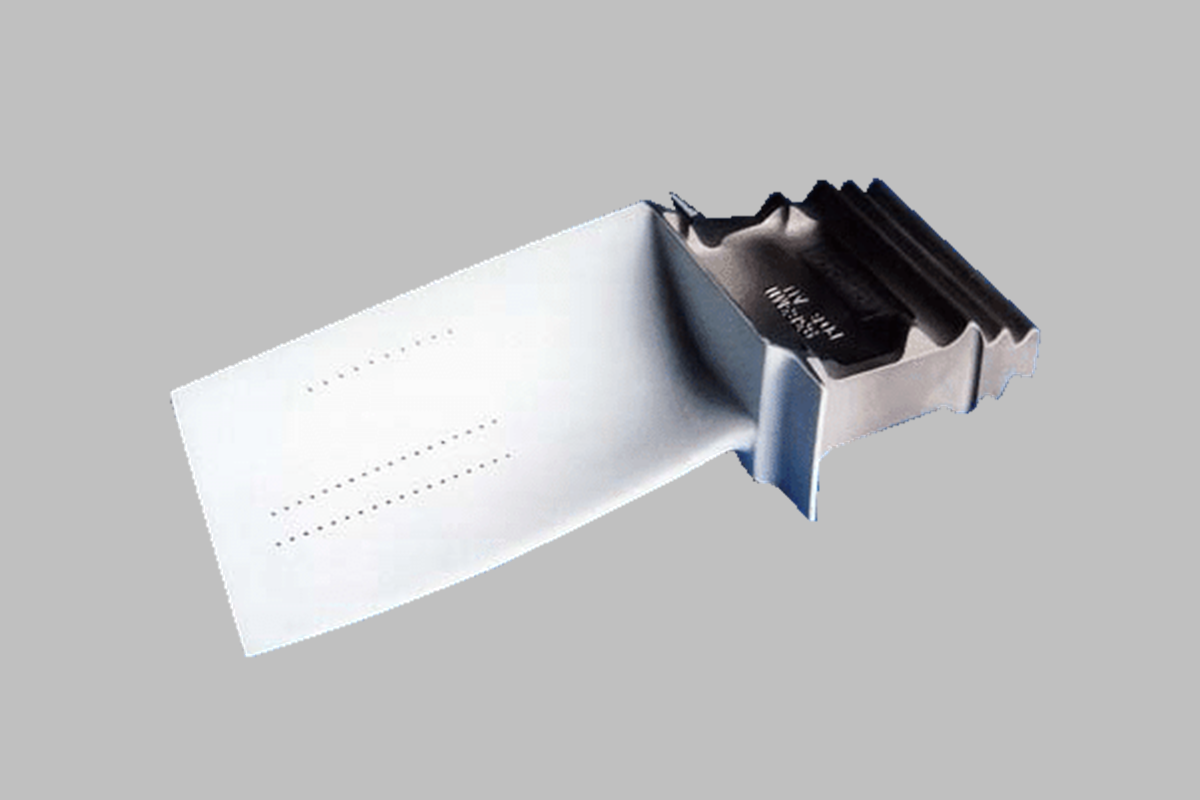
Pourquoi le TBC par plasma est essentiel pour les aubes d'aviation
Les aubes de turbine d'aviation subissent :
Des températures d'entrée de turbine (TIT) supérieures à 1100°C
Une fatigue thermique due aux cycles répétés de démarrage-arrêt
Une oxydation et une corrosion à chaud dues aux mélanges air-carburant brûlés
Une fatigue à grand nombre de cycles (HCF) et une déformation par fluage
Les TBC appliqués par projection plasma réduisent les températures de surface de 100 à 200°C, protégeant le substrat contre l'oxydation et retardant l'apparition de défaillances par fluage et fatigue.
Architecture du système TBC
Couche | Matériau | Fonction |
|---|---|---|
Couche de liaison | NiCrAlY ou PtAl (via HVOF ou plasma) | Améliore l'adhérence et la résistance à l'oxydation |
Couche supérieure | Zircone stabilisée à l'yttria (YSZ) à 7–8 % en poids | Fournit une isolation thermique et une compliance aux déformations |
L'épaisseur totale varie généralement entre 200 et 350 μm, optimisée selon la géométrie de l'aube et les exigences du constructeur.
Substrats compatibles pour le TBC par plasma
Nous revêtons une gamme d'aubes d'aviation en superalliages SX et DS, notamment :
CMSX-4 – Aubes de turbine de premier étage dans les moteurs GE, Rolls-Royce et Safran
PWA 1484 – Utilisé dans les moteurs F119/F135 et les turbofans haute performance
Rene N5/N6 – Appliqué dans les aubes de section chaude militaires et commerciales
IN738LC / Rene 80 – Aubes coulées utilisées dans les unités auxiliaires et les conceptions de turbine de première génération
Chaque substrat subit une préparation de surface rigoureuse, garantissant une adhérence optimale et une compatibilité microstructurale.
Processus d'application du TBC par plasma
1. Préparation de surface
Les aubes sont sablées et nettoyées pour éliminer l'oxydation et les contaminants.
La rugosité de surface est contrôlée pour l'adhérence de la couche de liaison.
2. Dépôt de la couche de liaison
Les couches de liaison NiCrAlY ou PtAl sont appliquées par HVOF ou projection plasma à basse pression (LPPS).
Épaisseur de la couche de liaison : 75–125 μm.
3. Application de la couche supérieure YSZ
L'YSZ est déposée par Projection Plasma Atmosphérique (APS) ou Dépôt Physique en Phase Vapeur par Faisceau d'Électrons (EB-PVD).
La structure du revêtement est optimisée pour la tolérance aux déformations et une faible conductivité thermique.
4. Conditionnement post-revêtement
Un traitement thermique ou un scellement peut être appliqué pour améliorer la résistance à l'écaillage et correspondre au comportement en cyclage thermique du moteur.
Principaux avantages du TBC par plasma pour les aubes d'aviation
Avantage | Description |
|---|---|
Isolation thermique | Réduit la température du métal jusqu'à 200°C |
Résistance au fluage | Retarde l'adoucissement et la déformation du matériau sous chaleur continue |
Protection contre l'oxydation | Limite la croissance de l'oxyde thermique (TGO) et la formation de calamine lors d'une utilisation prolongée à haute température |
Durée de vie en fatigue thermique | Améliore la résistance à la fissuration sous cyclage thermique chauffage-refroidissement |
Efficacité du moteur | Permet des TIT plus élevées et réduit la consommation de carburant par unité de poussée |
Normes et validation des revêtements aérospatiaux
Nos revêtements sont appliqués et testés pour répondre aux spécifications des constructeurs de moteurs et de l'aérospatial :
GE C50TF26
PWA 36945
Rolls-Royce RPS 661
ASTM C633 (Test d'adhérence)
SAE AMS 4981/4984 (Alliages de base)
Les tests incluent :
Mesure de l'épaisseur du revêtement (±10 μm)
Test de choc thermique (jusqu'à 1000 cycles à 1150°C)
Analyse de microstructure par MEB
Caractérisation de la croissance du TGO
Résistance à l'adhérence ≥30 MPa
Exemples d'application
Aubes GE9X CMSX-4 : TBC EB-PVD appliqué pour la stabilité en cyclage thermique dans les moteurs commerciaux à très haut taux de dilution
Aubes F135 PWA 1484 : TBC APS utilisé pour répondre aux exigences de préparation opérationnelle dans les avions militaires furtifs
Aubes directrices Trent 1000 CMSX-4 : Revêtements céramiques à haute adhérence pour une durabilité améliorée dans les avions long-courriers
Aubes HPT CF6-80C2 (Rene N5) : Les systèmes barrières thermiques permettent des programmes de mise à niveau de moteurs existants
FAQ
Quelle est l'épaisseur typique du TBC appliqué par plasma pour les aubes d'aviation ?
Comment l'APS se compare-t-il à l'EB-PVD en termes de résistance à la fatigue thermique ?
Le TBC peut-il être réappliqué après la rénovation ou la révision d'une aube ?
Quels sont les signes de défaillance du TBC pendant le fonctionnement du moteur ?
Combien de temps les aubes revêtues de TBC peuvent-elles fonctionner à 1150–1200°C ?
