Quinta generación
Introducción al material
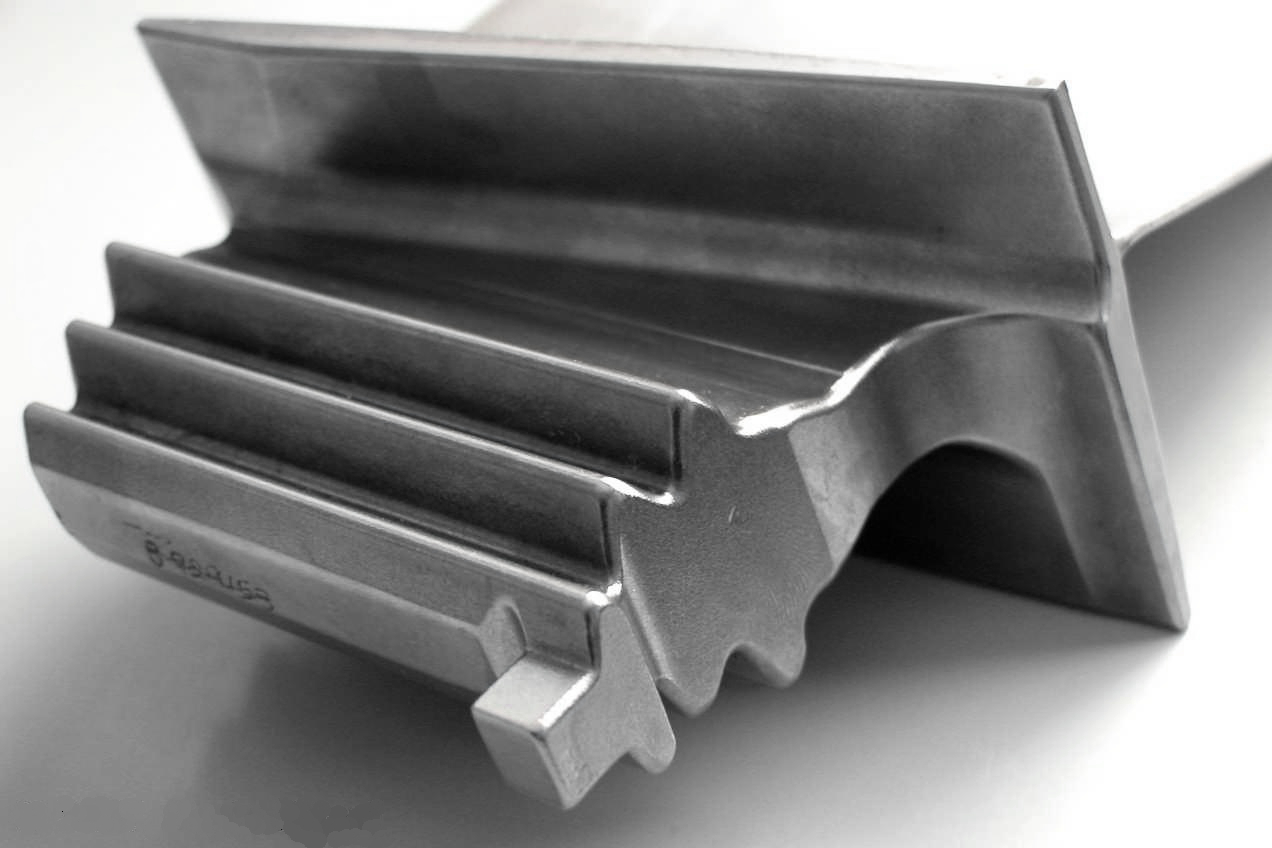
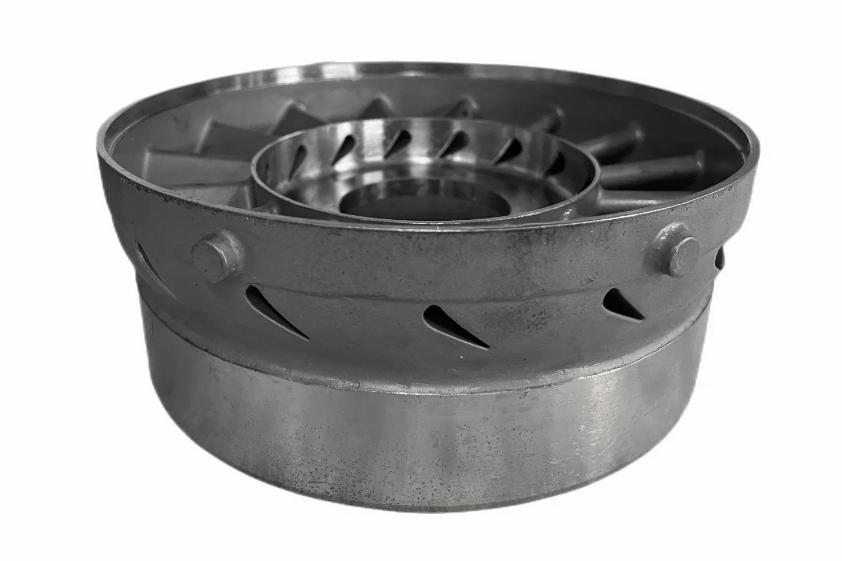
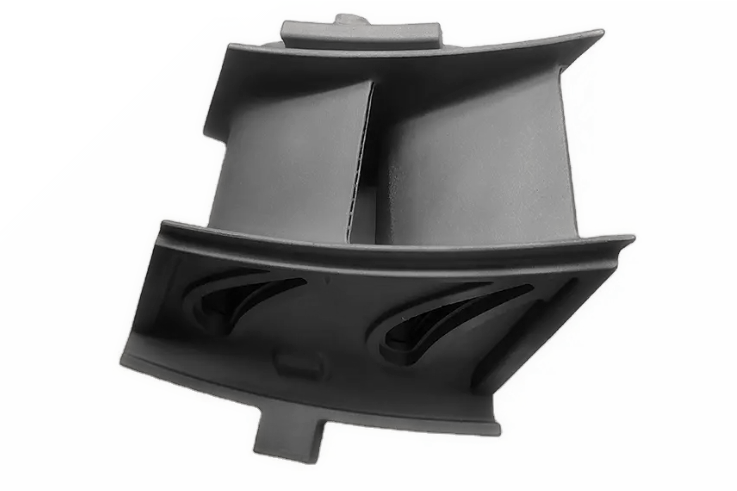
Las superaleaciones monocristalinas de quinta generación representan la clase más avanzada de materiales basados en níquel actualmente desplegados o en evaluación para aplicaciones de turbinas a ultra alta temperatura. Desarrolladas para soportar temperaturas de entrada a la turbina aún más elevadas, objetivos de emisiones más estrictos e intervalos de servicio extendidos, estas aleaciones se producen mediante rutas de fundición monocristalina de quinta generación altamente controladas que gestionan rigurosamente la orientación cristalina, los gradientes térmicos y la segregación. Las composiciones químicas combinan típicamente contenidos elevados de renio y rutenio con niveles optimizados de tántalo, wolframio y molibdeno para estabilizar la microestructura γ/γ′ y suprimir la formación de fases TCP bajo condiciones de operación extremas. Aprovechando las plataformas avanzadas de fundición a la cera perdida al vacío, la tecnología de precisión de núcleos y carcasas, y el monitoreo riguroso de procesos de Neway AeroTech, los componentes monocristalinos de quinta generación logran una integridad estructural y una reproducibilidad excepcionales. Cuando se integran con tratamientos térmicos adaptados, densificación por HIP y sistemas de vanguardia de recubrimiento de barrera térmica, estas aleaciones permiten un rendimiento sin precedentes en la sección caliente de motores aeroespaciales y turbinas de generación de energía de próxima generación.
Opciones alternativas de materiales
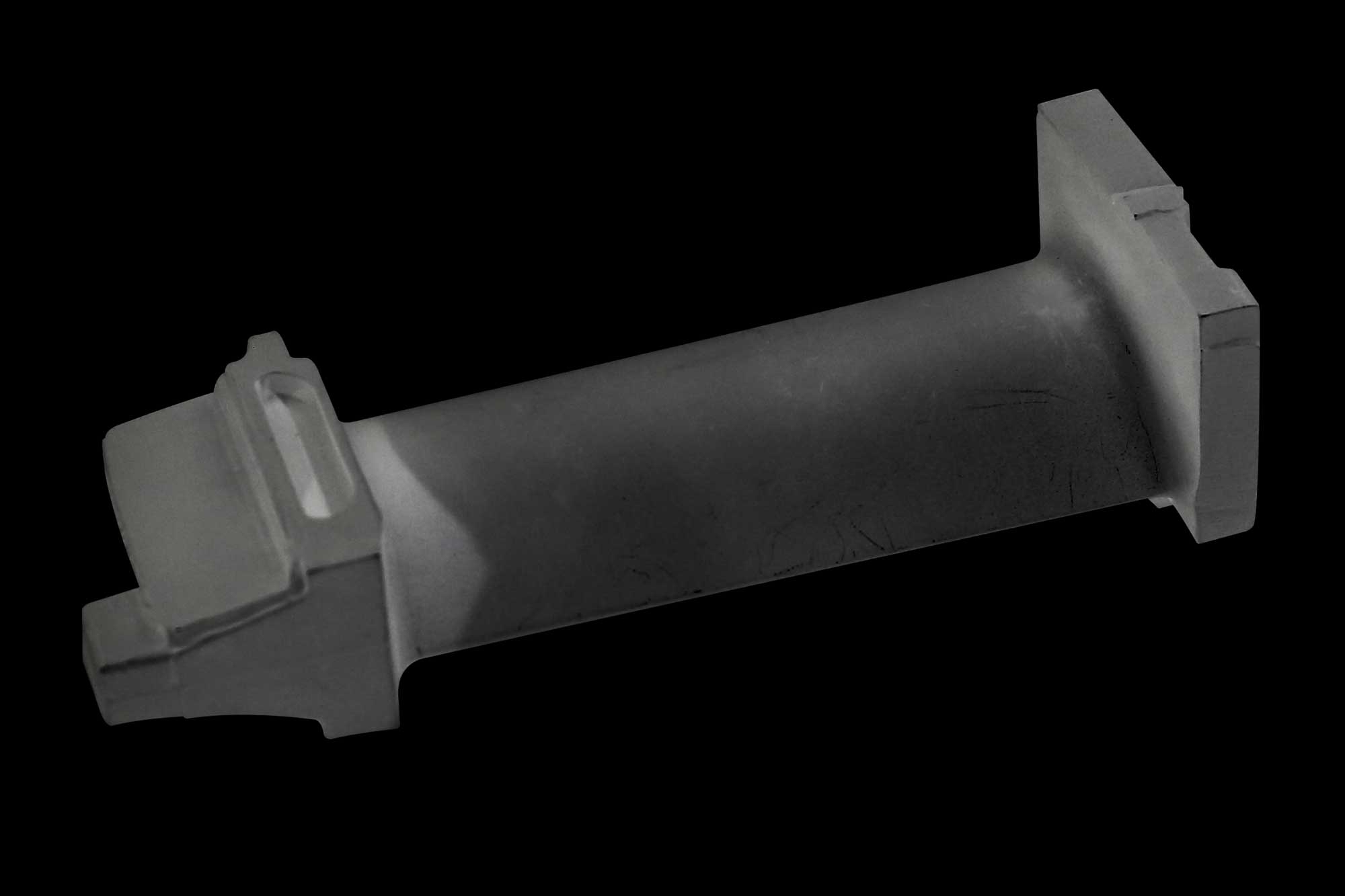
Si bien las aleaciones monocristalinas de quinta generación ofrecen una capacidad a alta temperatura inigualable, su selección debe equilibrarse con el costo, la fabricabilidad y la estrategia de flota. Para motores de alto rendimiento donde las temperaturas de combustión permanecen ligeramente más bajas, las aleaciones monocristalinas de cuarta generación ofrecen una solución probada con una complejidad de aleación algo reducida. Muchas plataformas de producción actuales continúan dependiendo de sistemas monocristalinos de tercera y segunda generación donde se cumplen plenamente los objetivos de vida útil y eficiencia. En segmentos donde la tecnología monocristalina no es obligatoria, la fundición direccional y la fundición de cristales equiaxiales de superaleaciones basadas en níquel y cobalto proporcionan un rendimiento robusto en la sección caliente a menor costo. Para discos rotativos y componentes de sección pesada, los discos de turbina de metalurgia de polvos como FGH96 y FGH97 siguen siendo la opción preferida. Durante la exploración del diseño, la optimización del enfriamiento y la reducción de riesgos, la impresión 3D de superaleaciones permite una iteración rápida antes de comprometerse con el utillaje de producción en serie de quinta generación.
Equivalente internacional / Grado comparable
País/Región | Aleaciones SC ultraavanzadas / de quinta generación representativas | Sistemas comerciales / de desarrollo específicos | Notas |
Japón | Familia TMS de siguiente paso (más allá de TMS-196 / TMS-238) | Aleaciones ricas en Ru–Re dirigidas a TIT ultra altos con mejor resistencia a TCP y compatibilidad con recubrimientos. | |
EE. UU. | Conceptos avanzados Rene y PWA | Utilizados como líneas base y puntos de partida para desarrollos propietarios de quinta generación en motores aeroespaciales. | |
Europa | Serie CMSX avanzada | CMSX-486 y derivados CMSX de mayor especificación | Conceptos con rutenio dirigidos a aumentar las temperaturas de combustión y extender los intervalos de revisión en turbinas de gran marco. |
China | Series DD y SC de próxima generación | Aleaciones SC de alto rendimiento adaptadas para turbinas de gas aeroespaciales e industriales avanzadas con objetivos agresivos de TIT. | |
Práctica global de OEM | Mezclas propietarias de quinta generación | Variantes específicas de OEM derivadas de las familias Rene, CMSX, TMS y PWA | Composiciones químicas personalizadas optimizadas para ciclos de trabajo específicos del motor, recubrimientos y políticas de gestión de vida útil. |
Propósito de diseño
Las superaleaciones monocristalinas de quinta generación se desarrollaron para permitir el siguiente salto en la eficiencia y la densidad de potencia de las turbinas, soportando temperaturas de combustión aún más altas, parámetros de ciclo más agresivos y vidas útiles de componentes más largas en comparación con las generaciones anteriores. La filosofía de diseño se centra en estabilizar la microestructura γ/γ′ contra el engrosamiento y la formación de balsas, suprimir las fases TCP y preservar la compatibilidad con recubrimientos bajo exposición a largo plazo a temperaturas metálicas extremas. Los niveles elevados de rutenio y renio, junto con contenidos cuidadosamente ajustados de tántalo, wolframio y molibdeno, permiten que estas aleaciones ofrezcan un rendimiento excepcional de ruptura por fluencia y resistencia a la fatiga termomecánica. Cuando se combinan con arquitecturas avanzadas de refrigeración interna y recubrimientos de barrera térmica multicapa, las aleaciones de quinta generación ayudan a los OEM a lograr ambiciosas reducciones en el consumo de combustible, objetivos de emisiones y requisitos de disponibilidad en motores aeroespaciales, turbinas de generación de energía de próxima generación y sistemas de propulsión de alta gama para defensa y militares.
Composición química
Elemento | Níquel (Ni) | Cobalto (Co) | Cromo (Cr) | Aluminio (Al) | Tántalo (Ta) | Wolframio (W) | Molibdeno (Mo) | Renio (Re) | Rutenio (Ru) | Otros (Hf, Ti, etc.) |
Composición típica (%) | Resto | 3.0–9.0 | 1.0–4.0 | 5.0–6.5 | 4.0–8.0 | 4.0–8.0 | 0.5–3.0 | 5.0–7.0 | 3.0–5.0 | 0.1–1.5 (cada uno) |
Propiedades físicas
Propiedad | Densidad | Rango Sólidus–Líquidus | Conductividad térmica (RT) | Expansión térmica | Calor específico (RT) |
Valor | ~8.8–9.3 g/cm³ | ~1270–1340°C | ~7–10 W/m·K | ~12–15 µm/m·°C | ~400–500 J/kg·K |
Propiedades mecánicas
Propiedad | Resistencia a la tracción (RT) | Límite elástico (RT) | Alargamiento (RT) | Resistencia a la ruptura por fluencia | Dureza |
Valor | ~950–1200 MPa | ~750–1000 MPa | ~3–6% | ~200–300 MPa a 1080–1120°C / 1000 h (dependiente de la aleación) | ~36–48 HRC después del tratamiento térmico completo |
Características clave del material
La microestructura monocristalina elimina los límites de grano, eliminando virtualmente los modos de fallo por fluencia en límites de grano y oxidación intergranular.
La química rica en Ru–Re proporciona una resistencia a la fluencia a temperaturas excepcionalmente altas y suprime la formación perjudicial de fases TCP.
Microestructura γ/γ′ altamente estable bajo exposición prolongada a temperaturas metálicas ultra altas.
Compatibilidad sobresaliente con sistemas avanzados de recubrimiento de barrera térmica diseñados para los entornos de combustión más severos.
Excelente resistencia a la fatiga termomecánica y a cargas transitorias severas en regímenes exigentes de arranque-parada y carga pico.
Optimizado para arquitecturas complejas de refrigeración interna realizadas mediante fundición a la cera perdida al vacío de precisión y tecnologías avanzadas de núcleos.
Permite temperaturas de entrada a la turbina más allá de los límites prácticos de las aleaciones de segunda, tercera y muchas de cuarta generación.
Compatible con el procesamiento HIP para cerrar la porosidad interna y mejorar el rendimiento frente a la fatiga.
Soporta mejoras significativas en la eficiencia del ciclo del motor, el consumo de combustible y las emisiones de CO₂ por unidad de potencia o empuje.
Proporciona una plataforma orientada al futuro para iteraciones futuras de aleaciones y arquitecturas de motores avanzados.
Fabricabilidad y posprocesamiento
Fundición monocristalina de quinta generación: Requiere un control extremadamente estricto de los gradientes térmicos, las velocidades de extracción y el diseño del molde para prevenir pecas, granos extraños y recristalización.
Fundición a la cera perdida al vacío: Proporciona alta limpieza de la aleación, baja captación de gases y reproducción precisa de geometrías intrincadas de perfiles aerodinámicos y cubiertas.
Tecnología de núcleos y carcasas cerámicas: Los núcleos avanzados permiten canales serpentinos complejos y cavidades de impacto, mientras que las carcasas están optimizadas para la estabilidad térmica y la interacción controlada entre el metal y el molde.
Posprocesamiento: La eliminación de compuertas, el mezclado y la restauración dimensional preceden al mecanizado de precisión y la aplicación de recubrimientos.
Mecanizado CNC de superaleaciones: Acaba las formas de raíz, los perfiles de cola de milano/diente de sierra y las superficies de unión con tolerancias estrechas y alta calidad superficial.
Mecanizado por electroerosión (EDM): Produce orificios de refrigeración intrincados y orificios conformados con capas de refundición controladas y daño térmico mínimo.
Taladrado profundo de superaleaciones: Crea canales internos largos y pasajes de alimentación con excelente rectitud y acabado superficial.
Prensado isostático en caliente (HIP): Consolida la porosidad por contracción y los defectos internos, mejorando la resistencia a la fatiga de bajo ciclo y la tolerancia al daño.
Tratamiento térmico: Los ciclos de solubilización y envejecimiento de múltiples pasos se ajustan cuidadosamente a cada química de quinta generación para optimizar la morfología γ/γ′ y aliviar la tensión residual.
Ensayos y análisis de materiales: Los ensayos no destructivos (NDT) integrales, las pruebas mecánicas y la evaluación microestructural sustentan los modelos de predicción de vida útil y el aseguramiento de la calidad para componentes críticos para la seguridad.
Tecnologías de reparación: Estrategias cualificadas de soldadura, brasado y recapado pueden extender la vida útil del componente cuando se llevan a cabo dentro de los límites del OEM y son seguidas por el retratamiento térmico apropiado.
Tratamientos superficiales y recubrimientos adecuados
Recubrimientos de barrera térmica de próxima generación: Sistemas cerámicos multicapa con capas de unión altamente ingenierizadas para soportar temperaturas de gas extremas y ciclos térmicos.
Capas de unión avanzadas MCrAlY y aluminuros: Adaptadas a aleaciones ricas en Ru–Re para una resistencia superior a la oxidación y corrosión en caliente.
Recubrimientos de superposición y difusión: Personalizados para manejar especies corrosivas comunes en combustibles de petróleo y gas, marinos e industriales.
Taladrado láser y texturizado superficial: Mejora el rendimiento de los orificios de refrigeración y mejora la adherencia del recubrimiento alrededor de las salidas de refrigeración por película.
Pulido y acondicionamiento de la trayectoria de gas: Reduce las pérdidas aerodinámicas y gestiona las concentraciones de tensión del recubrimiento en turbinas de generación de energía y aeroespaciales.
Inspección posterior al recubrimiento y análisis de materiales: Rayos X, TC y metalografía aseguran la integridad del recubrimiento y detectan la degradación temprana de la capa de unión o el desprendimiento.
Industrias y aplicaciones comunes
Álabes, paletas guías y cubiertas de turbina de alta presión en motores aeroespaciales insignia que buscan temperaturas de combustión y eficiencia máximas.
Turbinas de gas de generación de energía de próxima generación dirigidas a emisiones ultrabajas y un rendimiento de ciclo combinado de primera clase.
Sistemas de propulsión avanzados en el ámbito militar y de defensa, incluidas plataformas de alto empuje y alta maniobrabilidad.
Turbinas de accionamiento mecánico críticas que apoyan infraestructuras exigentes de petróleo y gas y energía con ciclos de trabajo extremos.
Motores demostradores y prototipos utilizados para validar futuras arquitecturas de turbinas y conceptos de operación a ultra alta temperatura.
Proyectos de actualización y extensión de vida útil donde los operadores buscan ganancias máximas de rendimiento preservando la fiabilidad y la disponibilidad.
Cuándo elegir este material
Temperaturas de combustión ultraextremas: Más adecuado cuando las temperaturas objetivo de entrada a la turbina exceden significativamente la capacidad de las aleaciones de cuarta generación.
Eficiencia máxima y ahorro de combustible: Ideal para programas donde el consumo de combustible, las emisiones y el costo del ciclo de vida son diferenciadores competitivos críticos.
Activos estratégicos y críticos para la seguridad: Recomendado para propulsión de defensa y activos de generación de energía de alto valor donde el riesgo de fallo debe minimizarse.
Perfiles aerodinámicos rotativos altamente cargados: Especialmente valioso para álabes de turbina de alta presión sujetos a tensiones centrífugas y térmicas extremas.
Entornos operativos hostiles: Preferido en aplicaciones con combustibles corrosivos o contaminantes que exigen una sinergia robusta entre aleación y recubrimiento.
Intervalos de mantenimiento largos: Soporta una vida útil de servicio extendida y una frecuencia reducida de paradas tanto en flotas aeroespaciales como industriales.
Plataformas líderes en tecnología: Seleccionado por OEMs que desarrollan arquitecturas de motores de próxima generación y buscan el máximo margen térmico y fiabilidad.
Diseño preparado para el futuro: Apropiado cuando se espera que los motores experimenten aumentos incrementales en la temperatura de combustión a lo largo de su ciclo de vida.
Explorar blogs relacionados