
Wasserpumpengehäuse Wachsausschmelzverfahren Dienstleistung
Einführung
Das Wachsausschmelzverfahren ist ideal für die Herstellung von Wasserpumpengehäusen, die komplexe Geometrien, strenge Maßgenauigkeit (±0,05 mm) und glatte Oberflächen (Ra ≤3,2 µm) erfordern. Bei Neway AeroTech gewährleisten unsere fortschrittlichen Gießfähigkeiten und spezialisierten Feingusstechniken eine optimale Leistung in anspruchsvollen Umgebungen, wie z. B. in der Schifffahrt, der Automobilindustrie und der Energieerzeugung.
Unsere präzisionsgegossenen Pumpengehäuse bieten robuste mechanische Eigenschaften (Zugfestigkeit bis zu 1200 MPa), hervorragende Korrosionsbeständigkeit und konstante Zuverlässigkeit unter Betriebsdrücken bis zu 50 MPa und Temperaturen von 600°C.
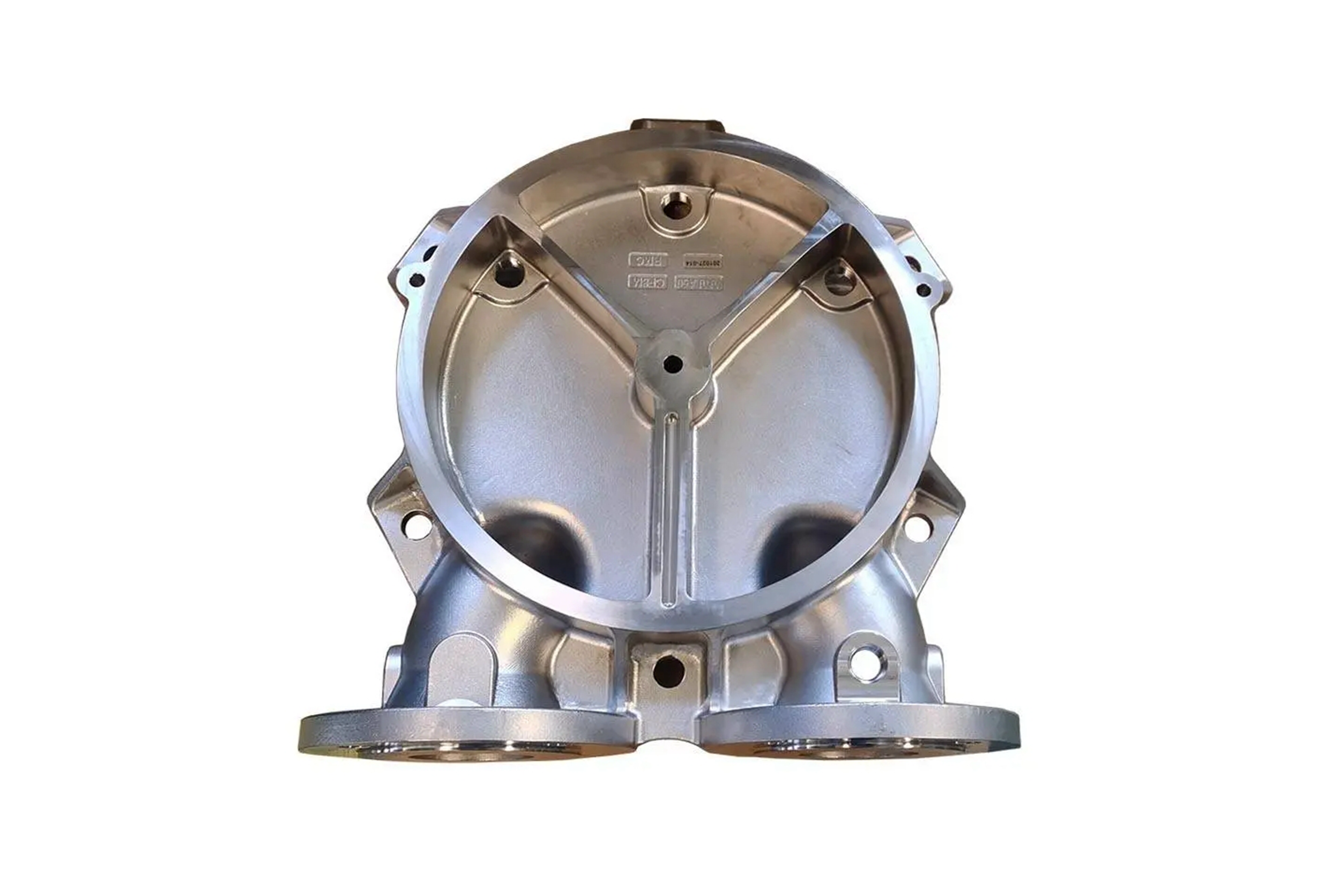
Kerntechnologie des Wachsausschmelzverfahrens
Präzise Wachsmodellerstellung: Wachsmodelle werden mit Toleranzen von ±0,03 mm präzise geformt, um die detaillierte Wiedergabe komplexer Gehäusegeometrien sicherzustellen.
Keramikschalenaufbau: Mehrere Keramikschlickerschichten (10–15 mm dick) werden aufgetragen, um robuste Formen zu schaffen, die hohen Gießtemperaturen standhalten.
Entwachsung: Die Formen werden auf etwa 250°C erhitzt, um das Wachs effektiv und ohne Verformung zu entfernen und feine geometrische Details zu bewahren.
Vakuumunterstütztes Gießen: Geschmolzene Legierung wird bei Temperaturen um 1550°C unter Vakuumbedingungen (<0,01 MPa Sauerstoff) eingegossen, um Oxidation und Porosität (<0,1 %) zu minimieren.
Schalenentfernung und Nachbearbeitung: Mechanische Schalenentfernung gefolgt von sorgfältiger Reinigung erzielt hervorragende Oberflächengüten von Ra ≤3,2 µm.
Kontrollierte Wärmebehandlung: Maßgeschneiderte Wärmebehandlung bei etwa 1050°C verbessert Zugfestigkeit, Ermüdungsbeständigkeit und Korrosionseigenschaften.
Materialeigenschaften für Wasserpumpengehäuse
Eigenschaft | Spezifikation |
|---|---|
Gängige Materialien | Edelstähle, Nickelbasislegierungen (Inconel 718), Titanlegierungen (Ti-6Al-4V) |
Zugfestigkeit | 800–1200 MPa |
Streckgrenze | ≥700 MPa |
Korrosionsbeständigkeit | Hervorragend in marinen und aggressiven Umgebungen |
Betriebstemperatur | Bis zu 600°C |
Druckstufe | Bis zu 50 MPa |
Maßgenauigkeit | ±0,05 mm |
Oberflächengüte | Ra ≤3,2 µm |
Fallstudie: Wasserpumpengehäuse Wachsausschmelzverfahren
Projekthintergrund
Ein globaler Pumpenhersteller benötigte präzisionsgefertigte Wasserpumpengehäuse, die marinen und industriellen Bedingungen mit Korrosion, hohen Drücken und schwankenden Temperaturen standhalten. Die Hauptziele waren das Erreichen optimaler Maßgenauigkeit, hoher mechanischer Festigkeit und außergewöhnlicher Korrosionsbeständigkeit.
Gängige Wasserpumpengehäusetypen und Anwendungen
Marine-Pumpengehäuse: Konzipiert für den Einsatz in aggressivem Meerwasser, bieten Korrosionsbeständigkeit und konstante Leistung bei Drücken um 40 MPa.
Automobil-Kühlmittelpumpengehäuse: Leichte und dennoch langlebige Gussteile, die Zuverlässigkeit in Automobilmotoren bei Temperaturen bis zu 400°C gewährleisten.
Industrielle Prozesspumpengehäuse: Robuste Konstruktion für den Umgang mit aggressiven chemischen Lösungen, die Betriebsstabilität und Langlebigkeit sicherstellt.
Hochdruck-Boosterpumpengehäuse: Entwickelt für Booster-Anwendungen, bieten zuverlässige Abdichtung und mechanische Festigkeit unter kontinuierlichen Drücken von 50 MPa.
Auswahl und strukturelle Merkmale von Pumpengehäusen
Ausgewählte Materialien wie Edelstahl 316L, Inconel 718 und Ti-6Al-4V bieten ausgewogene Korrosionsbeständigkeit, mechanische Haltbarkeit (≥800 MPa Zugfestigkeit) und Temperaturbeständigkeit. Strukturelle Verbesserungen umfassen verstärkte Wandstärken und optimierte Strömungskanäle, um Turbulenzen zu minimieren und den Wirkungsgrad zu maximieren.
Herstellungslösung für Wasserpumpengehäuse
Wachseinspritzguss: Präzise Wachsmodelle werden mit Toleranzen innerhalb von ±0,03 mm eingespritzt, um Konsistenz in der endgültigen Gussgeometrie sicherzustellen.
Keramikschalenbildung: Robuste Keramikschalen (10–15 mm dick) halten hohen Gießdrücken stand, ohne die Maßhaltigkeit zu beeinträchtigen.
Vakuumgießverfahren: Geschmolzene Legierungen werden unter Vakuum bei ~1550°C eingegossen, um Gussteile mit geringer Porosität (<0,1 %) und minimaler Oxidation zu produzieren.
Präzisionswärmebehandlung: Glüh- und Auslagerungsbehandlungen um 1050°C verbessern die strukturellen Eigenschaften und erreichen Zugfestigkeiten von 800–1200 MPa.
Fortschrittliche CNC-Bearbeitung: Präzise CNC-Bearbeitung verfeinert Maße innerhalb von ±0,05 mm und optimiert die interne Strömungsdynamik.
Oberflächenbehandlungen: Spezialbeschichtungen wie Thermal Barrier Coatings (TBC) erhöhen den Wärmeschutz und die Korrosionsbeständigkeit.
Zerstörungsfreie Prüfung (ZfP): Radiografische (Röntgeninspektion) und Ultraschallmethoden validieren die interne Strukturqualität und stellen fehlerfreie Komponenten sicher.
Funktionsprüfung: Strenge hydraulische und zyklische Ermüdungstests werden durchgeführt, um die Betriebszuverlässigkeit und Haltbarkeit unter realistischen Bedingungen zu bestätigen.
Kernherausforderungen bei der Herstellung
Erreichen hoher Maßgenauigkeit innerhalb von ±0,05 mm.
Minimierung der Porositätswerte (<0,1 %) für optimale strukturelle Integrität.
Gewährleistung einer konsistenten Korrosionsbeständigkeit in aggressiven Umgebungen.
Strenge Testprotokolle zur Validierung der Langzeitleistung.
Ergebnisse und Verifizierung
Maßgenauigkeitsprüfung: Verifiziert mit fortschrittlichen Koordinatenmessmaschinen (CMM), die Toleranzen innerhalb von ±0,05 mm bestätigen.
Ergebnisse der mechanischen Prüfung: Zugversuche zeigten durchgehend Festigkeiten zwischen 800–1200 MPa, die die Projektstandards übertrafen.
Validierung der Korrosionsbeständigkeit: ASTM-konforme Salzsprühprüfungen bestätigten eine außergewöhnliche Korrosionsleistung, ideal für marine und industrielle Anwendungen.
ZfP-Inspektionen: Umfassende radiografische und Ultraschalluntersuchungen zertifizierten die Einhaltung der internen Qualität und den fehlerfreien Status.
Verifizierung der Oberflächenintegrität: Die Oberflächengüte wurde durchgehend mit Ra ≤3,2 µm gemessen, was die Korrosionsbeständigkeit und Strömungsdynamik erheblich verbessert.
FAQs
Welche Materialien sind ideal für das Gießen von Wasserpumpengehäusen?
Wie präzise sind die von Neway AeroTech erreichten Maßtoleranzen?
Welche Oberflächenbehandlungen werden zur Verbesserung der Korrosionsbeständigkeit angewendet?
Kann Neway AeroTech kundenspezifische Designs für spezialisierte Anwendungen bearbeiten?
