
Stellite 6K Präzisionsguss-Dampfturbinen-Leitschaufel Hersteller
Einführung
Stellite 6K ist eine kobaltbasierte Legierung, die für überragende Fressbeständigkeit, ausgezeichnete Erosions- und Korrosionsbeständigkeit sowie hohe mechanische Festigkeit bei hohen Temperaturen entwickelt wurde. Als spezialisierter Präzisionsguss-Hersteller produzieren wir Stellite 6K Dampfturbinen-Leitschaufeln mit Maßtoleranzen von ±0,05 mm und für hohe Wechselfestigkeit optimierten Gefügestrukturen.
Unsere Gussteile erfüllen die kritischen Anforderungen moderner Dampfturbinen-Systeme und bieten eine verlängerte Lebensdauer und konstante thermische Leistung in anspruchsvollen Industrieumgebungen.
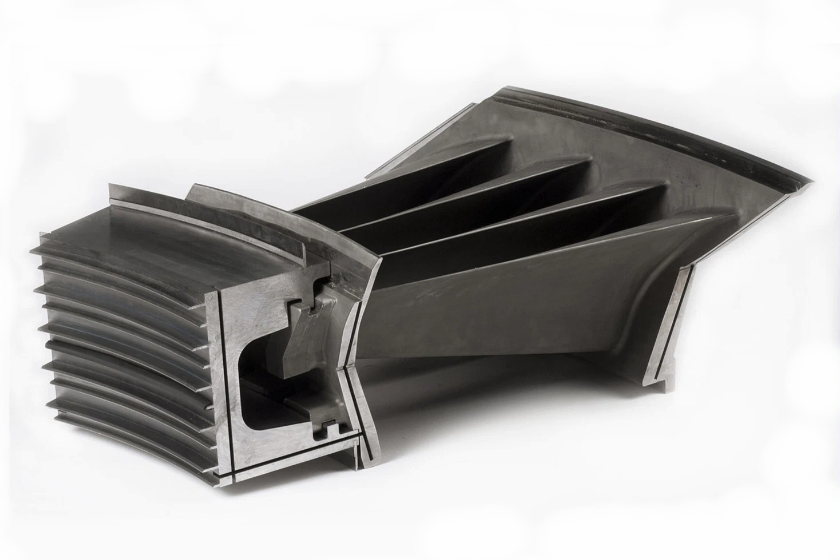
Kerntechnologie: Präzisions-Wachsausschmelzverfahren von Stellite 6K
Unsere Stellite 6K Turbinenschaufeln werden mittels Präzisions-Wachsausschmelzverfahren hergestellt, unter Verwendung mehrschichtiger Keramikschalengussformen (8–10 Beschichtungen), Vakuumschmelzen bei ~1430°C und Formvorwärmung bei 1000–1100°C. Kontrollierte Erstarrung mit 40–90°C/min ergibt äquiaxiale Korngrößen von 0,5–2 mm und eine Gussporosität unter 1 %, was eine überlegene Ermüdungsleistung und strukturelle Integrität bei hohen Betriebstemperaturen gewährleistet.
Materialeigenschaften der Stellite 6K Legierung
Stellite 6K ist eine verschleißfeste Kobalt-Chrom-Legierung mit ausgezeichneter metallurgischer Stabilität, ideal für rotierende und statische Komponenten in Turbinen. Zu den Haupteigenschaften gehören:
Eigenschaft | Wert |
|---|---|
Schmelzbereich | 1380–1430°C |
Dichte | 8,45 g/cm³ |
Zugfestigkeit (Raumtemperatur) | 870 MPa |
Streckgrenze | 610 MPa |
Härte (HRC) | 38–44 HRC |
Fressbeständigkeit | Ausgezeichnet |
Thermische Stabilität | Bis zu 900°C |
Erosions-/Korrosionsbeständigkeit | Ausgezeichnet |
Die feine Karbidverteilung und die ausgewogene mechanische Festigkeit von Stellite 6K machen es besonders geeignet für präzisionsgegossene Leitschaufeln, die Nassdampferosion, Oxidation und Gleitverschleiß ausgesetzt sind.
Fallstudie: Stellite 6K Dampfturbinen-Leitschaufeln
Projekthintergrund
Ein Wärmekraftwerk benötigte Leitschaufeln für eine 350 MW Dampfturbine, die unter gesättigtem und überhitztem Dampfstrom mit häufigem Lastwechselbetrieb arbeitet. Unsere Lösung: präzisionsgegossene Stellite 6K Schaufeln, die ASTM F75 und Versorgungsgrad-Toleranzen entsprechen, mit Oberflächenintegrität und Ermüdungsbeständigkeit, die auf lange Wartungsintervalle ausgelegt sind.
Typische Dampfturbinenschaufel-Anwendungen
GE D11 Steuerstufen-Leitschaufeln: Eingesetzt in der Steuerstufe der GE D11 Dampfturbine, widerstehen diese Schaufeln extremen Einlassdrücken und Hochgeschwindigkeitsdampf, wo Erosion und Schlagermüdung am kritischsten sind.
Siemens SST-5000 Mitteldruck (IP) Schaufeln: Stellite 6K Schaufeln, die in IP-Stufen verwendet werden, behalten ausgezeichnete Kantenstabilität und Form bei mittleren Temperaturen und schwankenden Lasten, wie sie typisch für GuD-Anwendungen sind.
Doosan SKD ND-Auslassschaufeln: Positioniert im Niederdruckteil großer Grundlastturbinen, widerstehen diese Schaufeln feuchten, hochvolumigen Dampfbedingungen, die typischerweise Kavitation und Oberflächenerosion beschleunigen.
Alstom GRT Variable Leitschaufeln: Ideal für Nachrüstungen oder modulare Geometrien bei fortschrittlichen Turbinen-Upgrades bieten Stellite 6K Schaufeln in diesen Systemen hohe Fressbeständigkeit unter Drehanpassungen in druckregulierenden Stufen.
Diese Modelle veranschaulichen die Vielseitigkeit von Stellite 6K über verschiedene OEM-Turbinenplattformen und Betriebsstufen hinweg und liefern eine verbesserte thermische und mechanische Zuverlässigkeit.
Leitschaufel-Fertigungslösungen
Gussprozess Das Wachsausschmelzverfahren mit Keramikschalengussformen gewährleistet Maßkonstanz (±0,05 mm) und geometrische Komplexität. Vakuumgießen bei ~1430°C und Formvorwärmung bei ~1050°C ergeben verfeinerte Mikrostrukturen und gleichmäßige Karbidverteilung über die Schaufeloberflächen.
Nachbearbeitung Die Schaufeln durchlaufen Heißisostatisches Pressen (HIP) bei ~1180°C und 100 MPa, um Restporosität zu eliminieren und die mechanische Gleichmäßigkeit zu verbessern. Die Endbearbeitung gewährleistet Toleranzen für Schaufelfüße, Montagelöcher und Dichtflächen.
Oberflächenbehandlung Für zusätzliche Haltbarkeit können Oberflächen optional mit erosionsbeständigen keramischen oder metallischen Beschichtungen behandelt werden. Passivierung und Polieren reduzieren die Oberflächenrauheit und minimieren so Erosion durch Hochgeschwindigkeitsdampftropfen.
Prüfung und Inspektion Jede Schaufel durchläuft digitale Röntgeninspektion, CMM Maßvalidierung und Zugprüfung bei Umgebungs- und erhöhten Temperaturen. Metallografische Analyse bestätigt die Karbidverteilung und Gefügestruktur.
Kernfertigungsherausforderungen von Dampfturbinen-Leitschaufeln
Erreichen von ±0,05 mm Toleranzen bei komplexen, dünnwandigen aerodynamischen Geometrien.
Minimierung der Porosität (<1 %), um rissfreie Leistung unter thermischer Wechselbelastung sicherzustellen.
Kontrolle der Karbidverteilung, um Erosions-Hotspots und strukturelle Schwächung zu vermeiden.
Ergebnisse und Verifizierung
Von unserer Gießerei gelieferte Stellite 6K Leitschaufeln erzielten:
Verifizierte Maßkonstanz innerhalb von ±0,05 mm mittels 3D-CMM-Scanning.
Oberflächenhärte von 40–44 HRC und Zugfestigkeit ≥870 MPa.
Erosionsbeständigkeit von über 10.000 Betriebsstunden in gesättigten Dampfumgebungen ohne messbaren Profilabbau.
FAQs
Warum wird Stellite 6K für Dampfturbinen-Leitschaufelanwendungen bevorzugt?
Welche Vorteile bietet Präzisionsguss gegenüber spanender Bearbeitung für die Schaufelproduktion?
Wie wird die Maßgenauigkeit in Stellite 6K Gussteilen erreicht?
Welche Beschichtungen können die Erosionsbeständigkeit von Schaufeln weiter verbessern?
Können Stellite 6K Schaufeln für den Einbau in bestehende Turbinenstufen nachgerüstet werden?
