
Einkristallguss von IN713LC Turbinenschaufeln
Einführung
Turbinenschaufeln, die mittels Einkristallguss hergestellt werden, stellen den höchsten Standard in Bezug auf Hochtemperaturleistung und Haltbarkeit dar. Im Gegensatz zu herkömmlichen Gussteilen enthalten Einkristallschaufeln keine Korngrenzen, was die Kriechbeständigkeit und Oxidationsstabilität unter extremen Belastungen erheblich verbessert. IN713LC, eine Nickelbasis-Superlegierung, eignet sich aufgrund ihrer hervorragenden Hochtemperaturfestigkeit und Phasenstabilität besonders gut für dieses Verfahren.
Neway AeroTech bietet fortschrittliche Einkristallguss-Dienstleistungen für IN713LC-Turbinenschaufeln an, maßgeschneidert für den Einsatz in Luft- und Raumfahrt, Stromerzeugung und Verteidigungsanwendungen. Unser Gussverfahren erreicht eine außergewöhnliche gerichtete Erstarrung und strukturelle Präzision für kritische Heißbereichskomponenten von Triebwerken.
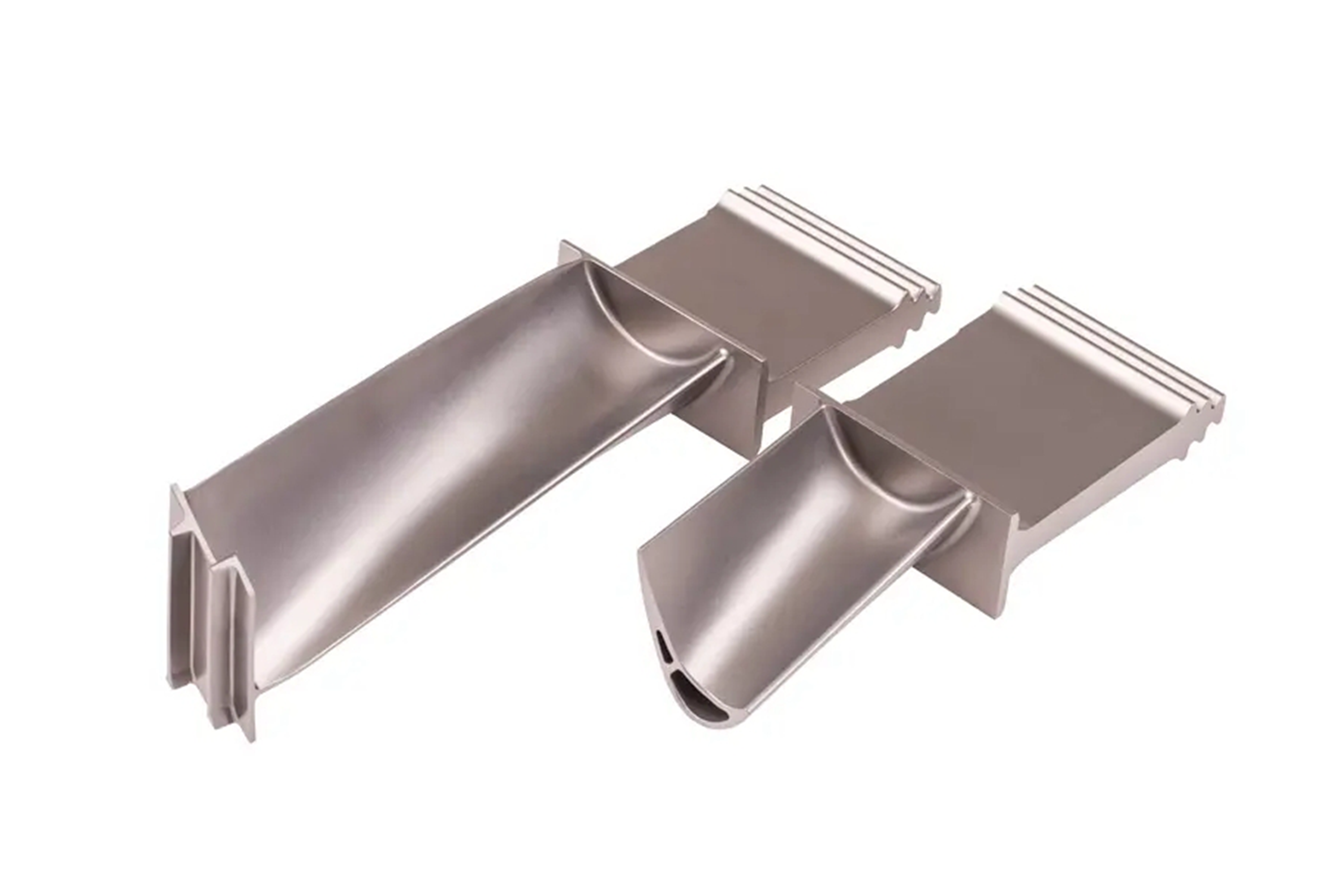
Kerntechnologie des Einkristallgusses von IN713LC Turbinenschaufeln
Wachsmodellherstellung Präzisionswachsmodelle werden mit Toleranzen von ±0,05 mm gefertigt, um die aerodynamische Geometrie und die internen Kühlstrukturen der Schaufel nachzubilden.
Schalenherstellung Mehrere Schichten aus keramischer Schlicker- und feuerfestem Stuck werden aufgetragen, um Formen mit Wärmebeständigkeit und Maßhaltigkeit bis zu 1200°C zu erzeugen.
Design des gerichteten Kornselektors Ein spiralförmiger Selektor oder ein helikaler Kornstarter ist in den Formenboden integriert, um das Einkristallwachstum während der Erstarrung einzuleiten und zu steuern.
Vakuumschmelzen und -gießen Die IN713LC-Legierung wird bei ~1450°C mittels Vakuuminduktionsschmelzen unter einem Vakuum von ≤10⁻³ Pa geschmolzen, wodurch Oxide und Gaseinschlüsse reduziert werden.
Gerichtete Erstarrung Die Form wird vertikal mit ~3 mm/min aus einer Hochtemperaturzone gezogen, wodurch eine Einkristallstruktur entsteht, die entlang der [001]-Orientierung ausgerichtet ist.
Schalenentfernung und Reinigung Nach kontrollierter Erstarrung wird die Schale durch Hochdruckstrahlen entfernt, wobei die Erhaltung komplexer Kühlmerkmale sichergestellt wird.
Heißisostatisches Pressen (HIP) Die Schaufeln werden unter 1150°C und 150 MPa in HIP-Systemen behandelt, um Mikroporen zu beseitigen und die mechanische Integrität zu verbessern.
Wärmebehandlung Eine mehrstufige Lösungs- und Auslagerungsbehandlung wird angewendet, um die γ'-Phase zu stabilisieren und das Kriech- und Ermüdungsverhalten zu verbessern.
Materialeigenschaften von IN713LC für Einkristallanwendungen
Obwohl typischerweise für Gleichachsenguss verwendet, kann IN713LC für eine verbesserte Leistung an die Einkristallverarbeitung angepasst werden:
Maximale Betriebstemperatur: 982°C (1800°F)
Zugfestigkeit: ≥1034 MPa bei Raumtemperatur
Streckgrenze: ≥862 MPa
Kriechbruchfestigkeit: ≥200 MPa @ 760°C, 1000 Std.
Dehnung: ≥5%
Phasenstabilität: γ'-Volumenanteil über 50% mit verfeinerten Karbiden und minimaler Seigerung
Diese Eigenschaften machen IN713LC für hochbelastete Turbinenschaufeln, die in rauen Umgebungen arbeiten, geeignet.
Fallstudie: IN713LC Einkristallschaufel für die HPT-Stufe eines Flugtriebwerks
Projekthintergrund
Ein bedeutender Flugtriebwerkshersteller beauftragte Neway AeroTech mit der Entwicklung von Einkristall-IN713LC-Schaufeln für die Hochdruckturbinen(HPT)-Stufe eines Militärturbofans. Das Projekt legte besonderen Wert auf Langzeitbeständigkeit gegen thermische Ermüdung und Maßhaltigkeit unter anhaltenden Lastzyklen.
Anwendungsszenarien
Militärturbofan-Schaufeln (z.B. F110 Triebwerke): Entscheidend für Schubleistung und Zuverlässigkeit unter variablen Einsatzbedingungen.
HPT-Schaufeln für Stromturbinen (z.B. LM2500+): Arbeiten im Dauerbetrieb nahe 950°C und erfordern Langzeitkriechbeständigkeit.
Triebwerke für unbemannte Luftfahrzeuge: Erfordern leichte, hochfeste Turbinenschaufeln mit hoher Zykluslebensdauer.
Gaserzeugerturbinen (Hubschraubertriebwerke): Wo thermische Gradienten und schnelle Startzyklen zu starker Ermüdungsbelastung führen.
Strukturelle Merkmale der Schaufel
Aerodynamische Profile, die für Strömungen mit hoher Machzahl ausgelegt sind
Interne serpentinenförmige und Prallkühlkanäle
Fußformen: Tannenbaum- oder Schwalbenschwanzverbindungen, kompatibel mit Standardnaben
Schirm- und Spitzenleisten für Gasabdichtung unter radialem Wachstum
Fertigungslösung für IN713LC Einkristallschaufeln
Wachsbaugruppe & Formenbau Design integriert mit CFD-Analyse und Kühloptimierung; Wachsanschnitte unterstützen einen ordnungsgemäßen Metallfluss und die Ausrichtung des Selektors.
Vakuumschmelzen und gerichtetes Gießen Unter Verwendung modernster Gießsysteme wird die Form durch einen Temperaturgradienten abgesenkt, um ein kontrolliertes Einkristallwachstum einzuleiten.
Nachguss-HIP und Wärmebehandlung HIP beseitigt verbleibende Porosität; Wärmebehandlung verbessert die Gleichmäßigkeit der γ'-Phase, was entscheidend für die Langzeitkriechlebensdauer ist.
CNC-Bearbeitung & Endbearbeitung Kritische Oberflächen und Kühlbohrungen werden durch Superlegierungs-CNC-Bearbeitung und EDM für die Maßhaltigkeit fertiggestellt.
Qualitätskontrolle und ZfP Jede Schaufel wird mittels Röntgen, CMM und metallografischer Untersuchung gemäß AS9100 und NADCAP bewertet.
Kernherausforderungen bei der Herstellung von IN713LC Einkristallschaufeln
Vermeidung der Bildung von Streukörnern während des Ziehvorgangs
Beherrschung der Legierungsseigerung im Fußbereich
Erreichen einer fehlerfreien γ'-Ausscheidung nach der Wärmebehandlung
Bearbeitung komplexer Kühlgeometrien ohne thermische Verformung
Ergebnisse und Verifizierung
Röntgen- und CMM-Prüfung bestätigte 100%ige Übereinstimmung mit Geometrie- und Fehlerkriterien
Metallografie zeigte gleichmäßige [001]-Orientierung und <2° Abweichung
Die Zugfestigkeit übertraf 1034 MPa bei 20°C, mit überlegenem Ermüdungsverhalten
Keine Kriechbruchausfälle nach 1000 Stunden bei 760°C unter 200 MPa Belastung
FAQs
Kann IN713LC für die Herstellung von Einkristall-Turbinenschaufeln verwendet werden?
Welches Gussverfahren stellt die [001]-Kornorientierung in Turbinenschaufeln sicher?
Welche Branchen profitieren am meisten von Einkristall-IN713LC-Schaufeln?
Was ist der Unterschied zwischen gleichachsigen und einkristallinen Schaufeln?
Wie wird die Bildung von Streukörnern beim Einkristallguss vermieden?
