Dritte Generation
Werkstoffeinführung
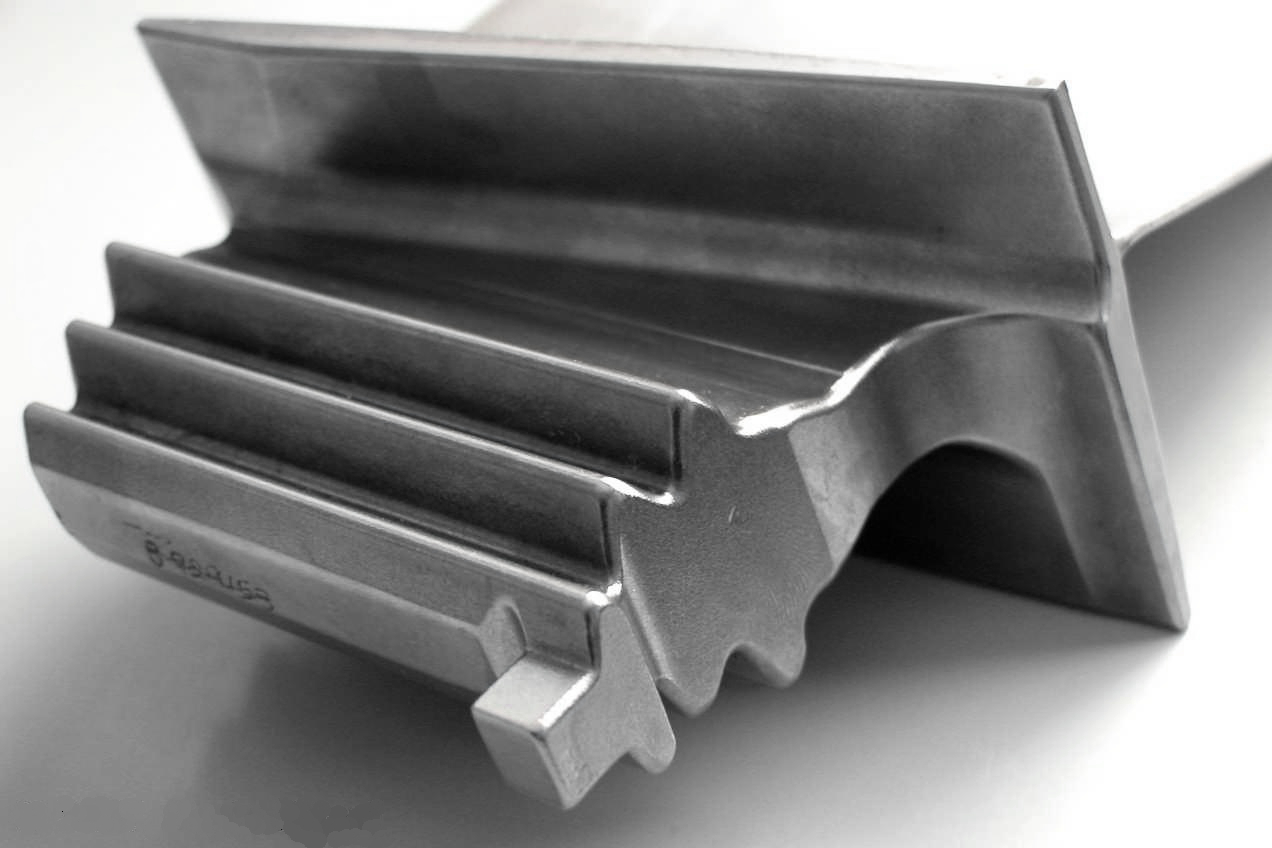
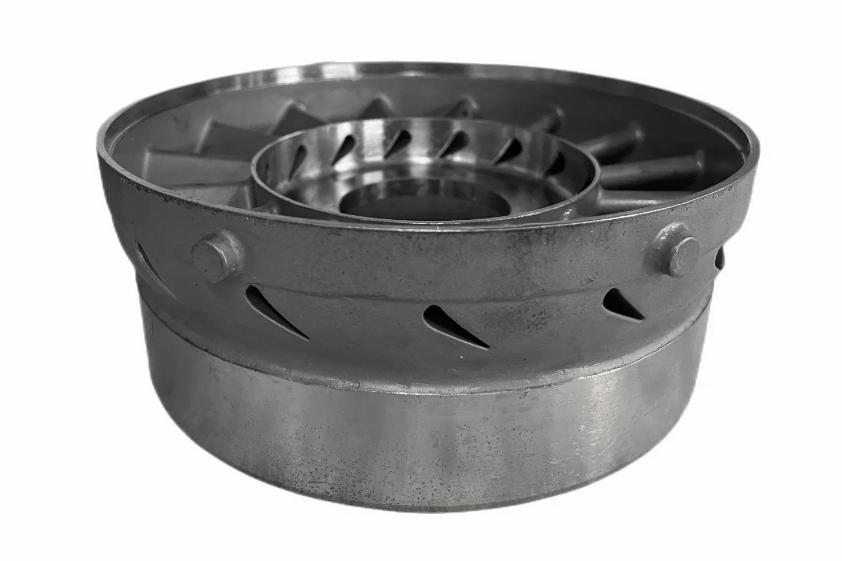
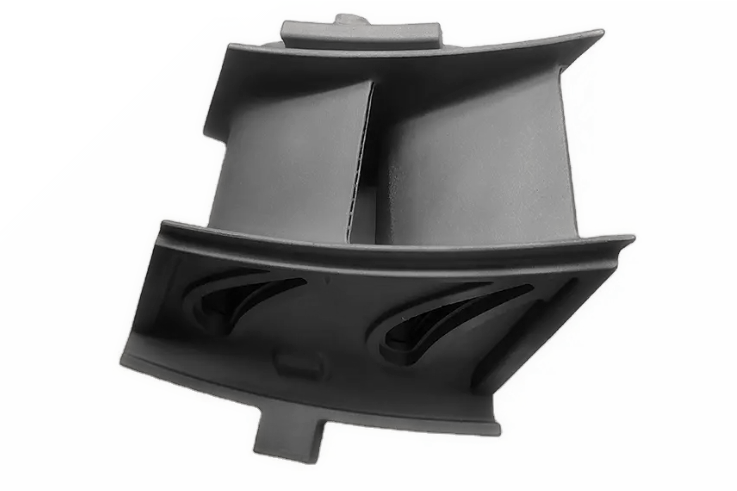
Einkristall-Superlegierungen der dritten Generation stellen eine fortschrittliche Klasse von Nickelbasiswerkstoffen dar, die entwickelt wurden, um die Turbineneintrittstemperaturen und die Bauteillebensdauer im Vergleich zu früheren Generationen erheblich zu steigern. Diese Legierungen werden durch präzises Einkristallgießen der dritten Generation hergestellt und enthalten höhere Rheniumgehalte sowie sorgfältig abgestimmte hochschmelzende Elemente, um bei extrem hohen Metalltemperaturen eine hervorragende Kriechbeständigkeit, Oxidationsstabilität und thermomechanische Ermüdungsfestigkeit zu bieten. Durch den Einsatz der streng kontrollierten Vakuum-Feingussplattformen, optimierter Abzugsprofile und fortschrittlicher Kristallorientierungskontrolle von Neway AeroTech erreichen Einkristallkomponenten der dritten Generation nahezu fehlerfreie Mikrostrukturen, die für die anspruchsvollsten Heißgaspfadanwendungen geeignet sind. In Kombination mit einer präzisen Wärmebehandlung, HIP-Verdichtung und modernsten Wärmedämmschichten ermöglichen diese Legierungen eine höhere Triebwerkseffizienz und verlängerte Wartungsintervalle in hochmodernen Luftfahrt- und Stromerzeugungsturbinen.
Alternative Werkstoffoptionen
Abhängig vom spezifischen Einsatzprofil, den Kostenzielen und der Inspektionsphilosophie können andere Einkristall- oder gerichtete Legierungen geeignet sein. Für Anwendungen, bei denen keine ultra-hohen Temperaturfähigkeiten zwingend erforderlich sind, bieten Einkristalllegierungen der zweiten Generation eine hervorragende Balance aus Leistung, Herstellbarkeit und Kosten. Im Gegensatz dazu können Turbinenkonstrukteure, die höchstmögliche Brenntemperaturen oder Strategien zur Lebensdauerverlängerung anstreben, Legierungen der vierten oder fünften Generation mit weiteren Verfeinerungen der Legierungszusammensetzung wählen. Wo keine Einkristalltechnologie erforderlich ist, können das gerichtete Gießen und das Gießen von equiaxialen Kristallen aus Nickel- und Kobaltbasis-Superlegierungen viele Anforderungen im Heißbereich zu geringeren Kosten erfüllen. Für stark belastete rotierende Scheiben anstelle von Schaufelblättern bieten pulvermetallurgische Turbinenscheiben wie FGH96 und FGH97 eine überlegene Low-Cycle-Fatigue-Leistung. Während der Designexploration oder Validierung von Kühlkonzepten ermöglicht der 3D-Druck von Superlegierungen ein schnelles Prototyping, bevor in vollständige Werkzeugkosten für Einkristalle der dritten Generation investiert wird.
Internationale Äquivalente / Vergleichbare Güten
Land/Region | Repräsentative Legierungen der dritten Generation | Spezifische Handelsmarken / Entwickler | Hinweise |
USA | Rene N6, Rene 104 | Hoch-Rhenium-Einkristallsysteme für fortschrittliche Luftfahrt- und industrielle Gasturbinenschaufeln. | |
USA / Globale OEMs | PWA 1484, EPM-102 | Weithin referenzierte EK-Legierungen für Hochdruckturbinenschaufeln und fortschrittliche Testprogramme. | |
Japan | TMS-138, TMS-162, TMS-196, TMS-238 | Entwickelt für den Betrieb bei ultra-hohen Temperaturen mit optimierten Gehalten an Re und Ru sowie ausgezeichneter Schichtkompatibilität. | |
China | DD6, SC180, RR3000 | Moderne EK-Systeme der dritten Generation, maßgeschneidert für Großrahmen- und Luftfahrt-Gasturbinen mit hohen Brenntemperaturen. | |
Globale OEM-Praxis | Rene 88, CMSX-486 | Verwendet in hochbelasteten Heißsection-Komponenten und als Plattformen für die Entwicklung von EK-Legierungen der nächsten Generation. |
Konstruktionsziel
Einkristall-Superlegierungen der dritten Generation wurden entwickelt, um den Betriebsbereich von Gasturbinen zu erweitern, indem sie höhere Brenntemperaturen und längere Missionsdauern bei gleichzeitiger Wahrung der strukturellen Integrität und Schichtstabilität ermöglichen. Durch die Erhöhung des Rheniumgehalts und in einigen Fällen durch die Zugabe von Ruthenium und anderen hochschmelzenden Elementen sind diese Legierungen so konzipiert, dass sie die γ′-Vergröberung verlangsamen, das Rafting verzögern und die Matrix unter längerer Hochspannungsbelastung stabilisieren. Ihr Konstruktionsziel ist es, eine außergewöhnlich hohe Kriechbruchfestigkeit und eine robuste Beständigkeit gegen thermische Ermüdung, Oxidation und Heißkorrosion in den anspruchsvollsten Bereichen des Turbinenströmungsweges zu bieten. In Kombination mit optimierten internen Kühlarchitekturen und fortschrittlichen TBC-Systemen helfen Legierungen der dritten Generation OEMs dabei, strengere Ziele hinsichtlich Kraftstoffeffizienz, Emissionen und Zuverlässigkeit bei Luftfahrttriebwerken, Stromerzeugungsturbinen und Hochleistungs-Antriebssystemen für Militär und Verteidigung zu erreichen.
Chemische Zusammensetzung
Element | Nickel (Ni) | Kobalt (Co) | Chrom (Cr) | Aluminium (Al) | Tantal (Ta) | Wolfram (W) | Molybdän (Mo) | Rhenium (Re) | Ruthenium / Andere |
Typische Zusammensetzung (%) | Rest | 4,0–10,0 | 1,5–6,0 | 5,0–6,5 | 4,0–8,0 | 4,0–8,0 | 0,5–3,0 | 4,0–6,0 | 0–3,0 kombiniert (Ru, Hf, Ti usw.) |
Physikalische Eigenschaften
Eigenschaft | Dichte | Solidus–Liquidus-Bereich | Wärmeleitfähigkeit (RT) | Wärmeausdehnung | Spezifische Wärme (RT) |
Wert | ~8,7–9,1 g/cm³ | ~1280–1350 °C | ~8–11 W/m·K | ~12–15 µm/m·°C | ~400–500 J/kg·K |
Mechanische Eigenschaften
Eigenschaft | Zugfestigkeit (RT) | Streckgrenze (RT) | Bruchdehnung (RT) | Kriechbruchfestigkeit | Härte |
Wert | ~950–1150 MPa | ~750–950 MPa | ~3–6 % | ~180–260 MPa bei 1000–1050 °C / 1000 h (legierungsabhängig) | ~36–46 HRC nach vollständiger Wärmebehandlung |
Hauptmerkmale des Werkstoffs
Die Einkristall-Mikrostruktur eliminiert Korngrenzen und beseitigt damit praktisch Kriech- und Ermüdungsschädigungsmechanismen an Korngrenzen.
Ein hoher Rheniumgehalt verbessert die Hochtemperatur-Kriechfestigkeit erheblich und verlangsamt die mikrostrukturelle Degradation während langer Betriebsdauern.
Eine optimierte Balance aus hochschmelzenden Elementen (Ta, W, Mo) bietet eine überlegene γ′-Stabilität und Matrixverstärkung bei erhöhten Temperaturen.
Ausgezeichnete Oxidations- und Heißkorrosionsbeständigkeit in Kombination mit geeigneten Diffusionsschichten und TBC-Systemen.
Hohe Beständigkeit gegen thermomechanische Ermüdung und Thermoschock bei aggressiven transienten Betriebsprofilen.
Konstruiert für komplexe Schaufelgeometrien mit fortschrittlichen internen Kühlnetzwerken, hergestellt durch Vakuum-Feinguss.
Behält die mechanische Integrität bei Metalltemperaturen bei, die die sicheren Grenzen von Einkristalllegierungen der zweiten Generation überschreiten.
Kompatibel mit der HIP-Bearbeitung, um innere Defekte zu unterdrücken und die Ermüdungslebensdauer kritischer Komponenten zu verbessern.
Unterstützt höhere Turbineneintrittstemperaturen, was eine verbesserte Triebwerkszykluseffizienz und niedrigere Emissionen pro Leistungs- oder Schubseinheit ermöglicht.
Bietet eine hervorragende Grundlage für die weitere Entwicklung hin zu Einkristallsystemen der vierten und fünften Generation.
Herstellbarkeit und Nachbearbeitung
Einkristallgießen: Legierungen der dritten Generation erfordern eine strikte Kontrolle der Temperaturgradienten und Abzugsgeschwindigkeiten, um Freckles, Fremdkörner und Rekristallisation zu vermeiden. Neway AeroTech nutzt fortschrittliche Ofensteuerung und Keimtechnologie, um eine konsistente <001>-Orientierung und minimale Defektdichte sicherzustellen.
Vakuum-Feinguss: Hochreines Schmelzen, niedrige Sauerstoffgehalte und sorgfältig konstruierte Keramikformen erhalten die Legierungsreinheit und reproduzieren präzise Kühllöcher, Plattformen, Deckbänder und Befestigungsmerkmale.
Keramikkerne und Schalentechnik: Robuste Kernsysteme ermöglichen komplizierte interne Kühlschemata, während die Schalenzusammensetzungen für thermische Stabilität und kontrollierte Metall-Form-Interaktionen optimiert sind.
Nachbearbeitung: Das Entfernen der Angüsse, das Verschleifen, die Plattformnachbearbeitung und die Wiederherstellung der Maße erfolgen vor den Präzisionsbearbeitungs- und Beschichtungsoperationen.
CNC-Bearbeitung von Superlegierungen: Wird für die Wurzelformbearbeitung, Tannenbaum- oder Schwalbenschwanzprofile, das Trimmen von Deckbändern und kritische Passflächen mit engen Maßtoleranzen verwendet.
Funkenerosion (EDM): Erzeugt geformte Kühllöcher, Diffusorlöcher und Filmkühlmerkmale mit begrenzten Aufschmelzzonen und hoher Positionsgenauigkeit.
Tiefbohren von Superlegierungen: Wird verwendet, um lange interne Kanäle und Zufuhrpassagen mit hervorragender Geradheit und Oberflächengüte zu erzeugen.
Heißisostatisches Pressen (HIP): Entscheidend für die Verdichtung von Mikrolunkern und innerer Porosität, wodurch die Low-Cycle-Fatigue und die Rissinitiierungsbeständigkeit verbessert werden.
Wärmebehandlung: Mehrstufige Lösungs- und Auslagerungsbehandlungen werden auf jede Chemie der dritten Generation zugeschnitten, um die γ/γ′-Morphologie für optimale Kriech- und Ermüdungseigenschaften zu verfeinern.
Werkstoffprüfung und Analyse: Umfassende zerstörungsfreie Prüfung (ZfP), mechanische Tests und mikrostrukturelle Bewertungen unterstützen Lebensdauervorhersagemodelle und die Qualitätssicherung für sicherheitskritische Schaufeln und Leiträder.
Reparaturtechnologien: Qualifizierte Schweiß-, Löt- und Wiederbeschichtungsverfahren können angewendet werden, um die Bauteillebensdauer zu verlängern, sofern sie mit den Reparaturgrenzwerten und Wärmebehandlungsstrategien der OEMs übereinstimmen.
Geeignete Oberflächenbehandlungen und Beschichtungen
Wärmedämmschichten: Fortschrittliche keramische Deckschichten in Kombination mit optimierten Haftvermittlern reduzieren die Metalltemperatur und verbessern die Oxidations-/Heißkorrosionsbeständigkeit bei erhöhten Gastemperaturen.
Aluminid- und MCrAlY-Haftvermittler: Entwickelt für Legierungen mit hohem Rheniumgehalt, um robusten Oxidationsschutz zu bieten und die Schichthaftung während thermischer Zyklen aufrechtzuerhalten.
Auflage- und Diffusionsbeschichtungen: Aufgebracht zum Schutz vor Heißkorrosion in marinen Umgebungen sowie in der Öl- und Gasindustrie und in industriellen Umgebungen mit kontaminierten Brennstoffen.
Oberflächenpolitur und Konditionierung: Reduziert aerodynamische Verluste in Stromerzeugungs- und Luftfahrtturbinen und kontrolliert gleichzeitig Spannungskonzentrationen in der Beschichtung.
Inspektion nach der Beschichtung und Werkstoffanalyse: CT, Röntgen und metallographische Prüfungen verifizieren die Beschichtungsintegrität und erkennen Abplatzungen oder Degradation des Haftvermittlers.
Laserbohren und Oberflächentexturierung: Verbessern die Austrittseigenschaften von Kühllöchern und die Beschichtungsleistung um Filmkühlauslässe herum.
Übliche Branchen und Anwendungen
Hochdruckturbinenschaufeln, Leiträder und Deckbänder in fortschrittlichen Luftfahrttriebwerken, die bei erhöhten Brenntemperaturen betrieben werden.
Modernste Stromerzeugungs-Gasturbinen, die auf maximale Effizienz und reduzierte CO₂-Emissionen abzielen.
Hochleistungsantriebssysteme in Militär- und Verteidigungsanwendungen, einschließlich Kampftriebwerken und strategischen Plattformen.
Mechanische Antriebsturbinen, die kritische Infrastrukturen in der Öl- und Gasindustrie und im Energiesektor mit anspruchsvollen Lastzyklen unterstützen.
Experimentelle und Demonstratortriebwerke zur Validierung von Turbinenarchitekturen der nächsten Generation und Materialien für ultra-hohe Temperaturen.
Nachgerüstete Heißsection-Komponenten in Upgrade-Programmen, bei denen erhöhte Brenntemperaturen und Leistungsabgaben erforderlich sind.
Wann Sie diesen Werkstoff wählen sollten
Ultra-hohe Brenntemperaturen: Am besten geeignet für Turbinen, bei denen sich die Metalltemperaturen den sicheren Grenzen von Legierungen der zweiten Generation nähern oder diese überschreiten, insbesondere in Kombination mit optimierten Kühl- und TBC-Systemen.
Lange Lebensdauer unter schweren Bedingungen: Ideal, wenn Wartungsintervalle verlängert werden müssen und Kriechbruch, Oxidation und Heißkorrosion historisch die Bauteillebensdauer begrenzt haben.
Fortschrittliche Triebwerksprogramme: Empfohlen für Plattformen der neuen Generation in der Luftfahrt und Stromerzeugung, bei denen maximale Effizienz und Kraftstoffeinsparungen entscheidende kommerzielle Treiber sind.
Kritische Sicherheit und Missionszuverlässigkeit: Geeignet für Verteidigungsantriebe und strategische Energieanlagen, bei denen ungeplante Ausfallzeiten oder Fehler inakzeptabel sind.
Hochbelastete rotierende Schaufelblätter: Besonders vorteilhaft für Hochdruckturbinenschaufeln, die intensiven Zentrifugal- und thermischen Spannungen ausgesetzt sind.
Harte Umgebungsbedingungen: Bevorzugt, wenn Brennstoffe oder Ansaugluft korrosive Spezies enthalten können, was die Synergie zwischen Beschichtung und Legierung unerlässlich macht.
Technologiedemonstration und zukünftige Plattformen: Ermöglicht OEMs, Konzepte mit höheren TIT-Werten zu erforschen und Zyklusverbesserungen der nächsten Generation zu validieren.
Optimierte Lebenszykluskosten: Obwohl die Kosten für Legierung und Verarbeitung höher sind, können verbesserte Effizienz und reduzierte Überholungshäufigkeit die Gesamtbetriebskosten erheblich senken.
Verwandte Blogs erkunden