
Titanlegierungs-CNC-Bearbeitungsdienste für zuverlässige Turboladerkomponenten
Einführung
Titanlegierungen bieten eine einzigartige Kombination aus leichtem Gewicht, hoher Festigkeit, Korrosionsbeständigkeit und Hochtemperaturstabilität, was sie ideal für die Herstellung kritischer Turboladerkomponenten macht. Bei Neway AeroTech bieten wir Präzisions-CNC-Bearbeitungsdienste für Titanlegierungen an und stellen Hochleistungs-Turboteile mit extrem engen Maßtoleranzen (±0,005 mm) und außergewöhnlicher Ermüdungsbeständigkeit her.
Durch den Einsatz fortschrittlicher Mehrachsen-CNC-Bearbeitungszentren, optimierter Schneidstrategien und luftfahrtgerechter Qualitätskontrollsysteme stellt Neway sicher, dass Titan-Turboladerkomponenten unter extremen Drehzahlen, Drücken und Temperaturen eine überlegene Leistung erbringen.
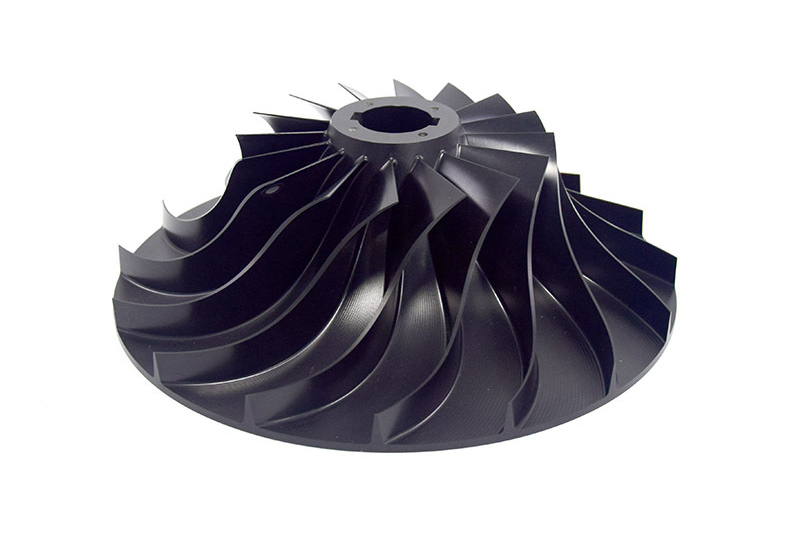
Herausforderungen bei der Herstellung von Titan-Turbokomponenten
Die CNC-Bearbeitung von Titanlegierungen wie Ti-6Al-4V und Ti-6Al-2Sn-4Zr-6Mo birgt spezifische Herausforderungen:
Geringe Wärmeleitfähigkeit, die zu Wärmeentwicklung während der Bearbeitung und potenziellem Werkzeugverschleiß führt.
Hohe Elastizität, die zu Materialrückfederung führt und die Präzisionsbearbeitung erschwert.
Erreichen enger Maßtoleranzen (±0,005 mm), die für den Rotorausgleich und die aerodynamische Abdichtung entscheidend sind.
Beibehaltung feiner Oberflächengüten (Ra ≤0,8 µm) für optimale Strömungseffizienz.
Präzisions-CNC-Bearbeitungsprozess für Titan-Turbokomponenten
Der Präzisions-CNC-Bearbeitungsprozess umfasst:
Materialbewertung: Bewertung von Mikrostruktur und Härte zur Optimierung der Bearbeitungsstrategie.
Fortschrittliche Werkzeuge: Einsatz beschichteter Hartmetall- oder PCD-Werkzeuge (polykristalliner Diamant), um den Verschleiß zu minimieren.
Mehrachsen-CNC-Bearbeitung: 5-Achsen-Bearbeitung für komplexe Merkmale mit minimalen Repositionierungsfehlern.
Optimierte Bearbeitungsparameter: Geringere Schnittgeschwindigkeiten (20–60 m/min) und hohe Vorschubgeschwindigkeiten zur Wärmesteuerung und Vermeidung von Kaltverfestigung.
Oberflächenbearbeitung: Endfeinschnitte und Polieren, um Ra ≤0,8 µm zu erreichen.
Präzisionsprüfung: Vollständige CMM-Verifizierung für Maßhaltigkeit und Oberflächengüte.
Vergleich von Fertigungsverfahren für Titan-Turbokomponenten
Fertigungsverfahren | Maßgenauigkeit | Oberflächengüte (Ra) | Ermüdungsbeständigkeit | Thermische Stabilität | Kosteneffizienz |
|---|---|---|---|---|---|
Präzisions-CNC-Bearbeitung | ±0,005 mm | ≤0,8 µm | Überlegen | Ausgezeichnet | Mittel-Hoch |
Draht-EDM-Bearbeitung | ±0,003 mm | ≤0,4 µm | Ausgezeichnet | Ausgezeichnet | Hoch |
Konventionelle Bearbeitung | ±0,01 mm | ≤1,6 µm | Gut | Gut | Mittel |
Strategie zur Auswahl des Fertigungsverfahrens
Die Wahl des richtigen Verfahrens hängt von der geometrischen Komplexität und den erforderlichen mechanischen Eigenschaften ab:
Präzisions-CNC-Bearbeitung: Ideal für Verdichterräder, Turboladergehäuse und leichte Turbokomponenten, bei denen das Festigkeits-Gewichts-Verhältnis und die Maßgenauigkeit (±0,005 mm) entscheidend sind.
Draht-EDM-Bearbeitung: Am besten für extrem feine innere Merkmale geeignet, bei denen maximale Präzision (±0,003 mm) erforderlich ist.
Konventionelle Bearbeitung: Geeignet für grundlegende Sekundäroperationen, bei denen Toleranzen von ±0,01 mm akzeptabel sind.
Leistungsmatrix für Titanlegierungen
Legierungsmaterial | Max. Betriebstemperatur (°C) | Zugfestigkeit (MPa) | Dichte (g/cm³) | Ermüdungsbeständigkeit | Typische Anwendungen |
|---|---|---|---|---|---|
400 | 930 | 4,43 | Ausgezeichnet | Verdichterräder, Turbowellen | |
550 | 1030 | 4,62 | Überlegen | Turbolader-Heißteile | |
480 | 870 | 4,5 | Gut | Niederdruck-Turbokomponenten | |
540 | 965 | 4,6 | Ausgezeichnet | Auspuff-Turboteile | |
370 | 980 | 4,68 | Gut | Leichte Luftfahrt-Turbokomponenten |
Legierungsauswahlstrategie für Turboladerkomponenten
Die richtige Legierungsauswahl gewährleistet überlegene mechanische Leistung und Haltbarkeit:
Ti-6Al-4V: Die Standardwahl für leichte, hochfeste Turbokomponenten, die bis zu 400°C betrieben werden.
Ti-6Al-2Sn-4Zr-6Mo: Ideal für Heißteile von Turboladern, die höheren Temperaturen (~550°C) ausgesetzt sind und eine ausgezeichnete Kriech- und Ermüdungsbeständigkeit benötigen.
Ti-5Al-2.5Sn: Ausgewählt für Niedertemperaturkomponenten, bei denen gute mechanische Eigenschaften und geringere Dichte benötigt werden.
Ti-6Al-2Sn-4Zr-2Mo: Verwendet für Auspuff- und Turbo-Heißseitenteile, die eine ausgezeichnete thermische Ermüdungsbeständigkeit benötigen.
Ti-15V-3Cr-3Sn-3Al: Gewählt für leichte, hochtourig rotierende Turbokomponenten, die hohe Festigkeit und gute Bearbeitbarkeit erfordern.
Wichtige Nachbearbeitungstechniken
Die Nachbearbeitung verbessert die mechanischen Eigenschaften und die Komponentenzuverlässigkeit:
Präzisions-Oberflächenbearbeitung: Schleifen und Polieren für Strömungsoberflächen mit Ra ≤0,8 µm.
Wärmebehandlung: Maßgeschneiderte Lösungsauslagerung zur Verbesserung der Ermüdungsfestigkeit und thermischen Stabilität.
Schutzbeschichtungen: Oxidations- und erosionsbeständige Beschichtungen für eine verlängerte Lebensdauer.
Heißisostatisches Pressen (HIP): Beseitigung von Porosität zur Verbesserung der Ermüdungslebensdauer und Komponentendichte.
Prüfmethoden und Qualitätssicherung
Jede Titan-Turbokomponente bei Neway AeroTech durchläuft:
Koordinatenmessmaschine (CMM): Maßverifizierung mit ±0,005 mm Genauigkeit.
Röntgenprüfung: Erkennung interner Defekte.
Metallographische Mikroskopie: Analyse von Mikrostruktur und Phasenverteilung.
Zugversuch: Validierung der mechanischen Eigenschaften.
Unsere Produktionsprozesse entsprechen vollständig den Luftfahrtstandards AS9100.
Fallstudie: CNC-gefertigte Ti-6Al-4V-Turboladerräder
Neway AeroTech lieferte erfolgreich CNC-gefertigte Ti-6Al-4V-Verdichterräder für Hochleistungs-Turboladersysteme:
Betriebstemperatur: Bis zu 400°C kontinuierlich
Maßgenauigkeit: Konstant ±0,005 mm erreicht
Oberflächengüte: Ra ≤0,6 µm für optimale Strömungsleistung
Zertifizierung: Vollständig AS9100-Luftfahrtqualität zertifiziert
FAQs
Warum werden Titanlegierungen für Turboladerkomponenten bevorzugt?
Welche Maßtoleranzen kann Neway AeroTech für CNC-Titanteile erreichen?
Wie wird die Bearbeitungswärme bei der Arbeit mit Titanlegierungen kontrolliert?
Welche Titanlegierungen werden für Verdichterräder und -wellen empfohlen?
Welche Qualitätskontrollmethoden garantieren die Zuverlässigkeit von Titan-Turbokomponenten?
