
Hersteller von maßgefertigten Inconel-Superlegierungs-Komponenten für Energie-Gasturbinen-Brennkamme...
Einführung in Inconel-Komponenten für Gasturbinen-Brennkammern
Inconel-Superlegierungen werden aufgrund ihrer außergewöhnlich hohen Temperaturfestigkeit, Korrosionsbeständigkeit und thermischen Ermüdungsbeständigkeit umfassend in Gasturbinen-Brennkammern eingesetzt. Bei Neway AeroTech sind wir spezialisiert auf die Herstellung von Präzisions-Inconel-Legierungskomponenten, die speziell für Anwendungen in der Energieerzeugung maßgeschneidert sind, unter Nutzung fortschrittlicher Verfahren wie Vakuum-Feinguß und gerichtete Erstarrungsguss.
Unsere Expertise stellt sicher, dass jede maßgefertigte Komponente unter den anspruchsvollen Bedingungen von Gasturbinen im Energiesektor optimale Leistung und Zuverlässigkeit bietet.
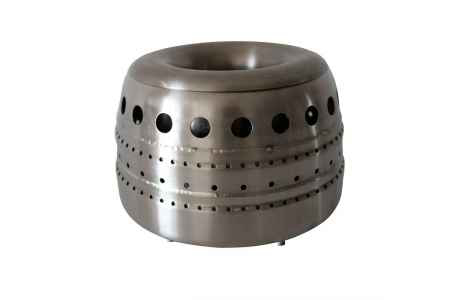
Kern-Herausforderungen bei der Fertigung von Brennkammerkomponenten
Die Herstellung von Brennkammerkomponenten beinhaltet spezifische Herausforderungen:
Thermische Beständigkeit: Komponenten müssen Temperaturen über 1000°C ohne mechanischen Abbau aushalten.
Oxidation und Korrosion: Wahrung der strukturellen Integrität in korrosiven Hochtemperaturumgebungen.
Präzisionsgenauigkeit: Erreichen komplexer Geometrien mit strengen Toleranzen (±0,10 mm).
Materialverarbeitung: Bewältigung von Schwierigkeiten aufgrund der geringen Wärmeleitfähigkeit und schnellen Kaltverfestigung von Inconel-Legierungen.
Detaillierte Erläuterung der Fertigungsverfahren
Vakuum-Feinguß
Erstellung detaillierter Wachsmodelle, die komplexe Geometrien nachbilden.
Keramikformbildung und Wachsentfernung durch Autoklavieren bei etwa 180°C.
Gießen unter Vakuumbedingungen (<0,01 Pa) reduziert Verunreinigungen und gewährleistet überlegene metallurgische Qualität.
Kontrollierte Abkühlung (25–35°C/Stunde) verhindert innere Spannungen und verbessert die Maßgenauigkeit.
Gerichtete Erstarrungsguss
Erstarrung unter präzisen Temperaturgradienten (20–50°C/cm) erreicht Kornausrichtung.
Verbesserte Kriechbeständigkeit und verlängerte Ermüdungslebensdauer im Hochtemperaturbetrieb.
Langsame Abkühlraten (20–35°C/Stunde) reduzieren innere Defekte und Porosität.
Vergleich gängiger Fertigungsverfahren
Verfahren | Maßgenauigkeit | Oberflächengüte | Effizienz | Komplexitätsfähigkeit |
|---|---|---|---|---|
Vakuum-Feinguß | ±0,15 mm | Ra 3,2–6,3 µm | Mittel | Hoch |
Gerichtete Erstarrung | ±0,20 mm | Ra 6,3–12,5 µm | Mittel | Mittel |
CNC-Bearbeitung | ±0,01 mm | Ra 0,8–3,2 µm | Mittel | Mittel |
SLM-3D-Druck | ±0,05 mm | Ra 6,3–12,5 µm | Hoch | Sehr hoch |
Strategie zur Auswahl des Fertigungsverfahrens für Inconel-Teile
Vakuum-Feinguß: Bevorzugt für hochkomplexe Geometrien, die eine Präzision von ±0,15 mm und exzellente Oberflächenintegrität benötigen.
Gerichtete Erstarrungsguss: Empfohlen für Komponenten, die von verbesserter Kriechbeständigkeit mit ±0,20 mm Genauigkeit profitieren.
CNC-Bearbeitung: Optimal für das Fertigbearbeiten komplizierter Merkmale, bietet Toleranzen innerhalb von ±0,01 mm.
SLM-3D-Druck: Geeignet für schnelle Prototypenherstellung und komplexe interne Kühlkanäle, mit Maßgenauigkeit bis zu ±0,05 mm.
Materialanalyse-Matrix für Inconel-Legierungen
Material | Zugfestigkeit (MPa) | Streckgrenze (MPa) | Max. Betriebstemp. (°C) | Oxidationsbeständigkeit | Typische Anwendungen |
|---|---|---|---|---|---|
930 | 517 | 980 | Außergewöhnlich | Brennkammerauskleidungen, Dichtungen | |
1375 | 1100 | 700 | Exzellent | Turbinenscheiben, Brennkammergehäuse | |
1240 | 930 | 980 | Hervorragend | Turbinenschaufeln, Leitradschaufeln | |
1100 | 830 | 980 | Überlegen | Turbinenräder, Brennkammerteile | |
1150 | 950 | 950 | Überlegen | Brennkammersegmente, Schaufeln | |
1200 | 810 | 816 | Exzellent | Befestigungselemente, Hitzeschilde |
Materialauswahlstrategie
Inconel 625: Optimal für Brennkammerauskleidungen aufgrund exzellenter Oxidationsbeständigkeit und Festigkeit (930 MPa) bei 980°C.
Inconel 718: Bestens geeignet für Turbinenscheiben und Brennkammergehäuse, die hohe Festigkeit (1375 MPa) bei 700°C erfordern.
Inconel 738: Empfohlen für Schaufeln und Leitradschaufeln aufgrund hervorragender thermischer Ermüdungsbeständigkeit und Hochtemperaturfestigkeit (1240 MPa) bei 980°C.
Inconel 713C: Ideal für Turbinenräder aufgrund überlegener Kriechbeständigkeit (1100 MPa Zugfestigkeit) bei 980°C.
Inconel 939: Geeignet für Brennkammersegmente aufgrund exzellenter mechanischer Eigenschaften (1150 MPa Zugfestigkeit) bei Temperaturen um 950°C.
Inconel X-750: Bevorzugt für Befestigungselemente und Hitzeschilde zur Wahrung der Festigkeit (1200 MPa Zugfestigkeit) und Haltbarkeit bei 816°C.
Wichtige Nachbearbeitungstechnologien
Heißisostatisches Pressen (HIP): Verbessert mechanische Eigenschaften durch Entfernen innerer Porosität (~1200°C, 150 MPa).
Wärmedämmschicht (TBC): Bietet Wärmeisolierung, reduziert Betriebsoberflächentemperaturen um etwa 200°C.
Funkenerosives Bearbeiten (EDM): Fertigt präzise komplexe interne Kanäle mit ±0,005 mm Genauigkeit.
Wärmebehandlung: Verfeinert die Legierungsmikrostruktur, verbessert Festigkeit und Korrosionsbeständigkeit.
Branchenanwendung und Fallanalyse
Neway AeroTech lieferte erfolgreich maßgefertigte Inconel-738-Brennkammerauskleidungen für einen globalen Energie-Turbinen-OEM. Die Komponenten wurden durch Vakuum-Feinguß hergestellt, gefolgt von HIP und Wärmedämmschichten, wobei eine Maßgenauigkeit innerhalb von ±0,15 mm, außergewöhnliche mechanische Eigenschaften und eine verlängerte Komponentenlebensdauer unter Dauerbetrieb über 950°C erreicht wurden.
FAQs
Welche Lieferzeiten können wir für maßgefertigte Inconel-Brennkammerkomponenten erwarten?
Können Sie Prototypenherstellung und Kleinserienfertigung für Inconel-Turbinenteile anbieten?
Welche Branchenzertifizierungen erfüllen Ihre Inconel-Brennkammerkomponenten?
Welche Nachbearbeitungstechniken empfehlen Sie zur Verbesserung der Komponentenleistung?
Kann Ihr Ingenieursteam bei der Materialauswahl und Designoptimierung für Inconel-Teile unterstützen?
