中文

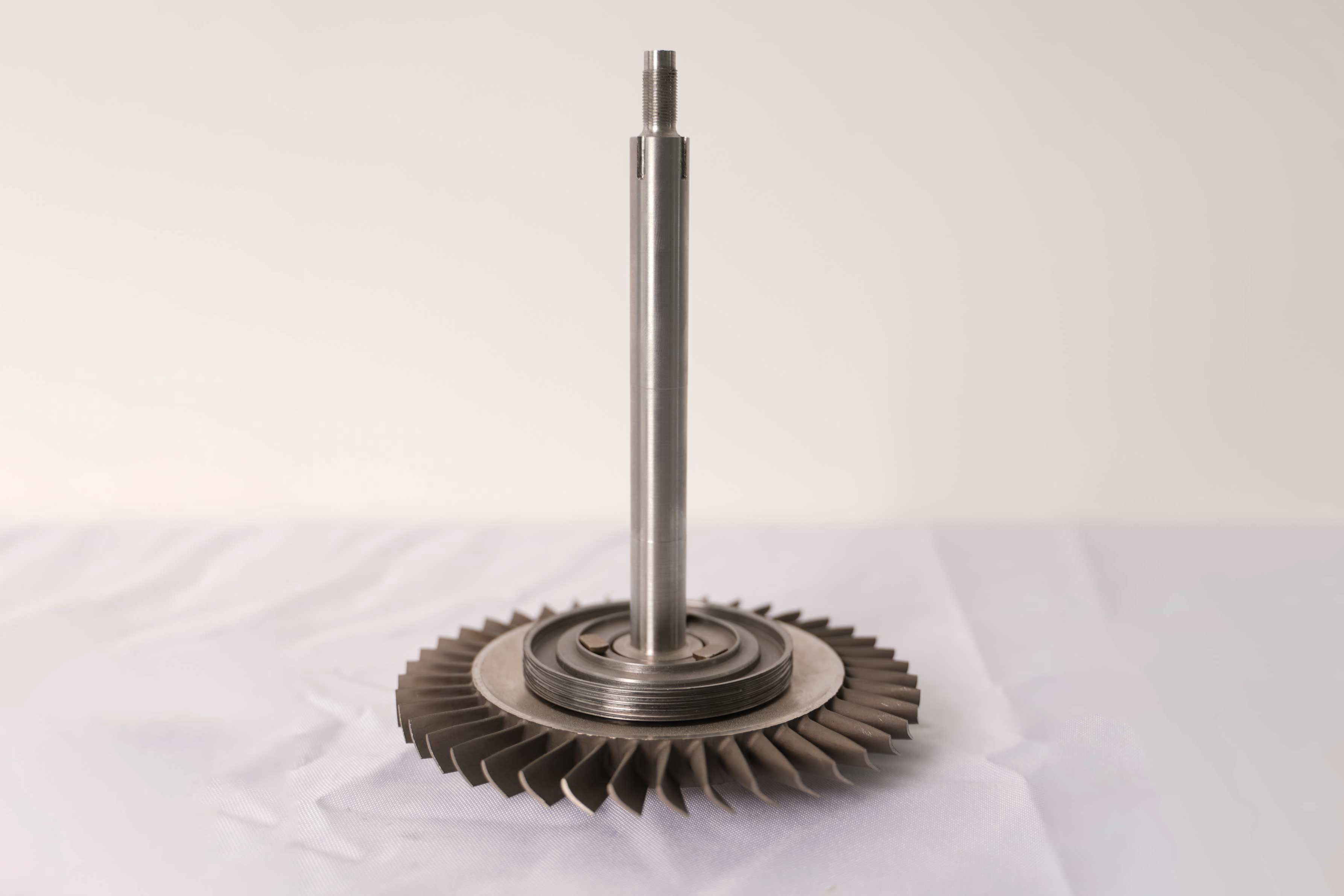
Ti-6Al-4V ELI (Grade 23) Precision Casting Turbine Wheel Components Fabricator

目录
Introduction
Core Technology: Precision Casting of Ti-6Al-4V ELI
Material Characteristics of Ti-6Al-4V ELI (Grade 23)
Case Study: Ti-6Al-4V ELI Turbine Wheel Production
Project Background
Typical Turbine Wheel Applications
Manufacturing Solutions for Turbine Wheel Components
Core Manufacturing Challenges
Results and Verification
FAQs

Introduction

Ti-6Al-4V ELI (Grade 23) is the extra-low interstitial version of Ti-6Al-4V, offering improved fracture toughness, superior fatigue resistance, and enhanced ductility. As a trusted precision casting fabricator, we produce high-performance Ti-6Al-4V ELI turbine wheel components using vacuum investment casting, achieving dimensional accuracy within ±0.05 mm and internal porosity levels below 1%.

Our castings are optimized for aerospace propulsion systems, particularly where turbine wheels must withstand high rotational speeds, thermal cycling, and long-term fatigue loading.

ti-6al-4v-eli-grade-23-precision-casting-turbine-wheel-components-fabricator

Core Technology: Precision Casting of Ti-6Al-4V ELI

We use vacuum investment casting to fabricate Ti-6Al-4V ELI components. The alloy is melted at ~1650°C and cast into 8–10 layer ceramic shell molds under vacuum (<10⁻³ torr). Mold preheating at ~1000°C and cooling rates of 30–70°C/min help achieve refined alpha+beta microstructures (0.5–2 mm grain size), free of alpha-case and internal defects.

Material Characteristics of Ti-6Al-4V ELI (Grade 23)

Ti-6Al-4V ELI (Grade 23) is a dual-phase titanium alloy with reduced levels of oxygen, nitrogen, and iron, leading to improved ductility and fracture resistance. It is ideal for highly loaded, fatigue-sensitive rotating components. Key properties include:

Property

Value

Density

4.43 g/cm³

Ultimate Tensile Strength

≥895 MPa

Yield Strength

≥825 MPa

Elongation

≥14%

Fracture Toughness (K_IC)

≥75 MPa·√m

Fatigue Strength (R=0.1, 10⁷ cycles)

~600 MPa

Operating Temperature Limit

Up to 400°C

Biocompatibility

Excellent

Its low interstitial impurity content ensures stable performance in critical rotating and high-vibration applications.

Case Study: Ti-6Al-4V ELI Turbine Wheel Production

Project Background

A propulsion system integrator required lightweight, fatigue-resistant turbine wheels for a high-altitude UAV engine. Ti-6Al-4V ELI was selected to handle sustained RPM loads and thermal cycling. Our team delivered vacuum-cast wheels with HIP processing and fine machining, fully meeting AMS 4930 and ISO 9001 standards.

Typical Turbine Wheel Applications

  • Auxiliary Power Unit (APU) Turbine Wheels: Castings designed for high-speed performance with excellent thermal fatigue endurance in compact aviation APUs.

  • Unmanned Aerial Vehicle (UAV) Core Engine Wheels: Lightweight rotors delivering thrust reliability and low inertia at altitudes above 60,000 ft.

  • Turboshaft Engine Turbine Rotors: Precision-cast components ensuring vibration stability and long fatigue life under rapid throttle changes.

  • Experimental Jet Propulsion Modules: Ti-6Al-4V ELI wheels used in R&D systems requiring tight tolerances, corrosion resistance, and stress survivability.

These applications demand exceptional balance between strength, weight, and thermal performance for safe, efficient turbine operation.

Manufacturing Solutions for Turbine Wheel Components

Casting Process Wax assemblies are formed with aerodynamic turbine profiles and invested into ceramic shells. The vacuum melting and casting process at ~1650°C eliminates oxidation risk. Controlled solidification promotes uniform grain morphology and net-shape integrity.

Post-processing Hot Isostatic Pressing (HIP) at 920°C and 100 MPa removes internal voids and densifies the structure. Aged heat treatment is applied to optimize alpha+beta phase balance and mechanical properties.

Post Machining Precision CNC machining ensures tolerance compliance at shaft bores, blade tips, and rotor contours. EDM is used for tight-feature finishing, while deep hole drilling enables access for cooling channels or fastener interfaces.

Surface Treatment Optional surface treatments include anodizing for oxidation protection and shot peening to enhance fatigue performance under cyclic loading.

Testing and Inspection Components are tested with X-ray radiography, CMM dimensional inspection, mechanical property testing, and metallographic analysis to confirm grain structure, phase distribution, and fatigue suitability.

Core Manufacturing Challenges

  • Preventing alpha-case formation and distortion during casting of thin, high-speed rotors.

  • Maintaining balance, roundness, and ±0.05 mm tolerances in large-diameter turbine wheels.

  • Delivering consistent fatigue and fracture toughness across production batches.

Results and Verification

  • Dimensional accuracy within ±0.05 mm validated by 3D CMM scanning.

  • Porosity <1% confirmed post-HIP through X-ray and metallography.

  • Fracture toughness ≥75 MPa·√m and fatigue strength ~600 MPa validated by fatigue crack growth testing.

  • Zero surface oxidation or phase instability after 1000-cycle thermal fatigue test at 400°C.

FAQs

  1. Why is Ti-6Al-4V ELI preferred for high-speed turbine wheel casting?

  2. How is dimensional accuracy maintained in precision-cast titanium rotors?

  3. What heat treatment steps are used to enhance phase stability in Grade 23?

  4. Can turbine wheels be machined and balanced to custom engine specifications?

  5. What quality certifications are used to ensure flight-critical compliance?