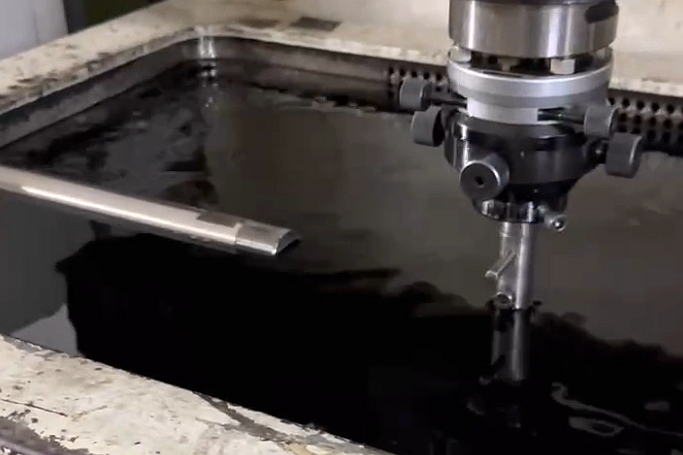
Electrical Discharge Machining (EDM) provides a precision-oriented solution for manufacturing superalloy pressure vessel components with intricate geometries and extreme tolerances. This non-contact process ensures minimal mechanical stress and maintains structural integrity under high-pressure, high-temperature conditions.
At Neway Aerotech, we specialize in advanced EDM machining for superalloy parts, offering wire EDM, sinker EDM, and hole drilling EDM for critical applications across nuclear energy, aerospace propulsion, and chemical processing systems.
The following table compares typical characteristics of common EDM methods used for high-performance superalloy components:
EDM Process | Surface Roughness (Ra, μm) | Dimensional Tolerance (mm) | Aspect Ratio | Heat Affected Zone (HAZ, μm) | Min. Feature Size (mm) |
|---|---|---|---|---|---|
Wire EDM | 0.3–1.2 | ±0.002–±0.01 | Up to 20:1 | 2–5 μm | ~0.1 |
Sinker EDM | 0.4–2.5 | ±0.005–±0.02 | Up to 10:1 | 5–10 μm | ~0.2 |
Hole Drilling EDM | 0.5–3.0 | ±0.02–±0.05 | Up to 30:1 | 10–15 μm | ~0.1 |
Micro-EDM | 0.1–0.4 | ±0.001–±0.005 | Up to 15:1 | <2 μm | <0.05 |
Note: HAZ values vary based on discharge energy, electrode material, and dielectric flushing efficiency.
Wire EDM: Best for intricate profiles and through-cuts with exceptional accuracy and minimal thermal distortion.
Sinker EDM: Ideal for cavities, blind features, and 3D shapes using shaped graphite or copper electrodes.
Hole Drilling EDM: Suitable for small diameter cooling channels or starter holes in hard-to-machine materials.
Micro-EDM: Designed for ultra-fine features in miniature components requiring high precision and excellent repeatability.
Material | High-Temp Strength (MPa @ 650°C) | Creep Resistance (1000h @ 650°C) | Thermal Fatigue Resistance | Chemical Stability | Main Application Scenarios |
|---|---|---|---|---|---|
~980 | Excellent (<0.1% strain) | Outstanding at 10⁶ cycles | Oxidation/corrosion resistant | Nuclear reactors, aerospace engine structures | |
~790 | Good (<0.3% strain) | Moderate | Resistant to acids and chlorides | Chemical reactors, seawater components | |
~1230 | Excellent (<0.05% strain) | High cycle life above 900°C | Stable in oxidizing conditions | Aerospace combustion liners, turbine housings | |
~940 | Moderate | Excellent (shock resistant) | Superior to most cobalt alloys | Valve seats, wear liners in corrosive systems | |
~960 | Very good (<0.1% strain) | Reliable up to 950°C | Stable in thermal oxidation | Turbine discs, high-stress vessel internals | |
~870 | Fair at elevated temp | Limited at >500°C | Good in neutral/pure atmospheres | Lightweight aerospace-grade pressure assemblies |
Inconel 718: Selected for high fatigue strength, tensile >980 MPa, oxidation resistance, and consistent creep behavior under 704°C load.
Hastelloy C-276: Ideal for acid-resistant environments; maintains corrosion resistance and strength in chloride or sulfur-bearing media up to 1040°C.
Rene 41: Used when creep rupture strength >1000 MPa at 980°C is required in continuous high-temperature operating conditions.
Stellite 6B: Preferred in wear-critical, corrosive assemblies; maintains surface integrity and hardness >35 HRC at 800°C.
Nimonic 90: Chosen for turbine internals needing low-strain creep resistance at 950°C with long service life cycles.
Ti-6Al-4V: Applied when weight-to-strength ratio matters; tensile strength ~900 MPa with excellent machinability and fatigue resistance.
A client in the nuclear energy sector required precision components for a pressurized water reactor (PWR) system. The component, an internal baffle ring and support flange, required dimensional tolerance within ±0.005 mm and complex internal channels.
Material Preparation: Inconel 718 billet, Ø180 mm × 60 mm, forged and aged at 720°C for 8 hours.
Pre-machining: CNC roughing at 0.8 mm depth per pass with 20 μm positioning accuracy for datum establishment.
Wire EDM: External contours cut at ±0.005 mm tolerance using Ø0.25 mm molybdenum wire.
Sinker EDM: 3D cavity machined with copper electrodes; depth 28 mm, spark gap 0.1 mm.
Hole Drilling EDM: Deep hole EDM applied to produce 0.8 mm radial micro-holes with 30:1 aspect ratio and ±0.02 mm tolerance.
Stress Relief Heat Treatment at 980°C for 4 hours
Hot Isostatic Pressing (HIP) to eliminate micro-voids (100 MPa @ 1200°C)
Shot Peening to improve fatigue resistance by >25%
Ra ≤ 0.8 μm achieved via fine polishing
Passivation for corrosion resistance enhancement
Optional TBC Coating for sections facing thermal shock
CMM dimensional verification with <2 μm deviation
X-ray inspection for void detection
SEM + EDX for surface integrity and elemental analysis
Ultrasonic Immersion Testing for internal defect validation
The final components achieved consistent dimensional tolerances within ±0.003 mm across all profiles, including critical sealing and mating surfaces.
Post-process densification using HIP resulted in complete pore closure, verified by zero porosity indication under 10x radiographic X-ray inspection criteria.
Surface finishing operations achieved Ra ≤ 0.8 μm uniformly, with no micro-cracks or stress concentrators observed under SEM at 500x magnification.
All internal features passed ultrasonic immersion testing, meeting ASTM E2375 Level 1 acceptance for flaw detection sensitivity and coverage.
CMM inspection confirmed geometric conformity within 2 μm total deviation from CAD model across 25 measured key inspection points.
What is the maximum thickness of superalloy that can be processed with EDM?
How does EDM affect the microstructure of high-temperature alloys?
What is the best way to ensure dimensional accuracy for internal features?
Can pressure vessel parts be EDM-machined after coating applications?
What are the recommended post-process inspections after EDM machining?