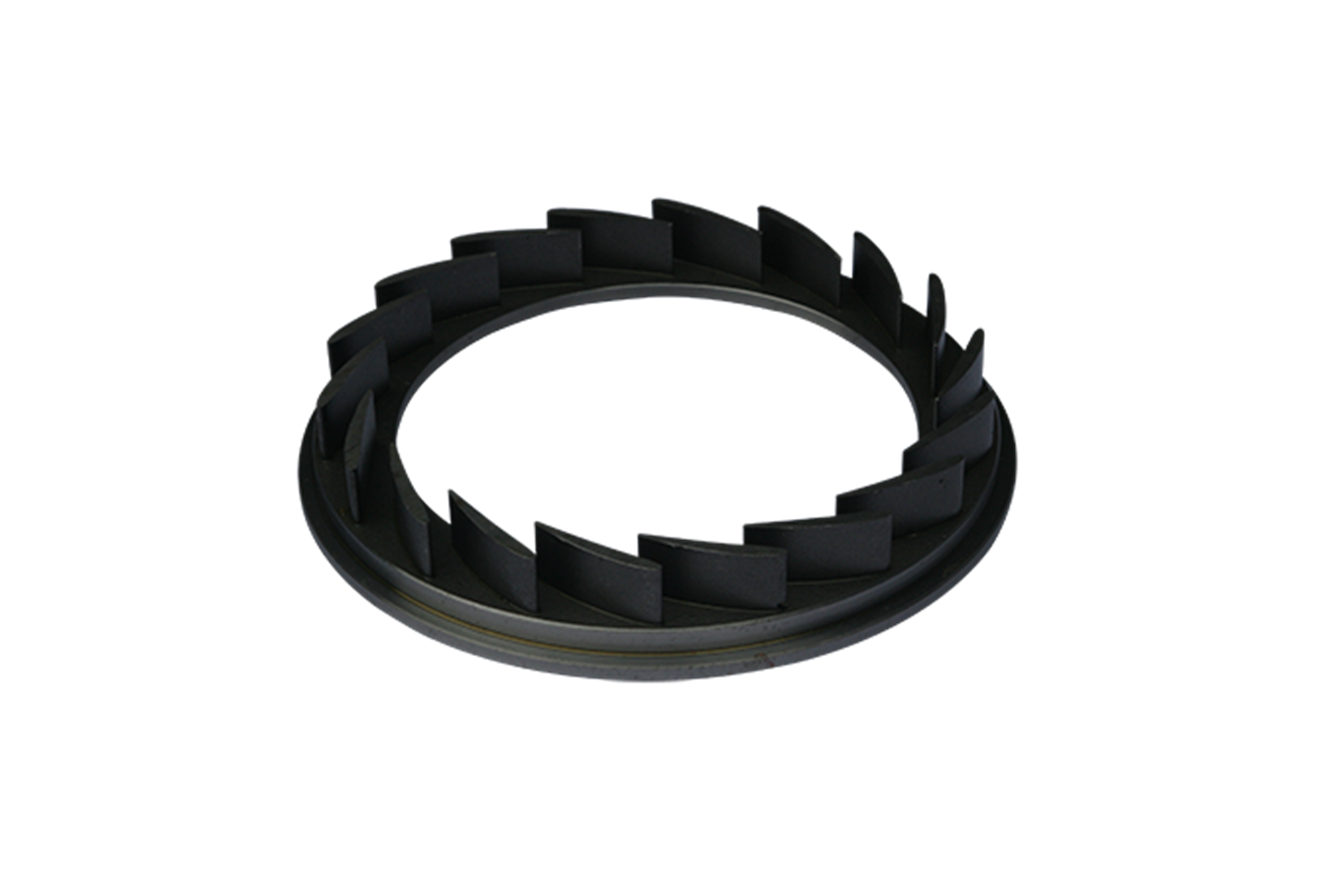
Turbine nozzle rings made from Inconel superalloys are exposed to intense thermal cycles, oxidation, and high gas velocities. These components, typically produced by vacuum investment casting, may contain internal shrinkage defects and microvoids that compromise fatigue life and dimensional stability. Hot Isostatic Pressing (HIP) is essential to densify these Inconel castings and ensure performance under prolonged high-temperature conditions.
Neway AeroTech is a specialized HIP company offering certified hot isostatic pressing services for Inconel alloy turbine nozzle rings. We apply HIP at temperatures up to 1260°C and pressures up to 200 MPa, supporting equiaxed, directionally solidified, and cast-repaired nozzle segments in compliance with AMS 2774 and turbine OEM specifications.
Turbine nozzle rings undergo thermal gradients exceeding 1000°C and are prone to high-cycle fatigue. HIP provides:
Complete densification of casting defects, including microporosity and shrinkage
Improved microstructural uniformity for oxidation and creep resistance
Enhanced fatigue strength, especially in vane-to-ring junctions
Stable geometry for CNC machining and sealing surfaces
HIP is typically applied prior to final machining and TBC coating.
Alloy | Max Temp (°C) | HIP Temp (°C) | Application |
|---|---|---|---|
950 | 1210 | Nozzle segments, vane rings | |
1050 | 1230 | Guide vanes, shrouds | |
980 | 1170 | Combustor rings, support flanges |
Alloy selection and HIP parameters are adjusted to meet component wall thickness and operating temperature profiles.
A customer submitted 160 equiaxed Inconel 713C nozzle segments with wall thicknesses ranging from 4 to 8 mm. HIP was performed at 1210°C, 100 MPa for 4 hours. SEM and X-ray confirmed porosity closure >98% and fatigue strength improvement by 2.6× over non-HIP parts.
Model | Description | Alloy | Industry |
|---|---|---|---|
NR-700 | Guide ring with radial vane segments | Inconel 713C | |
VNS-420 | Segmental vane ring with seal groove | Inconel 738 | |
CRC-350 | Combustion ring with flanged collar | Inconel 625 |
Each component was HIPed and post-processed with CMM validation and SEM microstructural confirmation.
Eliminates >99% porosity, enhancing ultrasonic inspection and fatigue reliability
Heals microcracks at vane intersections and seal lands
Improves creep resistance, critical in sustained high-load zones
Reduces anisotropy, supporting tight-tolerance CNC machining post-HIP
Boosts coating adhesion, providing uniform TBC coverage and bond strength
HIP Temp Range: 1170–1260°C, alloy-dependent
Pressure: 100–200 MPa, argon gas environment
Hold Time: 3–6 hours, based on geometry and wall thickness
Cooling: ≤10°C/min, to prevent phase imbalance and warping
Parts were HIPed at 1210°C, 100 MPa for 4 hours. Cooling was controlled at 5°C/min to avoid dimensional distortion.
Components underwent heat treatment per AMS 5383, followed by CNC machining and optional TBC coating for high-heat environments.
X-ray inspection verified internal densification. CMM ensured bore and seal geometry. SEM analysis confirmed homogeneous grain structure and crack-free zones.
What Inconel grades are most suitable for HIP in nozzle applications?
How does HIP improve fatigue resistance in vane-ring assemblies?
Can HIP be applied after weld repair of nozzle segments?
What dimensional tolerances are maintained post-HIP?
Is HIP necessary for both equiaxed and DS Inconel nozzle components?