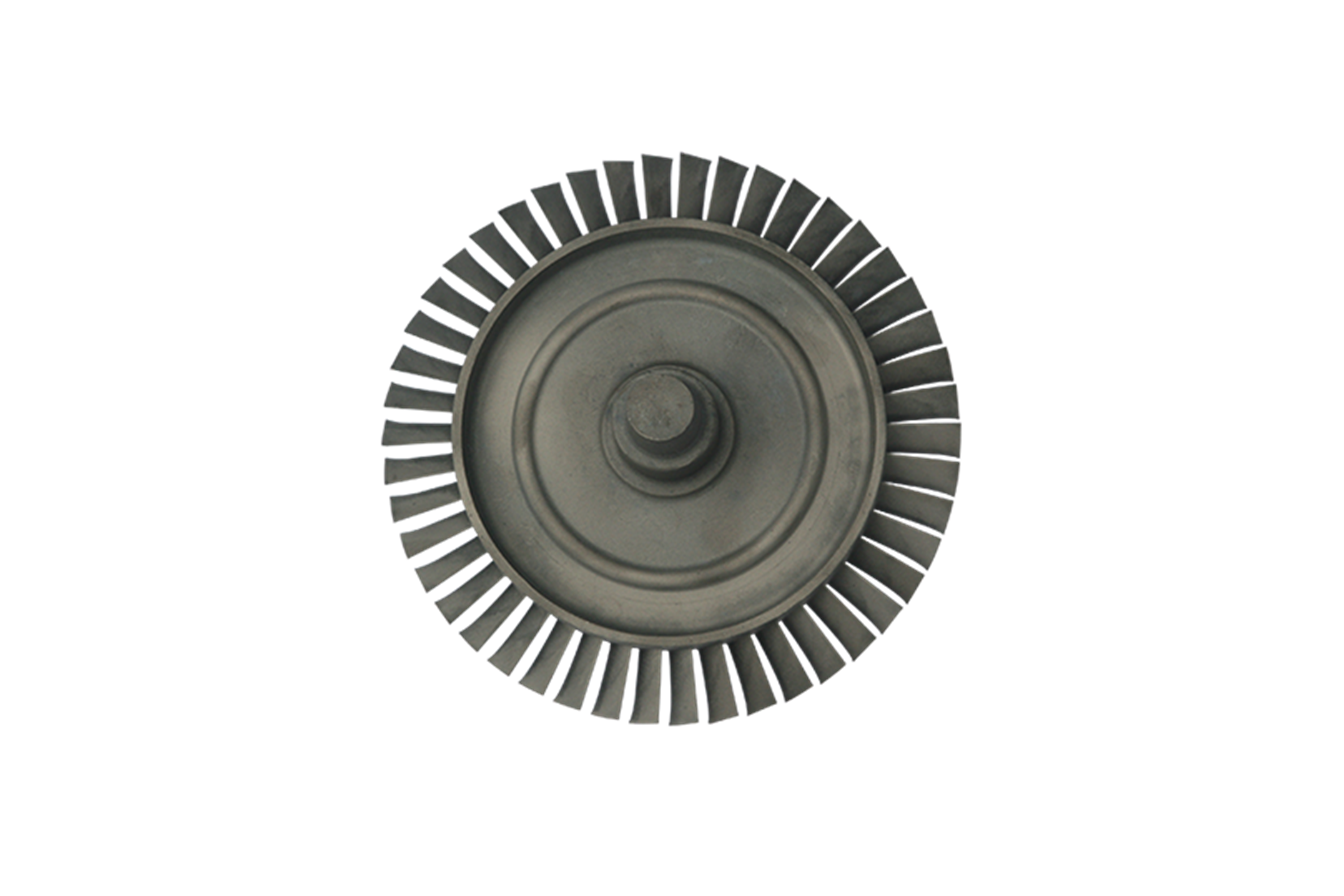
CMSX single crystal superalloys are engineered for high-temperature turbine blade and vane applications, offering exceptional resistance to creep, oxidation, and thermal fatigue. However, even precision single crystal castings can retain sub-surface porosity and localized shrinkage defects. Hot Isostatic Pressing (HIP) is critical to densify CMSX components while preserving directional grain orientation.
Neway AeroTech is a certified HIP supplier for single crystal turbine parts made from CMSX-4 alloy, CMSX-10 alloy, and CMSX-2 alloy. Our HIP process removes casting defects while maintaining crystallographic alignment and mechanical properties for OEM-qualified turbine components.
Single crystal blades must be structurally flawless to function under extreme turbine conditions. HIP treatment:
Eliminates internal microporosity from directional solidification in root, shroud, and airfoil sections
Maintains single grain integrity, critical for creep resistance
Improves mechanical uniformity before 5-axis CNC machining and thermal barrier coating
Supports weld repair readiness, minimizing recrystallization risk
All HIP parameters are tailored to avoid stray grain formation.
Alloy | Max Service Temp (°C) | HIP Temp (°C) | Applications |
|---|---|---|---|
CMSX-4 | 1140 | 1260 | 1st-stage blades, vanes |
CMSX-10 | 1170 | 1280 | Turbine rotors, airfoils |
CMSX-2 | 1120 | 1245 | Transition blades, cooling segments |
Alloys are HIPed using OEM and AMS 2774-compliant protocols.
A customer submitted 72 CMSX-4 single crystal turbine blades with 25 mm thick airfoils and radial cooling channels. HIP was performed at 1260°C, 140 MPa for 4 hours. Post-HIP SEM showed closed porosity and uninterrupted dendritic alignment with no recrystallization.
Component Model | Description | Alloy | Industry |
|---|---|---|---|
SCB-600 | 1st-stage airfoil with serpentine cooling | CMSX-4 | Aerospace applications |
VNS-420 | Nozzle guide segment with slot cooling | CMSX-2 | Power sector |
TBR-510 | Rotor blade with fir-tree root | CMSX-10 | Energy industry |
All parts are HIP-treated before finishing and coating.
Reduces porosity below 0.03%, improving ultrasonic inspectability and mechanical strength under 1150°C operating conditions.
Preserves grain orientation (001 axis) with zero stray grain formation or recrystallized zones during pressurization and cooling.
Improves fatigue life by 2–3×, especially at shroud corners and cooling cavity intersections under cyclic thermal stress.
Stabilizes wall thickness variation <0.01 mm, ensuring consistent post-HIP CNC machining tolerances.
Prepares castings for weld repair, enabling trailing edge TIG welding with minimal HAZ grain transformation.
Temperature: 1245–1280°C, held within ±5°C to maintain phase boundaries and avoid grain misorientation.
Pressure: 100–200 MPa, argon atmosphere ensures uniform consolidation of fine porosity across airfoil and root regions.
Hold time: 4–6 hours, adjusted for casting size, geometry complexity, and wall section thickness.
Cooling rate: ≤10°C/min, prevents stray grain growth, cracking, and residual stress development in airfoil surfaces.
Validation: X-ray, CMM inspection, SEM analysis, EBSD for orientation confirmation.
Parts were HIPed at 1260°C, 140 MPa for 4 hours in inert atmosphere. Cooling was controlled at ≤8°C/min. No stray grains or recrystallization detected.
All blades were heat treated per OEM spec. Final processing included precision CNC machining and optional thermal barrier coating application.
X-ray NDT confirmed porosity closure. Coordinate measurement validated dimensional accuracy. Grain structure SEM + EBSD confirmed integrity and orientation.
Can HIP be applied to CMSX blades with internal cooling holes?
How is single crystal orientation preserved during HIP?
What inspection methods verify HIP effectiveness in SC castings?
Can HIP follow weld repair or precede CNC profiling?
What standards govern HIP processing of CMSX turbine components?