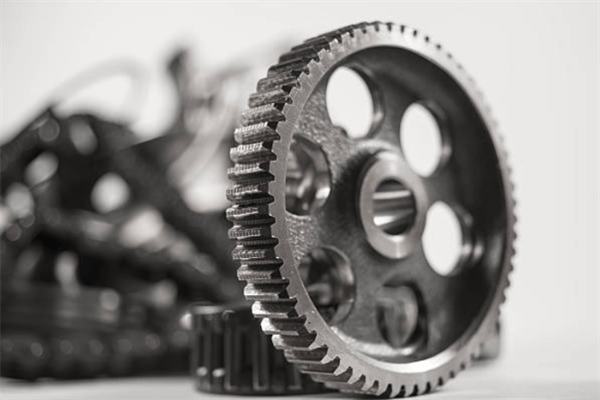
3D printing enables the efficient fabrication of high-precision gears from stainless steel and carbon steel with complex profiles. It is ideal for low-volume, high-strength components in demanding transmission and mechanical power systems.
At Neway Aerotech, our metal 3D printing services offer tailored solutions using carbon steel, 304, and 316L stainless steel for functional gears used in robotics, automotive, energy, and aerospace.
Technology | Layer Thickness (μm) | Surface Roughness (Ra, μm) | Tolerance (mm) | Feature Size (mm) | Applications |
|---|---|---|---|---|---|
SLM (Selective Laser Melting) | 20–50 | 5–15 | ±0.05 | ≥0.3 | High-load gears, small module precision gears |
DMLS (Direct Metal Laser Sintering) | 20–60 | 6–20 | ±0.08 | ≥0.4 | Industrial drive gears, custom mechanical sets |
Binder Jetting | 30–100 | 10–25 | ±0.10 | ≥0.6 | Prototype gear models, lower-load applications |
Note: SLM and DMLS are preferred for final-use components requiring durability, hardness, and wear resistance.
Material | UTS (MPa) | Hardness (HV) | Corrosion Resistance | Key Properties | Primary Applications |
|---|---|---|---|---|---|
Carbon Steel | 550–750 | 180–220 | Low | High strength, cost-effective, machinable | Industrial and agricultural gear components |
510–730 | 170–200 | Moderate | Non-magnetic, good wear and oxidation resistance | Medical equipment gears, food machinery | |
480–680 | 160–190 | Excellent | Chloride-resistant, low carbon, ductile | Marine gear units, chemical pumps and mixers |
Carbon Steel: Suitable for high-load structural gears with minimal exposure to corrosion, offering high toughness and machinability.
304 Stainless Steel: Used for general-purpose applications requiring moderate wear resistance and non-magnetic behavior.
316L Stainless Steel: Selected for corrosive environments where strength retention in chlorides and acids is critical.
A marine systems integrator needed a compact planetary gear component that could operate continuously in a seawater-lubricated hydraulic drive. Material had to withstand 1000-hour salt spray cycles with minimal degradation.
Design: Imported STEP model of involute gear with 42 mm OD and 0.8 mm module.
Material: 316L stainless steel selected for corrosion immunity and uniform density.
Printing Process: SLM at 30 μm layer height; build orientation optimized to preserve tooth profile integrity.
Post-processing: HIP at 1150°C and 100 MPa, followed by CNC tooth profile grinding to AGMA 10 class accuracy.
Surface Finishing: Electropolishing to Ra ≤ 0.6 μm and passivation to ASTM A967 standards.
CMM: Dimensional accuracy within ±0.02 mm across 16 gear teeth.
Salt Spray Test: 1000 hours exposure per ASTM B117 with no pitting or rusting detected.
Microhardness: 190 HV average post-HIP, stable across gear root and tip.
CT Scan: Confirmed >99.95% density with no internal porosity or delamination.
The 316L gear maintained pitch integrity, zero backlash, and dimensional stability under 12 MPa torque loading during 500-hour bench simulation. After service exposure, no signs of corrosion, wear, or tooth fracture were observed, validating both material and process strategy.
What is the surface roughness after 3D printing metal gear components?
Can 3D printed steel gears be used in high-torque industrial systems?
What heat treatments improve hardness for carbon steel 3D printed gears?
How does binder jetting compare to SLM for gear manufacturing?
Is passivation required for stainless steel gear parts after printing?