中文

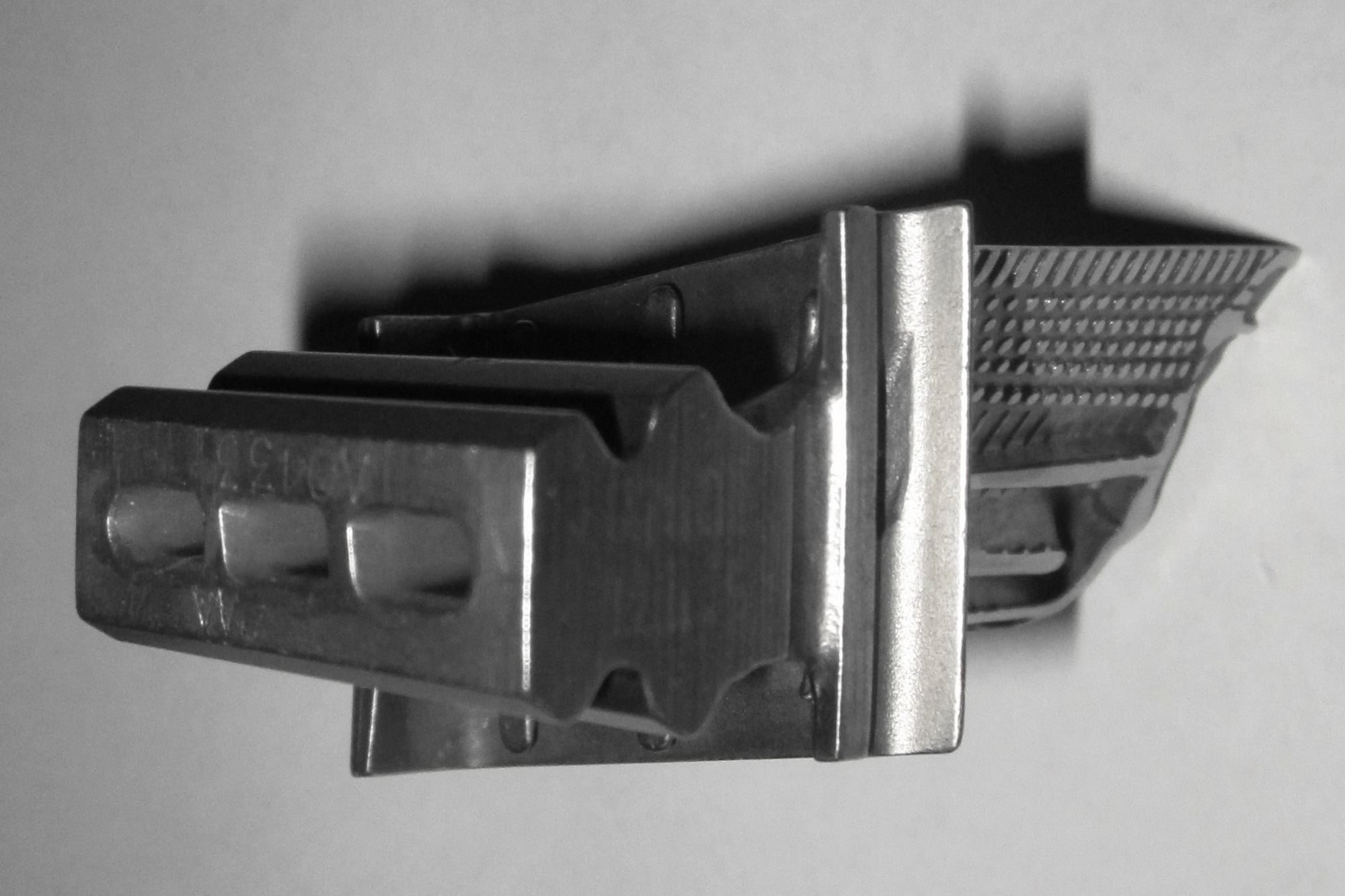
PWA 1484 Superalloy Compressor Blade Monocrystal Alloy Casting Factory

目录
Introduction
Key Manufacturing Challenges for PWA 1484 Compressor Blades
Monocrystalline Casting Process for PWA 1484 Compressor Blades
Comparative Analysis of Manufacturing Methods for Compressor Blades
Optimal Manufacturing Strategy for PWA 1484 Compressor Blades
PWA 1484 Alloy Performance Overview
Advantages of Using PWA 1484 for Compressor Blades
Post-processing Techniques for PWA 1484 Compressor Blades
Inspection and Quality Assurance for Compressor Blades
Industry Applications and Case Study
FAQs

Introduction

PWA 1484 is a second-generation nickel-based single-crystal superalloy developed for superior creep resistance, outstanding oxidation resistance, and excellent fatigue life at service temperatures up to 1100°C. With a tensile strength around 1420 MPa and exceptional γ' phase stability, PWA 1484 is widely used to produce compressor blades for advanced aerospace engines and high-efficiency gas turbines.

At Neway AeroTech, we specialize in manufacturing PWA 1484 compressor blades using precision monocrystalline (single crystal) vacuum investment casting, ensuring high dimensional accuracy, perfect crystallographic orientation, and maximum mechanical performance under extreme service conditions.

Key Manufacturing Challenges for PWA 1484 Compressor Blades

  • Maintaining precise alloy composition (Ni base, Cr ~5%, Co ~10%, Al ~5.6%, Ta ~8.5%, W ~6%, Re ~3%).

  • Controlling single crystal solidification to achieve defect-free [001] crystallographic orientation without grain boundaries.

  • Achieving tight dimensional tolerances (±0.03 mm) critical for aerodynamic efficiency and mechanical fit.

  • Ensuring surface finishes (Ra ≤1.6 µm) for optimal airflow and minimized drag.

Monocrystalline Casting Process for PWA 1484 Compressor Blades

The manufacturing process includes:

  1. Wax Pattern Fabrication: Injection molding of high-precision wax patterns with ±0.1% dimensional consistency.

  2. Shell Building: Construction of high-temperature ceramic shell molds using yttria-stabilized zirconia slurries.

  3. Dewaxing: Steam autoclaving at ~150°C removes wax and preserves shell integrity.

  4. Vacuum Melting and Pouring: Alloy melted at ~1450°C under vacuum (<10⁻³ Pa) to prevent oxidation.

  5. Single Crystal Growth: Controlled withdrawal (~3–6 mm/min) through a thermal gradient to grow a [001]-oriented single crystal.

  6. Shell Removal and CNC Finishing: Final removal of shell, followed by precision machining and polishing to achieve aerodynamic profiles.

Comparative Analysis of Manufacturing Methods for Compressor Blades

Process

Grain Structure

Surface Finish

Dimensional Precision

Mechanical Strength

Max Temp Resistance

Single Crystal Investment Casting

Single crystal

Excellent (Ra ≤1.6 µm)

Very High (±0.03 mm)

Superior (~1420 MPa)

Outstanding (~1100°C)

Directional Solidification

Columnar grains

Good (Ra ~3 µm)

High (±0.05 mm)

Very Good (~1350 MPa)

Excellent (~1050°C)

Equiaxed Casting

Random grains

Moderate (Ra ~3–5 µm)

Moderate (±0.1 mm)

Good (~1250 MPa)

High (~980°C)

Optimal Manufacturing Strategy for PWA 1484 Compressor Blades

Single crystal investment casting provides Ra ≤1.6 µm surface finish, ±0.03 mm dimensional accuracy, and maximizes high-temperature strength and fatigue life.

Directional solidification offers columnar grain structure with excellent mechanical properties but lower fatigue resistance than true single crystals.

Equiaxed casting is more economical but provides lower creep resistance and fatigue life, limiting application in hot turbine stages.

PWA 1484 Alloy Performance Overview

Property

Value

Application Relevance

Tensile Strength

~1420 MPa

Supports extreme centrifugal and thermal loads

Yield Strength

~1250 MPa

Provides stability under high stress conditions

Maximum Operating Temperature

~1100°C

Enables operation at turbine inlet conditions

Creep Resistance

Outstanding

Prolongs compressor blade service life

Fatigue Strength

~720 MPa

Resists crack initiation under cyclic loading

Advantages of Using PWA 1484 for Compressor Blades

  • Superior creep and fatigue resistance ensures blade stability at turbine operating temperatures up to 1100°C.

  • Excellent oxidation resistance protects blade surfaces under hot gas exposure.

  • Perfect single crystal structure eliminates grain boundary weaknesses, enhancing overall durability.

  • High mechanical strength maintains blade shape under high centrifugal and thermal loads.

Post-processing Techniques for PWA 1484 Compressor Blades

  • Hot Isostatic Pressing (HIP): Densifies castings at ~1160°C and 100 MPa, eliminating microporosity.

  • Solution and Aging Heat Treatment: Stabilizes γ' phase, enhancing strength and creep resistance at elevated temperatures.

  • Precision CNC Machining: Achieves ±0.01 mm tolerances and Ra ≤0.8 µm for aerodynamic surfaces.

  • Surface Polishing and Shot Peening: Induces compressive surface stresses, improving fatigue strength by 20–30%.

Inspection and Quality Assurance for Compressor Blades

Industry Applications and Case Study

PWA 1484 compressor blades manufactured by Neway AeroTech are widely used in the latest generation of aerospace engines and industrial gas turbines. In a recent aerospace engine program, PWA 1484 single crystal blades demonstrated over 18,000 flight hours under turbine inlet temperatures exceeding 1080°C, achieving a 40% increase in service life compared to conventional equiaxed and directional solidification blades.

FAQs

  1. What dimensional tolerances can Neway AeroTech achieve for PWA 1484 compressor blades?

  2. Why is single crystal casting critical for PWA 1484 turbine blade manufacturing?

  3. How does PWA 1484 compare to other turbine blade superalloys at high temperatures?

  4. What industries commonly use PWA 1484 single crystal compressor blades?

  5. How does Neway AeroTech ensure metallurgical quality and durability for PWA 1484 castings?