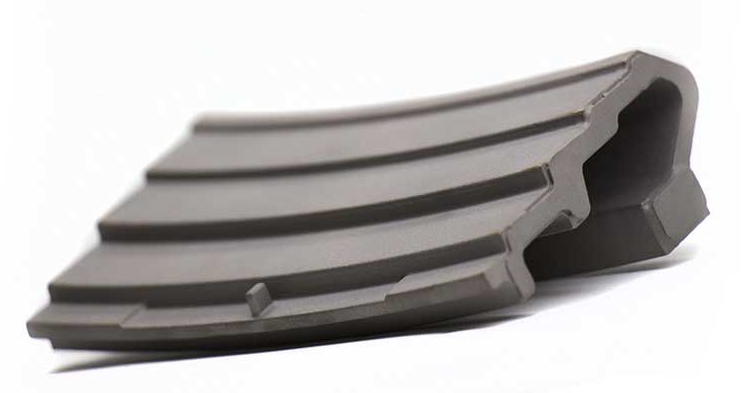
Heat shields forged from Nimonic superalloys deliver exceptional durability, oxidation resistance, and mechanical strength under continuous exposure to extreme temperatures. At Neway AeroTech, we specialize in precision forging services for Nimonic alloys, producing high-performance heat shields with dimensional tolerances of ±0.05 mm and outstanding creep and fatigue resistance.
Utilizing advanced forging processes and aerospace-grade quality control systems, our Nimonic heat shields are trusted for critical applications in aerospace turbines, energy generation, and industrial thermal protection systems.
Forging Nimonic alloys such as Nimonic 90 and Nimonic 80A involves several critical challenges:
High strength and work-hardening rates complicate deformation control during forging.
Maintaining tight dimensional tolerances (±0.05 mm) for complex shield geometries.
Managing grain size and orientation to ensure superior creep and thermal fatigue resistance.
Achieving consistent surface integrity (Ra ≤3.2 µm) for effective thermal protection.
The forging process for Nimonic superalloy heat shields includes:
Billet Heating: Controlled preheating to 1050-1150°C for optimal forgeability without grain growth.
Precision Die Forging: Forging under tightly controlled conditions to achieve desired microstructure and complex geometries.
Isothermal Forging (if required): Specialized isothermal forging for single-directional grain alignment in critical parts.
Controlled Cooling: Furnace or air cooling to maintain microstructural integrity and minimize residual stress.
Post-Forging Heat Treatment: Solution treatment at 1080-1120°C followed by controlled aging to optimize mechanical performance.
Final CNC Machining: Achieving precise final tolerances (±0.01 mm) and smooth surface finishes (Ra ≤1.6 µm).
Manufacturing Method | Dimensional Accuracy | Surface Finish (Ra) | Microstructure Control | Thermal Fatigue Resistance | Cost Efficiency |
|---|---|---|---|---|---|
Precision Forging | ±0.05 mm | ≤3.2 µm | Excellent | Superior | Medium |
Vacuum Investment Casting | ±0.1 mm | ≤3.2 µm | Good | Good | Medium |
CNC Machining (from Solid) | ±0.01 mm | ≤0.8 µm | Limited | Moderate | High |
Selecting the optimal manufacturing method for Nimonic heat shields requires balancing thermal fatigue performance, structural integrity, and economic efficiency:
Precision Forging: The preferred method for critical aerospace and energy applications. It delivers superior grain structure control, with dimensional tolerances of ±0.05 mm and surface finishes Ra ≤3.2 µm. Forged Nimonic heat shields offer up to 30% higher creep resistance and improved fatigue performance than cast counterparts, ensuring reliable operation beyond 900°C.
Vacuum Investment Casting: Suitable for components with intricate geometries where forging is impractical. While it offers good surface quality (Ra ≤3.2 µm) and moderate dimensional tolerances (±0.1 mm), cast parts generally exhibit coarser grain structures, making them more suitable for less critical high-temperature shielding applications.
CNC Machining (from Solid): Ideal for low-volume or prototype production requiring ultra-precise dimensional control (±0.01 mm) and fine surface finishes (Ra ≤0.8 µm). However, machining Nimonic solids is less material-efficient and increases cost, making it practical only for specific requirements such as complex interfacing features or urgent lead times.
Alloy Material | Max Service Temp (°C) | Tensile Strength (MPa) | Creep Resistance | Oxidation Resistance | Typical Applications |
|---|---|---|---|---|---|
950 | 1200 | Excellent | Superior | Turbine heat shields, discs | |
850 | 1050 | Good | Superior | Gas turbine thermal shields | |
750 | 820 | Moderate | Good | Industrial heat shields | |
870 | 930 | Excellent | Excellent | Combustor panels, aerospace shields | |
870 | 960 | Excellent | Excellent | Aerospace thermal protection systems | |
980 | 1180 | Superior | Superior | High-temperature gas turbine shields |
Alloy selection strategies include:
Nimonic 90: Preferred for critical turbine heat shields requiring maximum tensile strength (1200 MPa) and creep resistance at 950°C.
Nimonic 80A: Chosen for gas turbine shields balancing strength (1050 MPa) and oxidation resistance up to 850°C.
Nimonic 75: Used for industrial applications where good thermal resistance is needed at moderate temperatures (750°C).
Nimonic 263: Ideal for combustor panels and aerospace shields requiring a combination of toughness and oxidation resistance.
Nimonic PE16: Suitable for aerospace systems requiring consistent thermal fatigue resistance and strength at high temperatures.
Nimonic 115: Selected for the most demanding applications requiring superior high-temperature strength and oxidation resistance at nearly 1000°C.
Critical post-processing treatments:
Hot Isostatic Pressing (HIP): Improves density and eliminates internal porosity for higher fatigue life.
Precision CNC Machining: Final adjustment achieving tolerances of ±0.01 mm and excellent surface finishes.
Heat Treatment: Custom solution and aging processes to optimize microstructure and mechanical strength.
Surface Finishing Processes: Grinding and polishing to enhance fatigue life and thermal barrier efficiency.
Neway AeroTech ensures the quality of each heat shield through:
Coordinate Measuring Machine (CMM): Dimensional validation within ±0.005 mm.
X-ray Non-destructive Testing: Internal defect analysis.
Metallographic Microscopy: Evaluation of grain structures and carbide distribution.
Tensile Testing: Mechanical performance verification.
Quality assurance is conducted in full compliance with AS9100 aerospace standards.
Neway AeroTech delivered forged Nimonic 90 heat shields for aerospace turbines, achieving:
Operating Temperature: Continuous service up to 950°C
Fatigue Life: Increased by 38% after HIP and heat treatment
Dimensional Precision: ±0.03 mm maintained
Certification: Fully compliant with AS9100 aerospace quality standards
What advantages does precision forging offer for Nimonic heat shields?
Which Nimonic alloy grades are best for high-temperature turbine applications?
How do you ensure tight dimensional tolerances in forged Nimonic parts?
What post-processing methods improve Nimonic heat shield performance?
What quality certifications do your Nimonic forged products meet?