
Processamento de Núcleos de Molde em Superliga In718 por Eletroerosão a Fio
Introdução à Eletroerosão a Fio para Núcleos de Molde em In718
A eletroerosão a fio (Wire EDM) é a solução ideal para usinar núcleos de molde em Inconel 718 com geometrias intrincadas e tolerâncias apertadas. Esta técnica sem contato permite o corte preciso de superligas endurecidas sem induzir tensões ou deformações, algo crítico para aplicações de moldes sujeitas a ciclos térmicos.
Na Neway Aerotech**, somos especializados na **usinagem por eletroerosão a fio de Inconel 718, permitindo a produção de núcleos de molde de precisão para injeção, fundição sob pressão e ambientes de ferramentaria de alta temperatura.
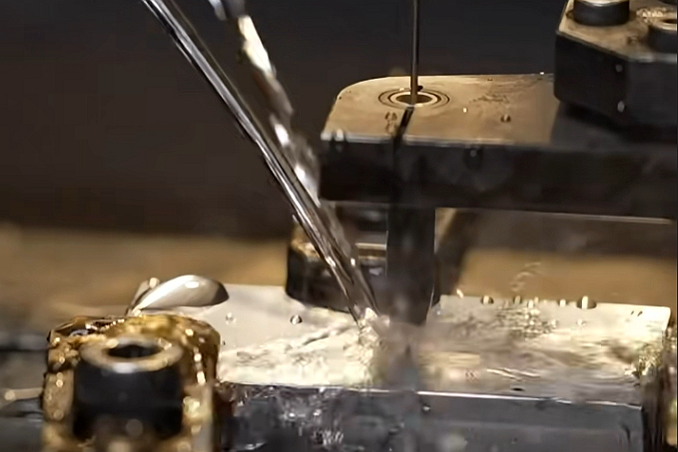
Visão Geral da Tecnologia de Usinagem por EDM
Classificação da Usinagem por EDM
Processo EDM | Rugosidade Superficial (Ra, μm) | Tolerância Dimensional (mm) | Relação de Aspecto | Zona Afetada pelo Calor (HAZ, μm) | Tamanho Mínimo do Recurso (mm) |
|---|---|---|---|---|---|
Eletroerosão a Fio (Wire EDM) | 0,3–1,2 | ±0,002–±0,01 | Até 20:1 | 2–5 μm | ~0,1 |
Eletroerosão por Penetração (Sinker EDM) | 0,4–2,5 | ±0,005–±0,02 | Até 10:1 | 5–10 μm | ~0,2 |
EDM de Perfuração de Furos | 0,5–3,0 | ±0,02–±0,05 | Até 30:1 | 10–15 μm | ~0,1 |
Micro-EDM | 0,1–0,4 | ±0,001–±0,005 | Até 15:1 | <2 μm | <0,05 |
A ZAC (Zona Afetada pelo Calor) é minimizada na eletroerosão a fio de múltiplas passagens com baixa energia, preservando a estabilidade metalúrgica dos componentes em In718.
Estratégia de Seleção de Usinagem por EDM
Eletroerosão a Fio (Wire EDM): Mais adequada para aparar núcleos de molde, perfis de insertos ejectores e superfícies de separação de precisão.
Eletroerosão por Penetração (Sinker EDM): Utilizada quando são necessárias cavidades 3D complexas ou recursos cegos em insertos de ferramentas em In718.
EDM de Perfuração de Furos: Aplicado para furos profundos de ventilação ou resfriamento em grandes blocos de molde.
Micro-EDM: Utilizado para microtexturas, ventilações e microrecursos <0,1 mm em ferramentas de moldagem térmica.
Considerações sobre Materiais
Perfil do Material Inconel 718 para Aplicações em Moldes
Propriedade | Valor |
|---|---|
Resistência à Tração @ 650°C | ~980 MPa |
Dureza (após envelhecimento) | HRC 36–42 |
Temperatura Máxima de Operação | 700–750°C |
Resistência à Corrosão | Excelente em ambientes térmicos e oxidantes |
Desempenho de Fadiga Térmica | Alta resistência à propagação de trincas |
Por Que Usar Inconel 718 para Núcleos de Molde?
Mantém a estabilidade dimensional até 700°C durante ciclos de injeção e fundição sob pressão
Excelente resistência à oxidação e à formação de carepa sob ciclagem térmica
Adequado para núcleos de alta carga com baixo desgaste ao longo de uma vida útil prolongada da ferramenta
Compatível com fundição de precisão a vácuo e pós-processamento por EDM
Estudo de Caso: Usinagem por EDM de Núcleo de Molde de Precisão em In718
Contexto do Projeto
Fluxo de Trabalho de Fabricação
Material: Bloco de In718, forjado, tratado em solução a 980°C, envelhecido a 720°C por 8 horas
Pré-usinagem: Desbaste CNC deixando 0,3 mm de sobremetal para acabamento por EDM
Eletroerosão a Fio: Fio de latão de Ø0,25 mm utilizado em corte de acabamento de 3 passagens; atingida precisão de perfil de ±0,003 mm
Micro-EDM: Adicionadas fendas de ventilação de 0,2 mm com relação de aspecto de 10:1 e ZAC <2 μm
Pós-Processo
Tratamento térmico de alívio de tensões a 870°C por 2 horas
Jateamento de granalha para cobertura de 150%, melhorando a resistência à fadiga
Aplicação opcional de revestimento TBC nas superfícies externas de face quente
Acabamento Superficial
Polimento fino até Ra ≤ 0,6 μm nas faces de separação
Passivação para aumentar a resistência à corrosão
Nenhuma alteração dimensional detectada após o polimento, conforme verificado por varredura 3D
Inspeção
Máquina de Medir por Coordenadas (MMC/CMM) com precisão de ±2 μm confirmou a precisão do perfil
Teste de raios X validou ausência de retração ou vazios de fundição
MEV (Microscopia Eletrônica de Varredura) confirmou superfície de descarga por EDM uniforme
Teste ultrassônico por imersão não encontrou falhas internas
Resultados e Verificação
A eletroerosão a fio atingiu tolerâncias consistentes dentro de ±0,003 mm em todo o perfil do núcleo em In718. A nitidez das arestas foi mantida dentro de ±0,01 mm nos recursos de vedação.
O alívio de tensões e o jateamento de granalha garantiram desempenho de fadiga térmica superior a 50.000 ciclos de moldagem sem degradação visível.
A rugosidade superficial final Ra ≤ 0,6 μm garantiu alto desempenho de desmoldagem, enquanto a passivação forneceu proteção contra corrosão durante o armazenamento e uso.
A varredura 3D e a MMC confirmaram total conformidade geométrica com o CAD, com variância de perfil <2 μm.
O núcleo passou em todas as verificações dimensionais e de integridade, atendendo aos padrões de ferramentaria Classe A para moldagem de termofixos.
Perguntas Frequentes (FAQs)
Quais níveis de tolerância são alcançáveis com eletroerosão a fio em peças de molde em Inconel 718?
O In718 sofre microfissuração durante o EDM e como isso é mitigado?
Quais etapas de acabamento são necessárias após o EDM em núcleos de molde?
Peças de molde em In718 podem ser pós-revestidas com camadas TBC ou de nitretação?
Qual é a vida útil típica de um núcleo de molde em Inconel 718 acabado por EDM?
