
Fabricación de piezas de sistema de escape impresas en 3D con superaleación Inconel 718
Introducción a los componentes de escape de Inconel 718 mediante fabricación aditiva
El Inconel 718 es una superaleación basada en níquel diseñada para un rendimiento sostenido bajo estrés térmico y mecánico extremo. Su resistencia a altas temperaturas, resistencia a la oxidación y durabilidad frente a la fatiga lo hacen ideal para la impresión 3D de piezas complejas de sistemas de escape en las industrias aeroespacial, automotriz y energética.
En Neway Aerotech, nuestros servicios de fabricación aditiva de Inconel 718 permiten la producción eficiente de colectores de escape para turbocompresores, toberas, conductos y bridas utilizando tecnologías de Fusión Selectiva por Láser (SLM) y Deposición de Energía Dirigida (DED).
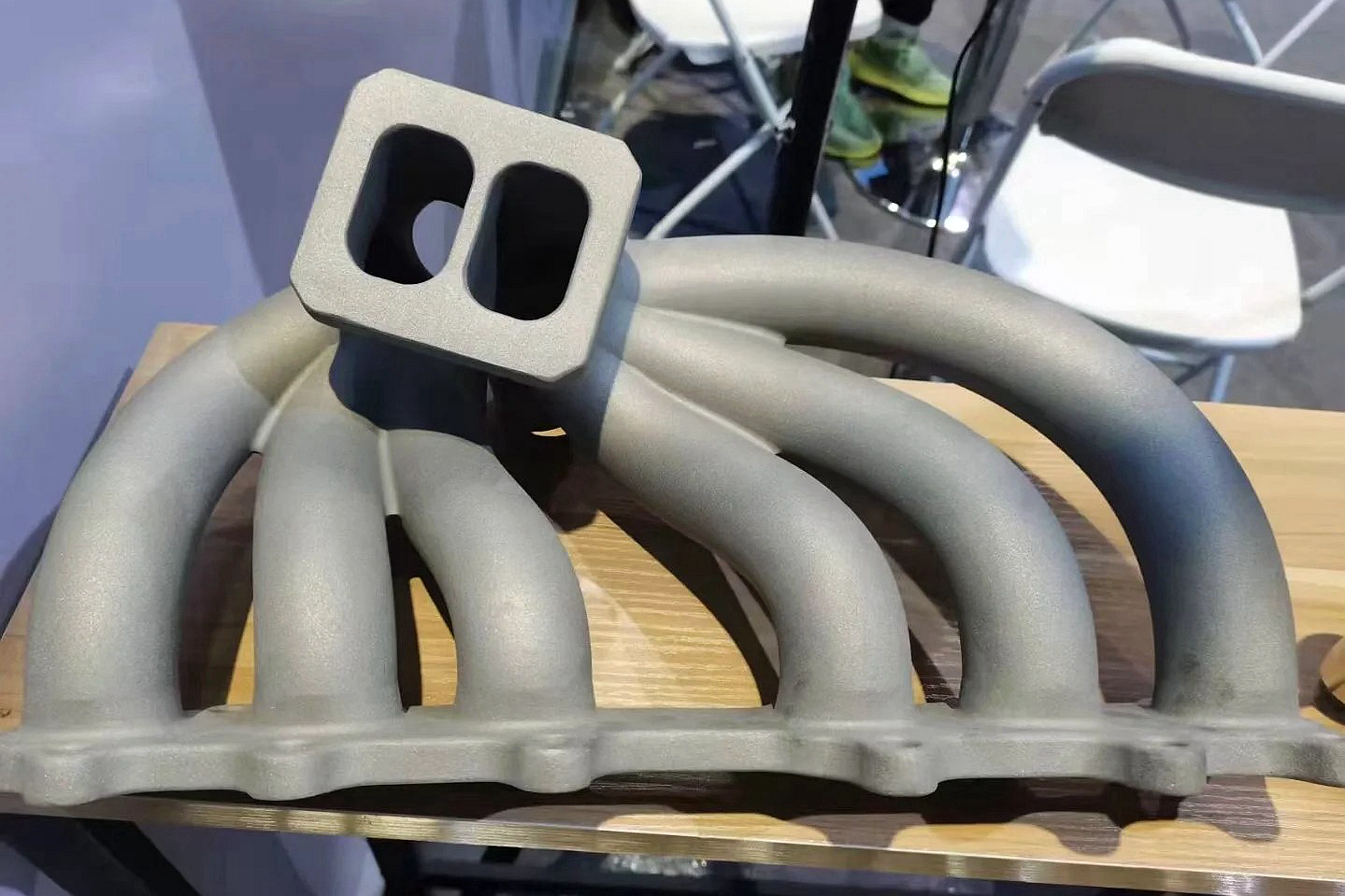
Métodos de fabricación aditiva para piezas de escape de Inconel
Tecnologías y parámetros clave
Tecnología | Espesor de capa (μm) | Resolución (mm) | Tamaño de característica | Piezas adecuadas |
|---|---|---|---|---|
SLM | 30–50 | ±0.05 | ≥0.3 | Bridas, conductos, toberas, uniones complejas |
DED (LMD) | 300–800 | ±0.2 | ≥1.0 | Reparación o reconstrucción de codos y colectores |
Se prefiere SLM para piezas intrincadas de pequeño a mediano tamaño; DED es ideal para secciones grandes y construcciones híbridas.
Por qué el Inconel 718 es ideal para sistemas de escape
Propiedad | Valor | Beneficio en aplicaciones de escape |
|---|---|---|
Límite de temperatura de operación | Hasta 980 °C | Sostiene el calor del flujo de gas alto con baja deformación |
Límite elástico @ 700 °C | ≥ 720 MPa | Mantiene la forma bajo ciclos térmicos dinámicos |
Resistencia a la oxidación | Excelente hasta 1000 °C | Previene la formación de cascarilla y fallos bajo gases de escape calientes |
Resistencia a la fatiga | >10⁸ ciclos a 650 MPa | Maneja vibraciones, pulsaciones y cambios de presión |
Conductividad térmica | 11.4 W/m·K | Retiene el aislamiento térmico y la operación estable |
Estrategia de material y postprocesamiento
Material: Inconel 718, atomizado por gas, D50 ~35 μm para SLM.
Tratamiento térmico: Tratamiento de solución a 980 °C + envejecimiento a 720 °C/8 h + 620 °C/8 h para una resistencia óptima.
HIP: Aplicado después de la construcción para componentes críticos por fatiga para eliminar la porosidad interna.
Mecanizado CNC: Acaba superficies de bridas, roscas o planos de acoplamiento a ±0.01 mm.
Caso de estudio: Colector de escape de Inconel 718 impreso en 3D para turbina aeroespacial
Antecedentes del proyecto
Un cliente aeroespacial requería un colector de escape compacto y de alto flujo para una APU de turbina de gas. Las restricciones de diseño incluían un volumen reducido, enrutamiento de gas multidireccional y una temperatura de operación >950 °C. La fundición y soldadura tradicionales requerirían un ensamblaje de múltiples partes y un tiempo de entrega prolongado.
Flujo de trabajo de fabricación
Diseño: Modelo CAD importado con corredores integrados y espesor de pared de 1.5–2.0 mm.
Proceso de impresión: SLM con capas de 40 μm, láser de 350 W, blindaje de argón.
Orientación de construcción: Alineado verticalmente para minimizar el soporte en las regiones de flujo de escape.
Postprocesamiento: HIP a 1200 °C / 100 MPa durante 4 horas, acabado de bridas por CNC, pasivación para durabilidad superficial.
Control de calidad: Inspección por rayos X, inspección por MMC y pruebas de presión/fugas a 3.5 bar.
Resultados y verificación
La pieza final logró una reducción de peso del 27% en comparación con el diseño fundido anterior y eliminó tres uniones soldadas. Las pruebas mecánicas mostraron una densidad >98%, una resistencia a la tracción de 1240 MPa y cero grietas o distorsiones después del ciclado térmico a 960 °C. La pieza pasó la calificación para la integración de hardware de vuelo.
Preguntas frecuentes
¿Cuál es el espesor de pared típico alcanzable para impresiones 3D de escape de Inconel 718?
¿Cómo se compara el Inconel por SLM con los componentes de turbo forjados o fundidos?
¿Es necesario el HIP para todas las piezas de escape de Inconel o solo para los componentes a presión?
¿Se pueden imprimir como una sola pieza uniones de bridas complejas y conductos?
¿Cuáles son las opciones de acabado superficial para mejorar el flujo de gas interno?
