
Mecanizado por Descarga Eléctrica (EDM) para la Fabricación de Piezas de Superaleaciones de Precisió...
Mecanizado Sin Contacto para Aleaciones de Alta Resistencia y Térmicas
Las superaleaciones como Inconel, Rene, CMSX y Hastelloy se utilizan ampliamente en motores de turbina, cámaras de combustión e intercambiadores de calor. Debido a su extrema dureza, baja conductividad térmica y propiedades de endurecimiento por trabajo, estas aleaciones presentan desafíos para el mecanizado convencional. El Mecanizado por Descarga Eléctrica (EDM) ofrece una solución sin contacto para fabricar geometrías complejas, microestructuras y características profundas con una precisión excepcional.
Neway AeroTech proporciona servicios de EDM para superaleaciones para aplicaciones aeroespaciales, energéticas y nucleares. Nuestras capacidades de EDM incluyen procesos de hilo, penetración y taladrado de agujeros, optimizados para geometrías de piezas intrincadas y materiales sensibles al calor.
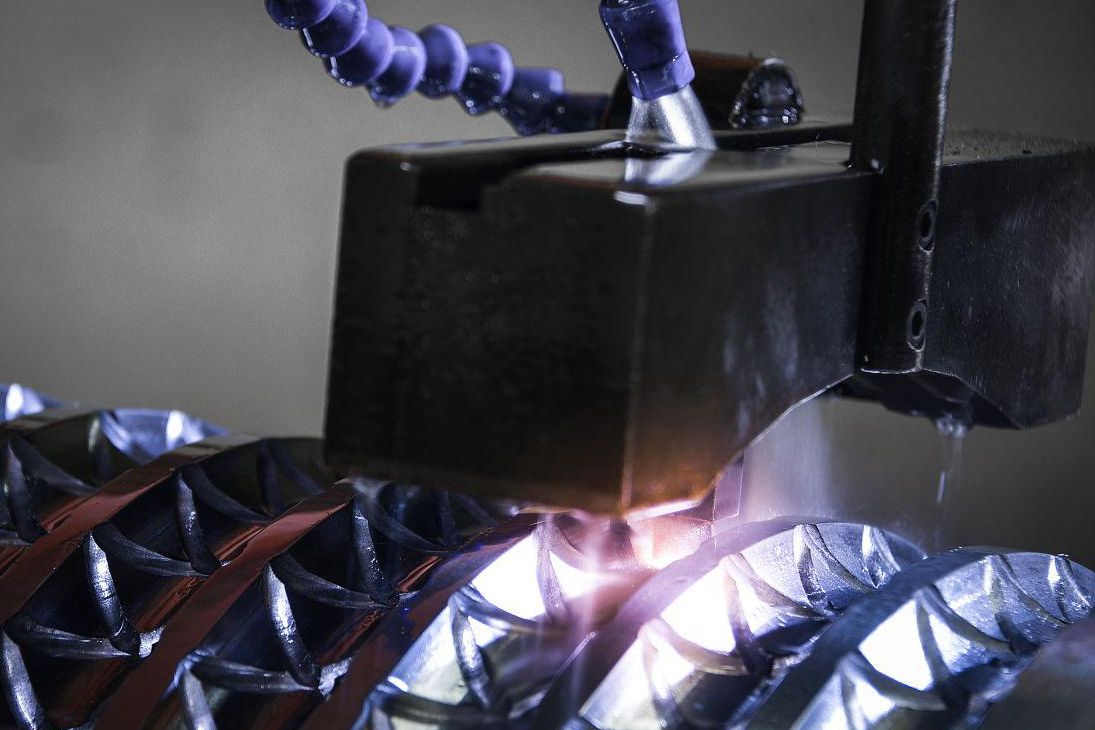
Técnicas de EDM para la Fabricación de Superaleaciones
El EDM utiliza descargas eléctricas entre una herramienta y una pieza de trabajo en un fluido dieléctrico para erosionar el material sin fuerza mecánica.
EDM de hilo para corte de perfiles, ranuras y estructuras de pared delgada
EDM de penetración para cavidades, restauración de puntas y esquinas afiladas
EDM de microagujeros para agujeros ≤0.3 mm de diámetro con relaciones profundidad-diámetro >20×D
EDM orbital y de múltiples ejes para canales en ángulo y acabado de características internas
El EDM permite mecanizar aleaciones endurecidas hasta 60 HRC sin inducir deflexión de la herramienta o distorsión por calor.
Superaleaciones Procesadas Comúnmente mediante EDM
Aleación | Temp. Máx. (°C) | Aplicaciones Comunes | Proceso EDM |
|---|---|---|---|
704 | Boquillas de combustible, ejes de turbina | EDM penetración + agujeros | |
980 | Toberas, segmentos de álabes | EDM de hilo | |
1140 | Superficies aerodinámicas, palas | EDM de agujeros, borde de salida | |
1175 | Conductos, piezas de cámara de combustión | EDM de penetración |
El EDM respalda la fabricación y reparación de piezas con contornos internos, pasajes intersectados y secciones transversales de pared delgada.
Estudio de Caso: EDM de Microagujeros en Superficie Aerodinámica de Enfriamiento CMSX-4
Antecedentes del Proyecto
Un cliente de turbinas requería agujeros de 0.3 mm de diámetro en superficies aerodinámicas de CMSX-4 para enfriamiento por película. Los agujeros tenían una profundidad de 6 mm y una tolerancia de ±0.008 mm. Se utilizó EDM de agujeros después del mecanizado en bruto. La capa de refundición final fue ≤2 μm, y la desviación de redondez se mantuvo por debajo de 5 μm.
Aplicaciones e Industrias Típicas de EDM
Componente | Aleación | Tipo EDM | Industria |
|---|---|---|---|
Superficie Aerodinámica de Enfriamiento | CMSX-4 | EDM de Agujeros | |
Revestimiento de Combustión | Hastelloy X | EDM de Penetración | |
Sello de Turbina | Inconel 718 | EDM de Hilo | |
Segmento de Álabe | Rene 88 | EDM Hilo + Agujeros |
El EDM es particularmente efectivo donde se requieren tolerancias finas y baja deformación térmica.
Desafíos en el Mecanizado EDM de Piezas de Superaleaciones
Capa de refundición >3 μm conduce a la iniciación de grietas por fatiga—requiere pasada de acabado o pulido post-EDM
Ruptura dieléctrica a alta energía puede causar microgrietas en secciones delgadas
Tasa de desgaste del electrodo >1% por operación afecta el control dimensional en cavidades profundas
Desviación de conicidad en agujeros profundos que excede 0.02 mm debe corregirse con trayectorias orbitales
Zona afectada por el calor (HAZ) requiere control por debajo de 0.5 mm en hardware de turbina
Soluciones de EDM para la Fabricación y Reparación de Superaleaciones
Ciclos de acabado de baja energía para reducir la capa de refundición a ≤1.5 μm para piezas sensibles a la fatiga
EDM orbital de múltiples pasadas para taladrado de ángulo de precisión en palas CMSX y Rene
Algoritmos de compensación de electrodo para repetibilidad dimensional dentro de ±0.005 mm
Tratamiento térmico post-EDM y pasivación superficial para restaurar los límites de grano
Inspección CMM y inspección SEM para verificar geometría y microestructura
Resultados y Verificación
Ejecución del Proceso
El EDM se realizó en sustratos de superaleación completamente tratados térmicamente. La energía de pulso, la velocidad de avance y el dieléctrico se controlaron mediante retroalimentación adaptativa. La geometría se verificó utilizando sensores en proceso.
Acabado y Precisión
Los diámetros finales de los agujeros se mantuvieron en ±0.008 mm. Se logró un acabado superficial Ra de 0.3–0.5 μm. La capa de refundición se eliminó mediante cepillado o pasadas de acabado de baja energía.
Post-Procesamiento
Las piezas mecanizadas por EDM se sometieron a tratamiento térmico para aliviar tensiones residuales. La superficie se limpió y pasivó donde se requería resistencia a la corrosión.
Inspección
CMM confirmó los objetivos dimensionales. Rayos X verificaron la rectitud del orificio. SEM confirmó una microestructura libre de grietas y la calidad de la ZAC.
Preguntas Frecuentes
¿Qué procesos EDM son mejores para piezas de Inconel y CMSX?
¿Cómo se elimina la capa de refundición después del mecanizado EDM?
¿Se puede usar EDM para reparar puntas de palas de turbina o superficies aerodinámicas?
¿Cuál es la tolerancia posicional típica de los agujeros mecanizados por EDM?
¿Cómo se inspeccionan los componentes EDM para garantía de calidad?
