
Unternehmen für heißisostatisches Pressen von Inconel-Legierungs-Turbinendüsenringen
Poreneliminierung und Gefügeregeneration für Inconel-Düsenringe
Turbinendüsenringe aus Inconel-Superlegierungen sind intensiven thermischen Zyklen, Oxidation und hohen Gasgeschwindigkeiten ausgesetzt. Diese Bauteile, die typischerweise im Vakuum-Feingussverfahren hergestellt werden, können innere Lunker und Mikroporen aufweisen, welche die Ermüdungslebensdauer und die Maßhaltigkeit beeinträchtigen. Das Heißisostatische Pressen (HIP) ist unerlässlich, um diese Inconel-Gussteile zu verdichten und ihre Leistungsfähigkeit unter langanhaltenden Hochtemperaturbedingungen sicherzustellen.
Neway AeroTech ist ein spezialisiertes HIP-Unternehmen, das zertifizierte Dienstleistungen zum heißisostatischen Pressen für Turbinendüsenringe aus Inconel-Legierungen anbietet. Wir wenden HIP bei Temperaturen bis zu 1260 °C und Drücken bis zu 20 MPa an und unterstützen equiaxiale, gerichteterstarrte sowie reparierte Düsensegmente in Übereinstimmung mit AMS 2774 und den Spezifikationen der Turbinen-OEMs.
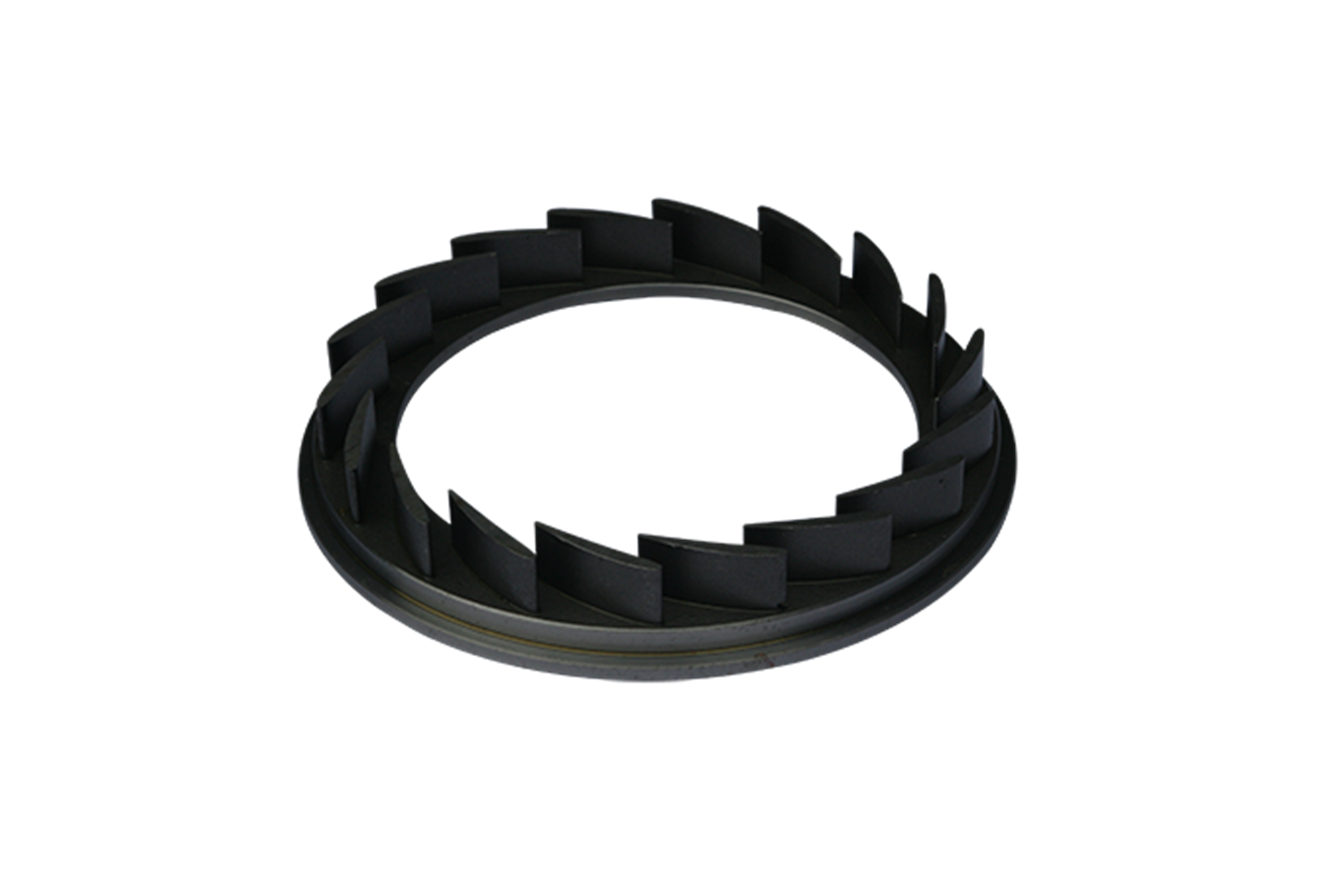
Warum HIP für Inconel-Düsenringe unerlässlich ist
Turbinendüsenringe sind thermischen Gradienten von über 1000 °C ausgesetzt und anfällig für Schwingfestigkeitsermüdung. HIP bietet:
Vollständige Verdichtung von Gussfehlern, einschließlich Mikroporosität und Lunkern
Verbesserte mikrostrukturelle Homogenität für Oxidations- und Kriechbeständigkeit
Erhöhte Ermüdungsfestigkeit, insbesondere an den Übergängen zwischen Schaufeln und Ring
Stabile Geometrie für CNC-Bearbeitung und Dichtflächen
HIP wird typischerweise vor der finalen Bearbeitung und dem Auftragen einer Wärmedämmschicht (TBC) angewendet.
Häufig per HIP behandelte Inconel-Güten
Legierung | Max. Temp. (°C) | HIP-Temp. (°C) | Anwendung |
|---|---|---|---|
950 | 1210 | Düsensegmente, Leitschaufelringe | |
1050 | 1230 | Leitschaufeln, Deckbänder | |
980 | 1170 | Brennkammerringe, Stützflansche |
Die Legierungsauswahl und die HIP-Parameter werden angepasst, um den Wandstärken der Bauteile und den Betriebstemperaturprofilen gerecht zu werden.
Fallstudie: HIP einer Düsenringbaugruppe aus Inconel 713C
Projekthintergrund
Ein Kunde lieferte 160 equiaxiale Inconel 713C-Düsensegmente mit Wandstärken zwischen 4 und 8 mm. Das HIP wurde bei 1210 °C und 100 MPa über 4 Stunden durchgeführt. REM- und Röntgenanalysen bestätigten einen Porenschluss von >98 % und eine Verbesserung der Ermüdungsfestigkeit um den Faktor 2,6 im Vergleich zu nicht-HIP-behandelten Teilen.
Typische Düsenringmodelle und Branchen
Modell | Beschreibung | Legierung | Branche |
|---|---|---|---|
NR-700 | Leitring mit radialen Schaufelsegmenten | Inconel 713C | |
VNS-420 | Segmentierter Leitschaufelring mit Dichtnut | Inconel 738 | |
CRC-350 | Brennring mit geflanschtem Kragen | Inconel 625 |
Jedes Bauteil wurde einem HIP-Prozess unterzogen und anschließend mittels KMG-Validierung und REM-Gefügebestätigung nachbearbeitet.
Technische Vorteile von HIP für Düsenringe
Beseitigt >99 % der Porosität, was die Ultraschallprüfung und die Ermüdungszuverlässigkeit verbessert
Heilt Mikrorisse an Schaufelkreuzungen und Dichtflächen
Verbessert die Kriechbeständigkeit, kritisch in Bereichen mit dauerhafter Hochbelastung
Reduziert Anisotropie, unterstützt CNC-Bearbeitung mit engen Toleranzen nach dem HIP
Steigert die Haftfestigkeit von Beschichtungen, sorgt für gleichmäßige TBC-Abdeckung und Bondstärke
HIP-Prozessspezifikationen
HIP-Temperaturbereich: 1170–1260 °C, legierungsabhängig
Druck: 100–200 MPa, Argon-Gasatmosphäre
Haltezeit: 3–6 Stunden, basierend auf Geometrie und Wandstärke
Abkühlung: ≤10 °C/min, zur Vermeidung von Phasenungleichgewicht und Verzug
Ergebnisse und Verifizierung
HIP-Durchführung
Die Teile wurden bei 1210 °C und 100 MPa über 4 Stunden HIP-behandelt. Die Abkühlung wurde mit 5 °C/min gesteuert, um Maßverzerrungen zu vermeiden.
Nachbehandlung nach HIP
Die Bauteile durchliefen eine Wärmebehandlung gemäß AMS 5383, gefolgt von CNC-Bearbeitung und optionaler TBC-Beschichtung für Hochtemperaturumgebungen.
Inspektion
Die Röntgeninspektion verifizierte die innere Verdichtung. Das KMG sicherte die Bohrungs- und Dichtgeometrie. Die REM-Analyse bestätigte eine homogene Kornstruktur und rissfreie Zonen.
Häufig gestellte Fragen (FAQs)
Welche Inconel-Güten eignen sich am besten für HIP in Düsenanwendungen?
Wie verbessert HIP die Ermüdungsbeständigkeit in Schaufel-Ring-Baugruppen?
Kann HIP nach einer Schweißreparatur von Düsensegmenten angewendet werden?
Welche Maßtoleranzen werden nach dem HIP eingehalten?
Ist HIP sowohl für equiaxiale als auch für DS-Inconel-Düsenkomponenten erforderlich?
