
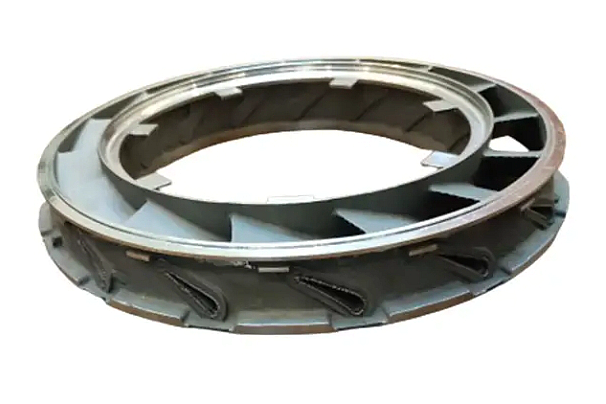
Turbinendüsenbaugruppe aus Stellite-Legierungen für hochpräzise Leistung gefertigt
Einführung
Stellite-Legierungen, die besonders für ihre überlegene Verschleißfestigkeit, ihren ausgezeichneten Korrosionsschutz und ihre Fähigkeit, die Festigkeit bei erhöhten Temperaturen zu erhalten, bekannt sind, sind ideal für kritische Turbinenkomponenten. Bei Neway AeroTech sind wir spezialisiert auf die präzise Bearbeitung von Turbinendüsenbaugruppen mit Stellite-Legierungen, die in Luft- und Raumfahrt, Energieerzeugung und industriellen Gasturbinenanwendungen außergewöhnliche Leistung, Haltbarkeit und Maßgenauigkeit bieten.
Durch den Einsatz fortschrittlicher CNC-Bearbeitungstechnologien und strenger Qualitätskontrolle fertigt Neway AeroTech Stellite-Turbinendüsen, die den höchsten Industriestandards entsprechen und maximale Betriebszuverlässigkeit selbst unter extremen thermischen und mechanischen Belastungen gewährleisten.
Hauptherausforderungen bei der Bearbeitung von Turbinendüsen aus Stellite-Legierungen
Bearbeitung hoher Härte, die spezielle Schneidwerkzeuge und -techniken erfordert.
Enge Maßtoleranzen, die innerhalb von ±0,01 mm eingehalten werden.
Minimierung thermischer Verformung während der Bearbeitung von hitzebeständigen Materialien.
Erzielung ausgezeichneter Oberflächengüten (Ra ≤0,8 µm) zur Optimierung des aerodynamischen Wirkungsgrads.
Präzisionsbearbeitungsprozess für Stellite-Turbinendüsenbaugruppen
Der Bearbeitungsprozess für Stellite-Düsenbaugruppen umfasst:
Materialvorbereitung: Hochintegritäts-Stellite-6- oder -21-Legierungen werden ausgewählt und vorverarbeitet.
Schruppbearbeitung: Hochleistungs-CNC-Anlagen entfernen Material unter Beibehaltung der Temperaturkontrolle.
Präzisionsfertigbearbeitung: Fein-CNC-Bearbeitung erreicht enge Toleranzen und optimale aerodynamische Profile.
Oberflächenbehandlung: Polier- und Beschichtungsverfahren werden bei Bedarf angewendet, um die Oberflächenleistung zu verbessern.
Endprüfung: 100%ige Maß-, metallurgische und Oberflächenqualitätsprüfungen mit Koordinatenmessgeräten und Mikroskopie.
Vergleichende Analyse von Turbinendüsenmaterialoptionen
Material | Verschleißfestigkeit | Hochtemperaturfestigkeit | Korrosionsbeständigkeit | Maßstabilität | Kostenniveau |
|---|---|---|---|---|---|
Stellite-Legierungen | Hervorragend | Ausgezeichnet (bis zu 870°C) | Ausgezeichnet | Ausgezeichnet | Mittel |
Inconel-Legierungen | Gut | Ausgezeichnet (bis zu 980°C) | Sehr gut | Gut | Hoch |
Hastelloy-Legierungen | Sehr gut | Gut | Überlegen | Gut | Hoch |
Edelstähle | Mittel | Mittel | Mittel | Mittel | Niedrig |
Strategie zur Auswahl von Turbinendüsenmaterialien
Stellite-Legierungen sind optimal für Düsen, die maximale Verschleißfestigkeit, Korrosionsschutz und thermische Stabilität benötigen.
Inconel-Legierungen werden bevorzugt, wenn extreme Hochtemperaturfestigkeit priorisiert wird.
Hastelloy-Legierungen werden in chemisch aggressiven Hochtemperaturumgebungen eingesetzt.
Edelstähle sind wirtschaftliche Lösungen, wo moderate Leistung akzeptabel ist.
Leistungsmatrix von Stellite-Legierungen für Turbinendüsen
Legierung | Max. Betriebstemperatur (°C) | Härte (HRC) | Verschleißfestigkeit | Typische Anwendungen |
|---|---|---|---|---|
870 | 43–48 | Hervorragende Abrieb- und Korrosionsbeständigkeit | Turbinendüsen, Ventilsitze | |
870 | 30–35 | Ausgezeichnete Verschleißfestigkeit und gute Duktilität | Turbinenschaufeln, Brennkammerauskleidungen | |
870 | 47–51 | Hohe Verschleißfestigkeit unter hohen Lasten | Turbinenschaufeln, Schneidwerkzeuge | |
870 | 38–43 | Gute Korrosions- und Stoßfestigkeit | Hochdruckturbinenkomponenten |
Begründung für die Auswahl von Stellite-Legierungsmaterialien
Stellite 6: Bevorzugt für ausgewogene Verschleißfestigkeit, Korrosionsbeständigkeit und thermische Stabilität für Düsenbaugruppen.
Stellite 21: Ausgewählt, wo höhere Duktilität und moderate Verschleißfestigkeit entscheidend sind.
Stellite 12: Verwendet in extrem verschleiß- und hochbelasteten Anwendungen.
Stellite 20: Gewählt für Düsen, die Stoß- und korrosiven Umgebungen ausgesetzt sind.
Wesentliche Nachbearbeitungstechniken
Präzisions-CNC-Bearbeitung: Erreicht Toleranzen von ±0,01 mm und aerodynamische Oberflächengüten.
Heißisostatisches Pressen (HIP): Beseitigt Porosität und verbessert die Ermüdungsfestigkeit.
Oberflächenpolitur: Reduziert den aerodynamischen Widerstand und verbessert den Wirkungsgrad.
Zerstörungsfreie Prüfung: Gewährleistet interne Integrität und Oberflächenqualität.
Industrieanwendungen und Fallstudie
Die Stellite-Turbinendüsen von Neway AeroTech werden in Flugzeugtriebwerken, Stromerzeugungsturbinen und industriellen Gasturbinen eingesetzt. In einem GuD-Gasturbinen-Upgrade-Projekt erzielten aus Stellite 6 gefertigte Düsen eine 30 % längere Lebensdauer als herkömmliche Legierungen und reduzierten Ausfallzeiten und Wartungskosten erheblich.
FAQs
Welche Maßtoleranzen kann Neway AeroTech für Stellite-Turbinendüsenbaugruppen erreichen?
Warum werden Stellite-Legierungen für Hochleistungsturbinendüsen bevorzugt?
Wie schneidet Stellite 6 im Vergleich zu Stellite 21 und Stellite 12 für Düsenanwendungen ab?
Welche Oberflächengüte kann bei Stellite-Düsenbaugruppen erreicht werden?
Wie stellt Neway AeroTech Qualität und Leistungskonsistenz bei der Stellite-Turbinendüsenbearbeitung sicher?
