
Cobalt-Legierungen CMSX-11 Turbinenschaufel Einkristall-Gießerei
Einführung
Cobalt-Legierungen wie CMSX-11 bieten außergewöhnliche Beständigkeit gegen thermische Ermüdung, Oxidation und Kriechen, was für Turbinenschaufeln, die extremen Betriebsbedingungen ausgesetzt sind, unerlässlich ist. Einkristall-Guss richtet die kristallografischen Strukturen präzise aus, maximiert die mechanischen Eigenschaften und verlängert die Betriebsdauer von Luft- und Raumfahrt- sowie Industriegasturbinen, die bis zu 1170°C betrieben werden, erheblich.
Neway AeroTech ist spezialisiert auf die Herstellung von CMSX-11 Turbinenschaufeln mit fortschrittlichen Einkristall-Gießtechniken. Unsere strengen Prozesskontrollen gewährleisten eine überlegene mikrostrukturelle Integrität und Maßgenauigkeit und liefern Turbinenschaufeln, die den strengen Luft- und Raumfahrt-, Energie- und Industriestandards für Leistung und Haltbarkeit unter starker thermischer Belastung entsprechen.
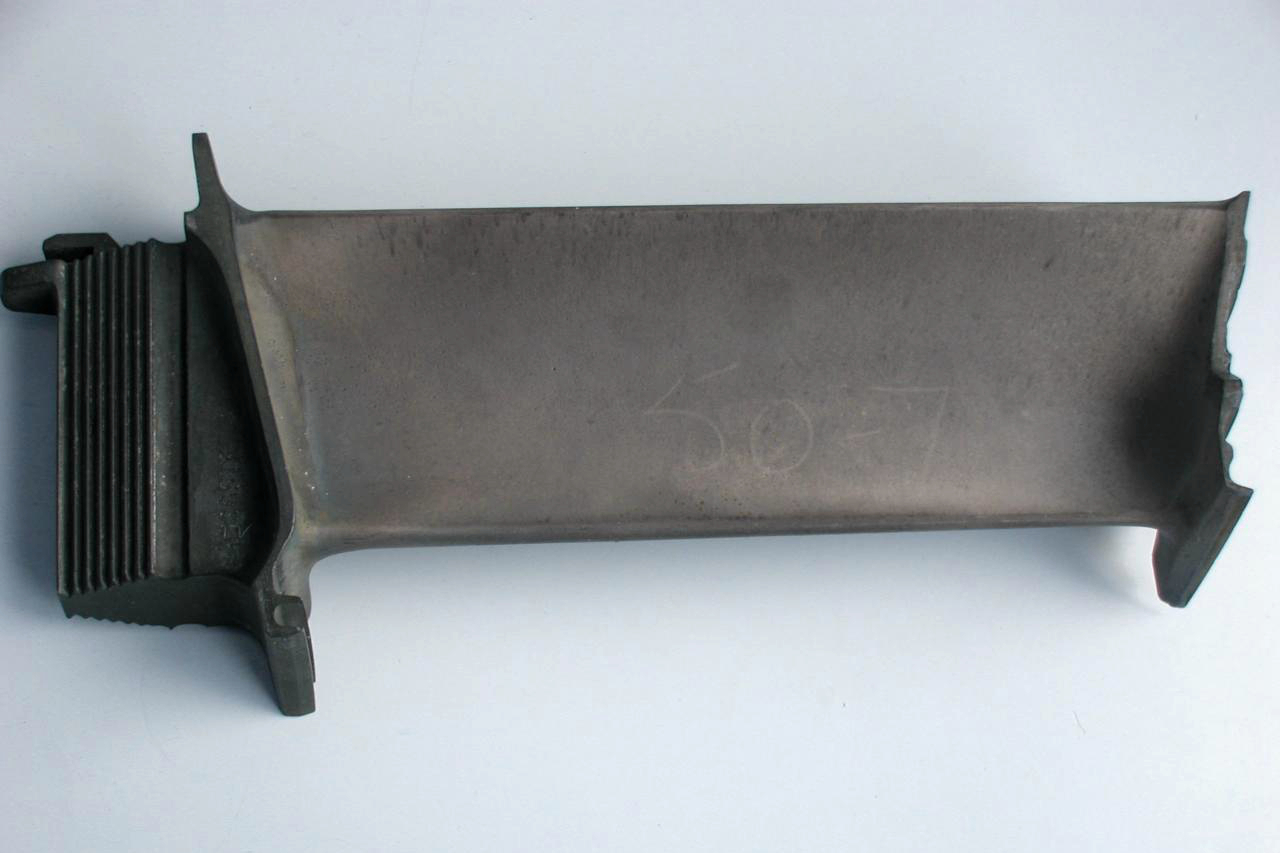
Wesentliche Fertigungsherausforderungen für CMSX-11 Legierungen
Erhöhte Schmelztemperaturen (~1390°C), die eine präzise Wärmemanagement erfordern.
Exakte gerichtete Erstarrung, um die Bildung von Korngrenzen zu verhindern.
Minimierung von Mikroporosität und Eigenspannungen.
Strenge Maßkontrolle innerhalb von ±0,05 mm Toleranzen.
Überblick über den CMSX-11 Einkristall-Gießprozess
Der CMSX-11 Einkristall-Guss umfasst:
Wachsmodellherstellung: Präzisionsformen werden durch Spritzgießen erstellt.
Keramikschalenbildung: Keramikschlicker und Sandschichten werden sorgfältig aufgetragen, getrocknet und ausgehärtet.
Wachsentfernung (Entwachsen): Dampfautoklavieren bei ~150°C erhält die Integrität der Keramikschale.
Vakuumschmelzen und Gießen: Legierungsschmelze unter Vakuumbedingungen (<10⁻³ Pa) mit kontrollierter gerichteter Abkühlung (~5°C/min).
Einkristallbildung: Kontrolliertes Kristallwachstum von einem Impfkristall, der entlang bevorzugter Richtungen, typischerweise <001>, orientiert ist.
Vergleichende Analyse von Fertigungstechniken
Prozess | Kornstruktur | Zugfestigkeit (MPa) | Kriechbeständigkeit | Anisotropie | Produktionskosten |
|---|---|---|---|---|---|
Einkristall-Guss | Einkristall | Ausgezeichnet (~1120 MPa) | Überlegen | Hoch (richtungsoptimiert) | Hoch |
Gerichtete Erstarrung | Säulenförmige Körner | Sehr gut (~980 MPa) | Hoch | Mäßig (gerichtete Festigkeit) | Mäßig |
Gleichachsiger Guss | Polykristallin, zufällig | Gut (~850 MPa) | Mäßig | Niedrig (isotrope Eigenschaften) | Niedrig |
Pulvermetallurgie | Feinkörnig | Ausgezeichnet (~1250 MPa) | Sehr hoch | Niedrig (gleichmäßig feinkörnig) | Sehr hoch |
Strategie zur Auswahl des Turbinenschaufel-Gießprozesses
Einkristall-Guss bietet maximale Kriechbeständigkeit und Ermüdungsdauerfestigkeit, ideal für kritische Turbinenschaufeln bei Temperaturen um 1170°C.
Superlegierungs-Gerichteter Guss bietet robuste Leistung zu niedrigeren Kosten, geeignet bis zu 1100°C.
Superlegierungs-Gleichachsiger Guss ermöglicht wirtschaftliche Anwendungsproduktion unter weniger strengen Betriebsanforderungen (~1050°C).
Pulvermetallurgische Turbinenscheiben erreichen überlegene Ermüdungseigenschaften und hohe Zugfestigkeiten (1250+ MPa), verursachen jedoch deutlich höhere Produktionskosten.
CMSX-11 Legierungs-Leistungsmatrix
Legierung | Max. Temp. (°C) | Zugfestigkeit (MPa) | Kriechbeständigkeit | Oxidationsbeständigkeit |
|---|---|---|---|---|
1170 | 1120 | Überlegen bei anhaltend hohen Temperaturen | Außergewöhnliche Oxidationsbeständigkeit bei hohen Temperaturen | |
1160 | 1150 | Außergewöhnliche Hochlastleistung | Überlegene Stabilität in aggressiven Umgebungen | |
1150 | 1100 | Ausgezeichnete Turbinenschaufelstabilität | Überlegener Oxidationsschutz | |
1150 | 1150 | Überlegen unter anhaltender Belastung | Ausgezeichnete Luft- und Raumfahrt-Oxidationsbeständigkeit | |
1050 | 1050 | Sehr gut für mittlere Anwendungen | Gute Oxidationsbeständigkeit | |
1140 | 1120 | Optimiert für Luft- und Raumfahrtanwendungen | Ausgezeichnete Haltbarkeit unter Oxidation |
Begründung für die CMSX-11 Materialauswahl
CMSX-11 zeichnet sich durch überlegene Kriechfestigkeit und Oxidationsbeständigkeit aus und ist ideal für Turbinenschaufeln geeignet, die bei ~1170°C betrieben werden.
CMSX-10 bietet außergewöhnliche Hochlast-Kriechleistung für Komponenten, die bis zu ~1160°C betrieben werden.
CMSX-8 liefert ausgezeichnete Turbinenschaufelleistung bei mäßig niedrigeren Betriebstemperaturen (~1150°C).
Rene N5 ist für Luft- und Raumfahrtturbinen optimiert und bietet unübertroffene Kriechfestigkeit und Oxidationsbeständigkeit (~1150°C).
Inconel 792 bietet robuste Leistung und wirtschaftliche Zuverlässigkeit für Turbinenanwendungen bei moderaten Temperaturen (~1050°C).
PWA 1484 adressiert Hochleistungs-Luft- und Raumfahrtturbinen mit herausragender Kriechdauerfestigkeit und oxidativer Stabilität (~1140°C).
Wesentliche Nachbearbeitungstechniken
Heißisostatisches Pressen (HIP): Beseitigt Mikroporosität bei ~1160°C und 100 MPa und verbessert die Ermüdungseigenschaften erheblich.
Wärmedämmschicht (TBC): Keramische Yttrium-stabilisierte Zirkoniumoxid-Beschichtungen (~250 µm dick), die die Schaufeltemperaturen um bis zu 150°C senken.
Präzisions-CNC-Bearbeitung: Erreicht strenge Maßtoleranzen innerhalb von ±0,01 mm für optimale Komponentenintegration.
Funkenerosives Bearbeiten (EDM): Präzise Bearbeitung komplexer Merkmale mit einer Genauigkeit von ±0,005 mm.
Branchenanwendungen und Fallanalyse
CMSX-11 Einkristall-Turbinenschaufeln von Neway AeroTech werden umfassend in Hochleistungs-Luft- und Raumfahrtantrieben und Stromerzeugungsturbinen eingesetzt. Ein bemerkenswertes Luft- und Raumfahrtprojekt umfasste Turbinenschaufeln, die konstant Temperaturen um 1160°C ausgesetzt waren und im Vergleich zu herkömmlichen Legierungen eine etwa 30%ige Steigerung der Schaufellebensdauer zeigten, was die Wartungskosten und Ausfallzeiten erheblich reduzierte.
Häufig gestellte Fragen
Welche Maßgenauigkeit kann Neway AeroTech mit CMSX-11 Turbinenschaufelguss erreichen?
Wie verbessert die Einkristall-Gießtechnologie die Leistung von CMSX-11 Turbinenschaufeln?
Welche Nachbearbeitungsmethoden wendet Neway AeroTech auf CMSX-11 Turbinenschaufeln an?
Welche maximale Betriebstemperatur wird für CMSX-11 Turbinenschaufeln empfohlen?
Wie stellt Neway AeroTech eine gleichbleibende Qualität und Zuverlässigkeit in der CMSX-11 Schaufelfertigung sicher?
