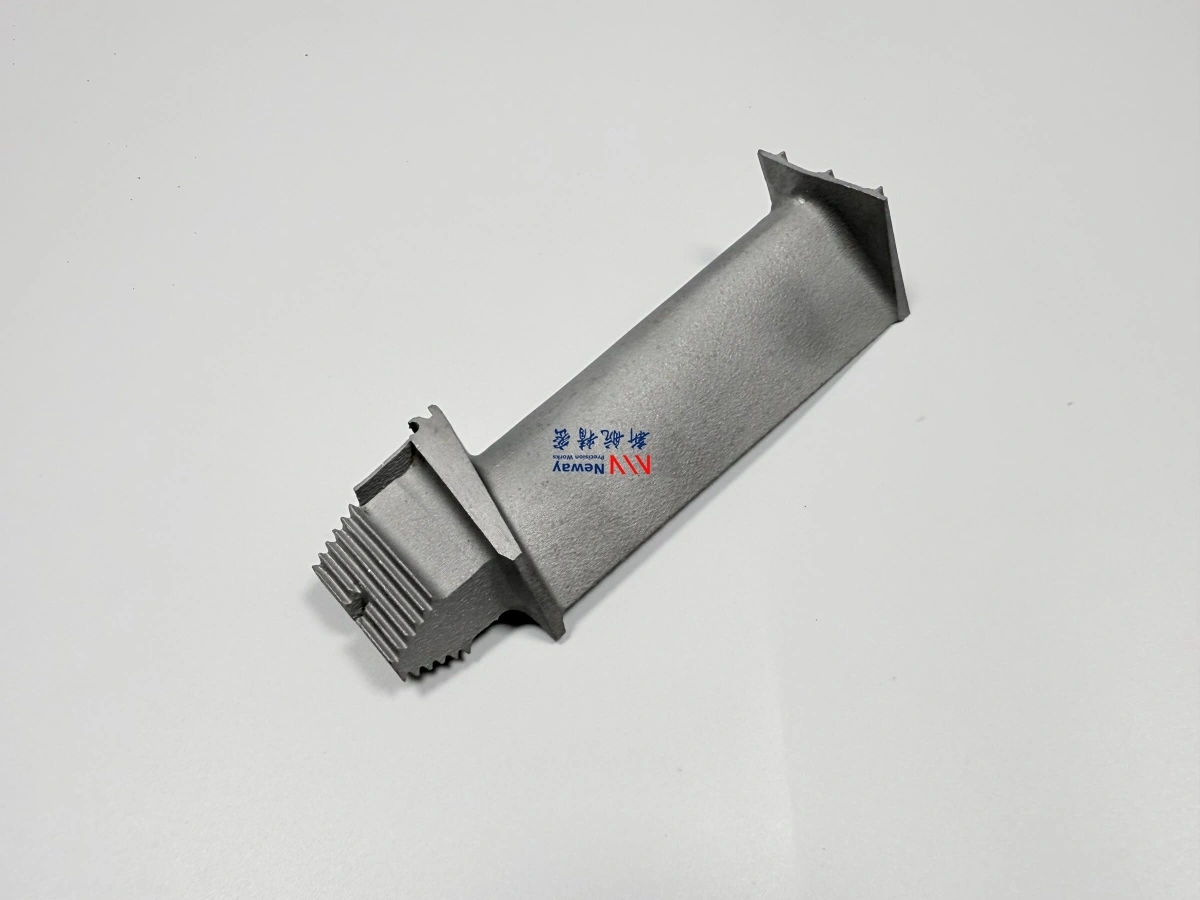
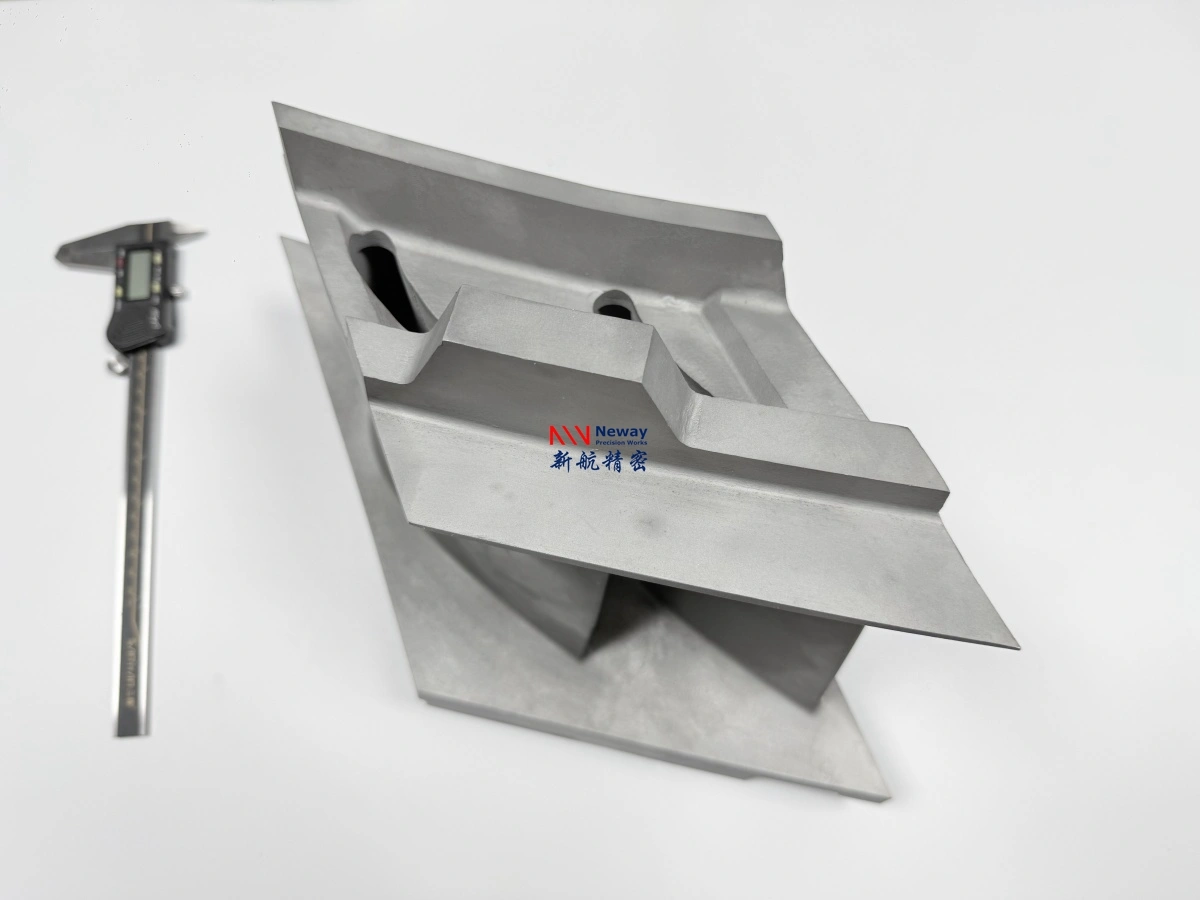
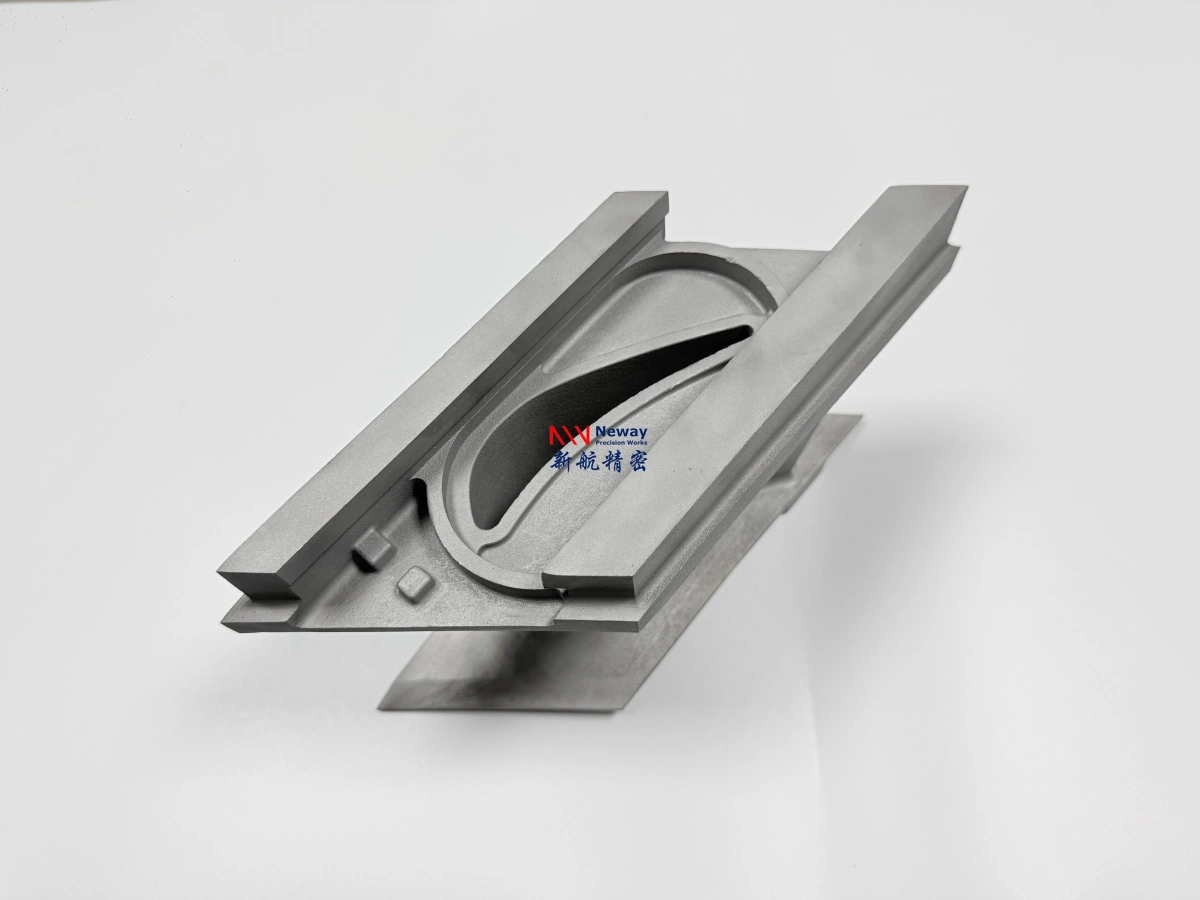
GE 7F / 7FA Combustion Parts Manufacturing: Liners, Transition Pieces, Fuel Nozzles
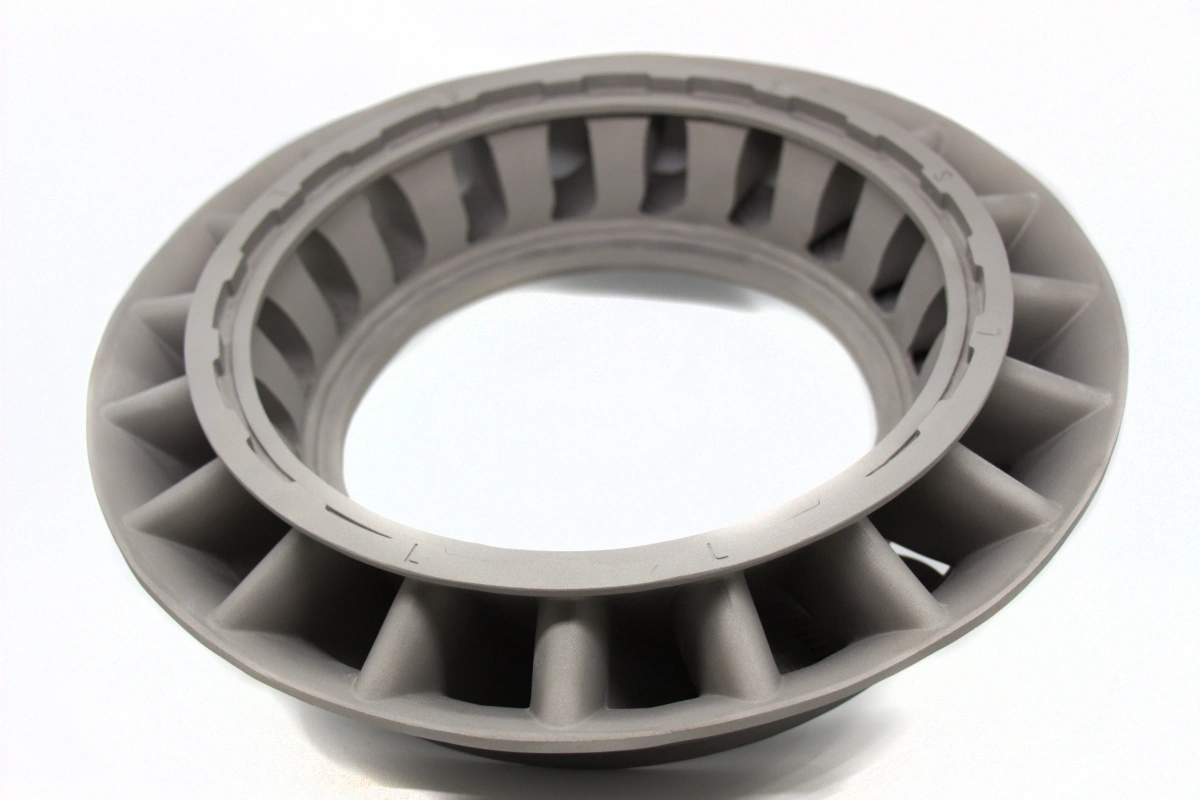
GE 7F and 7FA gas turbines operate in high-temperature combustion environments where component durability, thermal fatigue resistance, oxidation control, and dimensional stability directly affect outage intervals and operating efficiency. Combustion liners, transition pieces, fuel nozzles, and related hot-section hardware must withstand repeated thermal cycling, high-velocity gas flow, local hot spots, vibration, and complex pressure conditions. For this reason, combustion parts manufacturing requires more than simple metal forming. It depends on an integrated route that combines advanced alloy selection, precision forming, controlled joining, machining, coating, and inspection.
For critical combustion hardware, manufacturers often combine Vacuum Investment Casting, Special Alloy Casting, Superalloy Welding, Heat Treatment, Superalloy CNC Machining, and Thermal Barrier Coating (TBC) to achieve the required service life. Where repair rather than replacement is more economical, restoration routes may also include weld build-up, dimensional recovery, post-repair machining, and verification through Material Testing and Analysis.
Why GE 7F / 7FA Combustion Parts Are Demanding
Combustion components in F-class turbines operate under severe combined loading. The liner must tolerate flame exposure, pressure pulsation, and oxidation while maintaining geometric stability. The transition piece must channel hot gas from the combustor to the turbine section while surviving steep thermal gradients and local stress concentrations. Fuel nozzles require dimensional precision, stable internal flow paths, and material resistance to heat, corrosion, and wear. Small deviations in material condition, cooling geometry, weld quality, or coating integrity can reduce component life significantly.
Because of these conditions, combustion components are typically manufactured from nickel-based or cobalt-based heat-resistant alloys. Material families such as Inconel alloy, Hastelloy alloy, Nimonic alloy, and selected Rene Alloys are commonly considered for high-temperature combustion service because they offer strong creep resistance, oxidation resistance, and microstructural stability.
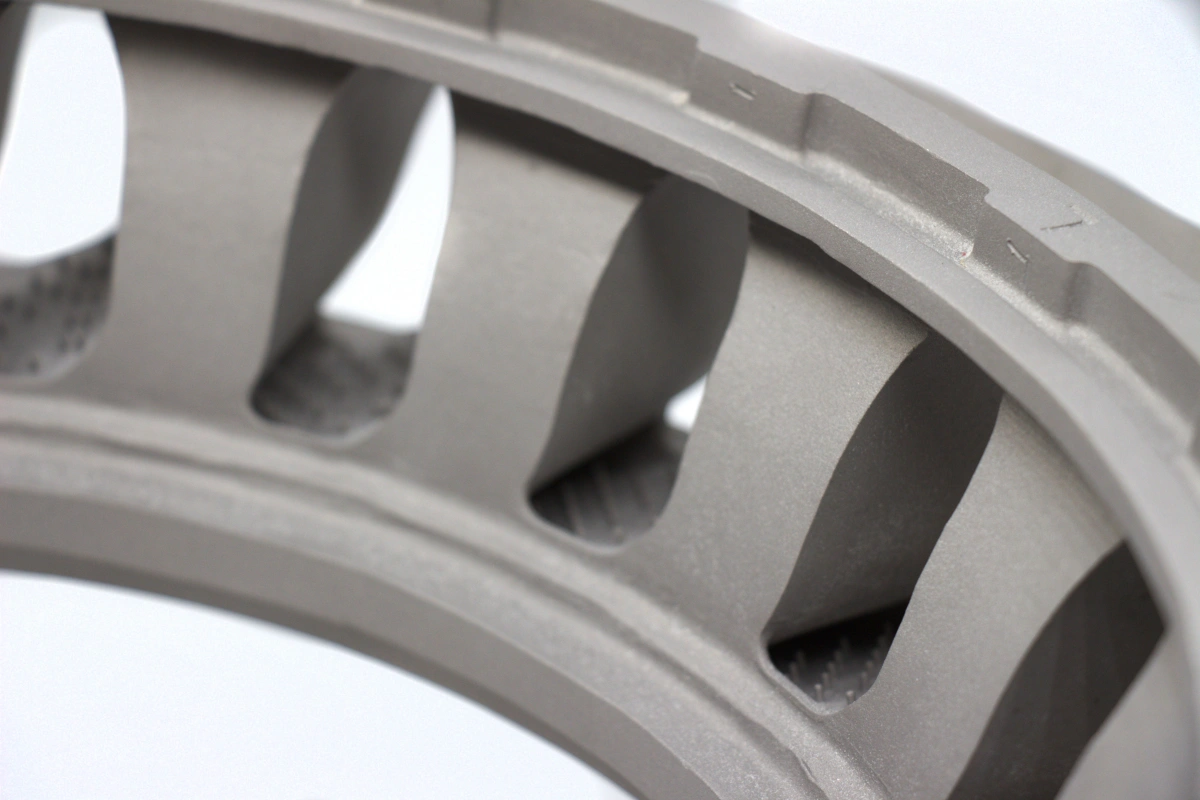
Key GE 7F / 7FA Combustion Parts
Combustion Liners
Combustion liners are exposed directly to flame and repeated startup-shutdown thermal cycles. These parts typically require heat-resistant alloy structures, controlled wall thickness, stable cooling-hole geometry, and a surface condition suitable for long service in oxidizing environments. Manufacturing methods may involve cast or fabricated alloy sections followed by precision drilling, finish machining, weld assembly, and coating.
Where complex geometry or integrated hot-end features are needed, Vacuum Investment Casting can provide dimensional control and metallurgical consistency. For areas requiring post-cast feature generation or recovery of tight interfaces, Superalloy CNC Machining and Superalloy Deep Hole Drilling become important.
Transition Pieces
Transition pieces face one of the harshest conditions in the combustion system because they must transfer hot gas into the turbine inlet section while accommodating both thermal expansion and structural loading. These parts often require large thin-wall heat-resistant constructions, sound weld seams, smooth internal gas-path surfaces, and reliable coating adhesion. Dimensional stability is critical because local distortion can influence flow distribution and thermal loading downstream.
Transition piece manufacturing often benefits from a combined route using alloy forming, Superalloy Welding, stress control through Heat Treatment, and final machining. In severe service environments, TBC is frequently added to reduce metal temperature and extend life.
Fuel Nozzles
Fuel nozzles demand high dimensional accuracy and internal passage consistency because they directly affect fuel distribution, combustion stability, and emissions behavior. These parts often contain narrow internal flow features, complex junctions, and wear-sensitive regions. Manufacturing must therefore balance precision, alloy performance, and repeatable inspection.
Depending on geometry, fuel nozzle production may involve 3D printing Service for rapid prototyping or highly complex passage development, followed by CNC Machining, Electrical Discharge Machining (EDM), and post-process inspection. When erosion, cracking, or wear affects service hardware, repair and dimensional recovery may be more cost-effective than full replacement.
Materials Used for Combustion Parts
Material selection depends on operating temperature, oxidation exposure, corrosion risk, fabrication method, and repair strategy. For combustion liners and transition pieces, nickel-based alloys are often preferred because they combine heat resistance with weldability and oxidation performance. Common alloy routes may involve Inconel alloy or Hastelloy alloy families where thermal fatigue and surface stability are central requirements.
For selected combustion hardware, Nimonic alloy grades may be considered for elevated-temperature strength, while some flow-path or specialized hot-end parts can require more application-specific alloy selection supported by Material Testing and Analysis. The choice is not only about strength. It must also consider weld response, coating compatibility, machinability, and repair economics.
Manufacturing Routes for New Combustion Parts
1. Casting for Complex Heat-Resistant Geometries
Where combustion parts include complex contours, integrated reinforcement features, or near-net-shape thermal structures, Vacuum Investment Casting offers a strong starting point. Vacuum conditions help reduce contamination and support better control of alloy integrity in high-temperature materials. For combustion parts requiring non-standard alloy behavior, Special Alloy Casting may also be relevant.
This route is especially useful for parts that must minimize excessive machining stock while preserving critical wall sections and overall geometry.
2. Machining for Critical Interfaces and Flow Features
After casting or fabrication, combustion hardware often requires extensive finish processing. Sealing interfaces, flange areas, mounting datums, flow features, and hole patterns must be machined to controlled tolerances. Superalloy CNC Machining supports these requirements for difficult-to-cut high-temperature materials.
For narrow passages, cooling paths, and depth-sensitive features, Superalloy Deep Hole Drilling may be needed. For intricate contours, slots, or hard-to-access internal forms, EDM can reduce cutting loads and improve process control.
3. Welding for Assembly and Restoration
Many combustion parts are not simple monolithic pieces. They may be built from multiple formed or cast sections, and repair strategies often rely on weld restoration in heat-affected or cracked regions. Superalloy Welding is therefore central to both new-part production and service recovery.
Controlled welding procedures help manage cracking risk, dilution, heat input, and local distortion. In high-value combustion hardware, weld quality is closely linked to post-weld heat treatment, machining recovery, and final inspection.
4. Heat Treatment and Stress Control
Heat treatment is often necessary to restore or optimize mechanical properties after casting, welding, or forming. Heat Treatment can help stabilize microstructure, relieve residual stress, and improve high-temperature performance. This is particularly important for large combustion shells, transition piece sections, and repaired nozzle hardware where thermal distortion must be controlled before finish machining.
Where cast regions require densification or internal defect healing, Hot Isostatic Pressing (HIP) may also be introduced into the route.
5. Coating for Life Extension
Combustion parts often rely on coating systems to lower substrate temperature, reduce oxidation, and slow thermal degradation. Thermal Barrier Coating (TBC) is especially relevant for liners, transition pieces, and similar hot-gas-path hardware. A stable coating system can improve durability, reduce thermal fatigue severity, and support longer maintenance intervals when the base material and surface preparation are correctly matched.
Repair Solutions for GE 7F / 7FA Combustion Parts
Repair is often a practical solution for expensive combustion hardware, especially where the main structure remains serviceable and damage is localized. Typical repair needs include crack removal, weld build-up, dimensional recovery, coating stripping and recoating, local machining restoration, and post-repair inspection. For GE 7F / 7FA combustion systems, this can apply to liners, transition pieces, fuel nozzles, supports, and associated hot-end assemblies.
A repair route may begin with incoming inspection and defect mapping. Damaged areas are then removed, rebuilt by Superalloy Welding, stress relieved by Heat Treatment, restored dimensionally by CNC Machining or EDM, and protected again using TBC where required. Final qualification depends on the condition of the parent material and the inspection standard demanded by the end user.
Inspection and Quality Control
Because combustion parts operate in highly demanding environments, inspection cannot be treated as a final checkbox. It must be integrated throughout the process. Incoming alloy verification, weld quality checks, dimensional validation, internal defect detection, microstructure review, and coating evaluation all contribute to component reliability.
Material Testing and Analysis may include dimensional inspection, metallographic examination, chemical verification, X-ray or CT-based review, tensile assessment, and other non-destructive or destructive methods depending on the part function. For repaired hardware, inspection is equally important because restored sections must perform under the same combustion and thermal-cycle conditions as the original component.
How Additive Manufacturing Supports Combustion Part Development
For prototype combustor hardware, development nozzles, flow test articles, or rapid design iterations, 3D printing Service can shorten lead times and support design validation before full production tooling or complex fabrication routes are launched. In certain programs, Superalloy 3D Printing may help produce complex internal passages or trial geometries for combustion development.
After printing, the part can still require support removal, heat treatment, machining, inspection, and in some cases coating. This makes additive manufacturing a useful complement rather than a complete replacement for traditional high-temperature part manufacturing.
Advantages of an Integrated Manufacturing and Repair Partner
Combustion hardware performs best when the supplier can control more of the production chain. If casting, welding, machining, heat treatment, coating, and inspection are disconnected across too many suppliers, lead time increases and process consistency becomes harder to manage. An integrated route improves accountability and makes it easier to control dimensional buildup, weld distortion, coating condition, and documentation flow.
For combustion parts linked to the broader Power Generation market, integrated manufacturing is especially valuable because outage schedules are tight and replacement windows are costly. Similar high-temperature service demands are also seen across Energy, Oil and Gas, and Aerospace and Aviation.
Applications Related to High-Temperature Combustion Systems
The same manufacturing logic used for GE 7F / 7FA combustion components also applies broadly to advanced hot-section hardware. Related examples include gas turbine components, high-temperature alloy engine components, superalloy exhaust system parts, and rocket engine modules. These parts all rely on careful management of alloy behavior, joining, thermal protection, and verification.
That overlap is useful because it means proven processes for aerospace and other high-temperature sectors can often support power-generation combustion hardware when adapted to the part geometry and service environment.
Conclusion
GE 7F / 7FA combustion parts manufacturing requires a coordinated process route built around heat-resistant materials, controlled joining, precision machining, coating, and strict inspection. Combustion liners, transition pieces, and fuel nozzles each present different technical challenges, but all demand stable alloy performance and reliable process control. For many end users, the best strategy combines new-part manufacturing with practical repair solutions that restore dimensional integrity and service life while controlling cost.
By integrating Vacuum Investment Casting, Superalloy Welding, Heat Treatment, CNC Machining, TBC, and Material Testing and Analysis, manufacturers can support both replacement and repair programs for critical combustion hardware used in demanding F-class turbine service.
FAQs
What combustion parts are most commonly replaced in GE 7F / 7FA gas turbines?
How are 7F / 7FA transition pieces manufactured for high-temperature service?
What materials are used for GE 7F / 7FA combustion liners and fuel nozzles?
How do heat treatment and coating affect 7F / 7FA combustion part life?
What should buyers provide when requesting a quote for 7F / 7FA combustion parts?