中文

Hastelloy C-4 Pump Components Single Crystal Casting Factory

目录
Introduction
Key Manufacturing Challenges for Hastelloy C-4 Pump Parts
Single Crystal Casting Process for Hastelloy C-4 Pump Components
Comparative Analysis of Pump Component Manufacturing Techniques
Pump Component Manufacturing Process Selection Strategy
Hastelloy C-4 Material Performance Matrix
Rationale for Hastelloy C-4 Material Selection
Essential Post-processing Techniques
Industry Applications and Case Study
FAQs

Introduction

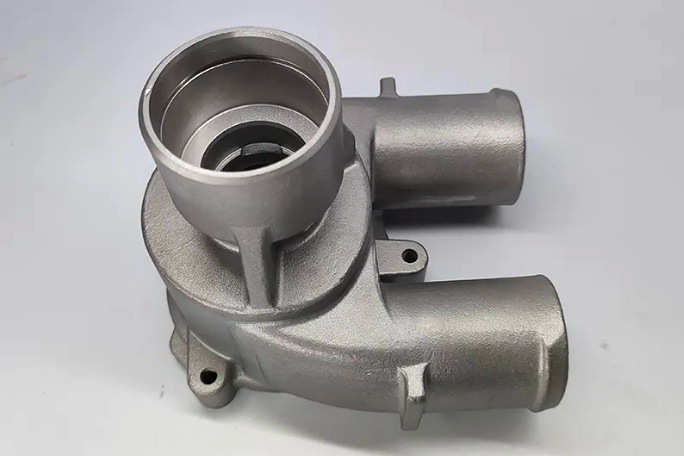
Hastelloy C-4 is a nickel-chromium-molybdenum alloy offering outstanding resistance to strong oxidizing agents, pitting, and stress-corrosion cracking across various chemical environments. At Neway AeroTech, we manufacture high-performance Hastelloy C-4 pump components using single-crystal casting technology, ensuring maximum strength, microstructural uniformity, and corrosion resistance critical for demanding fluid handling applications.

By leveraging single crystal casting under vacuum-controlled environments, Neway AeroTech delivers Hastelloy C-4 pump parts with precise dimensional accuracy, minimal internal defects, and superior operational reliability in aggressive chemical processing systems.

Key Manufacturing Challenges for Hastelloy C-4 Pump Parts

  • Controlling solidification to ensure defect-free single crystal growth.

  • Precise chemical composition management to maximize corrosion resistance.

  • Maintaining dimensional tolerances within ±0.03 mm for critical pump assemblies.

  • Minimizing micro-segregation and grain boundary formation.

Single Crystal Casting Process for Hastelloy C-4 Pump Components

The single crystal casting process for Hastelloy C-4 includes:

  1. Wax Pattern Fabrication: Injection molding of precision wax models for pump geometries.

  2. Ceramic Shell Formation: Coating with high-purity ceramic slurries and refractory sands.

  3. Dewaxing: Steam autoclaving at ~150°C to remove wax without shell deformation.

  4. Vacuum Melting and Casting: Hastelloy C-4 alloy melted under high vacuum (<10⁻³ Pa) to prevent oxidation.

  5. Controlled Directional Solidification: Slow withdrawal rates (~5°C/min) to achieve single crystal growth along the <001> axis.

  6. Shell Removal and Finishing: To meet final specifications, shell breakdown, CNC machining, and precision surface treatments.

Comparative Analysis of Pump Component Manufacturing Techniques

Process

Grain Structure

Strength Uniformity

Corrosion Resistance

Dimensional Precision

Cost Level

Single Crystal Casting

Single oriented crystal

Excellent

Outstanding

Very High (±0.03 mm)

High

Equiaxed Crystal Casting

Random fine grains

Good

Excellent

High (±0.05 mm)

Moderate

Sand Casting

Coarse random grains

Moderate

Good

Moderate (±0.5 mm)

Low

CNC Machining from Billet

Rolled or forged grains

Excellent

Good

Very High (±0.01 mm)

High

Pump Component Manufacturing Process Selection Strategy

Hastelloy C-4 Material Performance Matrix

Material

Tensile Strength (MPa)

Max Temp (°C)

Corrosion Resistance

Primary Applications

Hastelloy C-4

760

650

Outstanding oxidation, pitting, and cracking resistance

Chemical pumps, heat exchangers

Hastelloy C-22

690

650

Superior resistance to oxidizing/reducing media

Chemical reactors, valves

Hastelloy C-276

750

1038

Exceptional corrosion resistance in aggressive environments

Critical process pumps

Monel 400

550

480

Good general corrosion resistance

Marine pumps, chemical piping

Inconel 625

930

980

Excellent seawater and oxidation resistance

Offshore and marine pump components

Stellite 6

890

800

High wear and corrosion resistance

Pump valve trims and wear parts

Rationale for Hastelloy C-4 Material Selection

  • Hastelloy C-4: Ideal for pumps exposed to oxidizing chemicals and pitting environments.

  • Hastelloy C-22: Selected for applications requiring broad chemical resistance.

  • Hastelloy C-276: Preferred for the harshest mixed chemical processing environments.

  • Monel 400: Used where marine or mild chemical resistance is needed cost-effectively.

  • Inconel 625: Best for high-temperature marine applications requiring excellent corrosion resistance.

  • Stellite 6: Applied to pump parts demanding extreme wear resistance.

Essential Post-processing Techniques

  • Hot Isostatic Pressing (HIP): Removes internal porosity and improves structural integrity at ~1160°C and 100 MPa.

  • Precision CNC Machining: Achieves ultra-tight dimensional tolerances ±0.01 mm critical for pump sealing performance.

  • Surface Treatments: Improves corrosion resistance and hydraulic efficiency.

  • Material Testing & Analysis: Ensures consistent alloy chemistry and mechanical properties.

Industry Applications and Case Study

Neway AeroTech’s Hastelloy C-4 pump components are used in chemical manufacturing plants, fertilizer production, and waste treatment systems. Hastelloy C-4 pump bodies achieved 5+ years of continuous service without corrosion damage in a major nitric acid plant, outperforming conventional stainless steel and reducing total maintenance costs by over 35%.

FAQs

  1. What dimensional tolerances does Neway AeroTech achieve for Hastelloy C-4 pump castings?

  2. Why is single crystal casting ideal for Hastelloy C-4 pump manufacturing?

  3. How does Hastelloy C-4 compare to Hastelloy C-22 and C-276?

  4. Which industries most commonly use Hastelloy C-4 pump components?

  5. How does Neway AeroTech ensure corrosion resistance and structural integrity in Hastelloy C-4 castings?