
Disco de Turbina de Superliga por Metalurgia do Pó
Introdução
Discos de turbina por metalurgia do pó fabricados a partir de superligas são componentes críticos projetados para condições extremas, oferecendo excepcional resistência mecânica (até 1500 MPa de resistência à tração) e resistência à fadiga e ao fluência em temperaturas de operação de até 750°C. Na Neway AeroTech, somos especializados na produção de discos de turbina de superliga de alta precisão por meio de técnicas avançadas de metalurgia do pó para as indústrias de aeroespacial e geração de energia.
Nossas soluções avançadas de fabricação garantem microestruturas otimizadas, propriedades mecânicas superiores e confiabilidade incomparável em aplicações altamente exigentes.
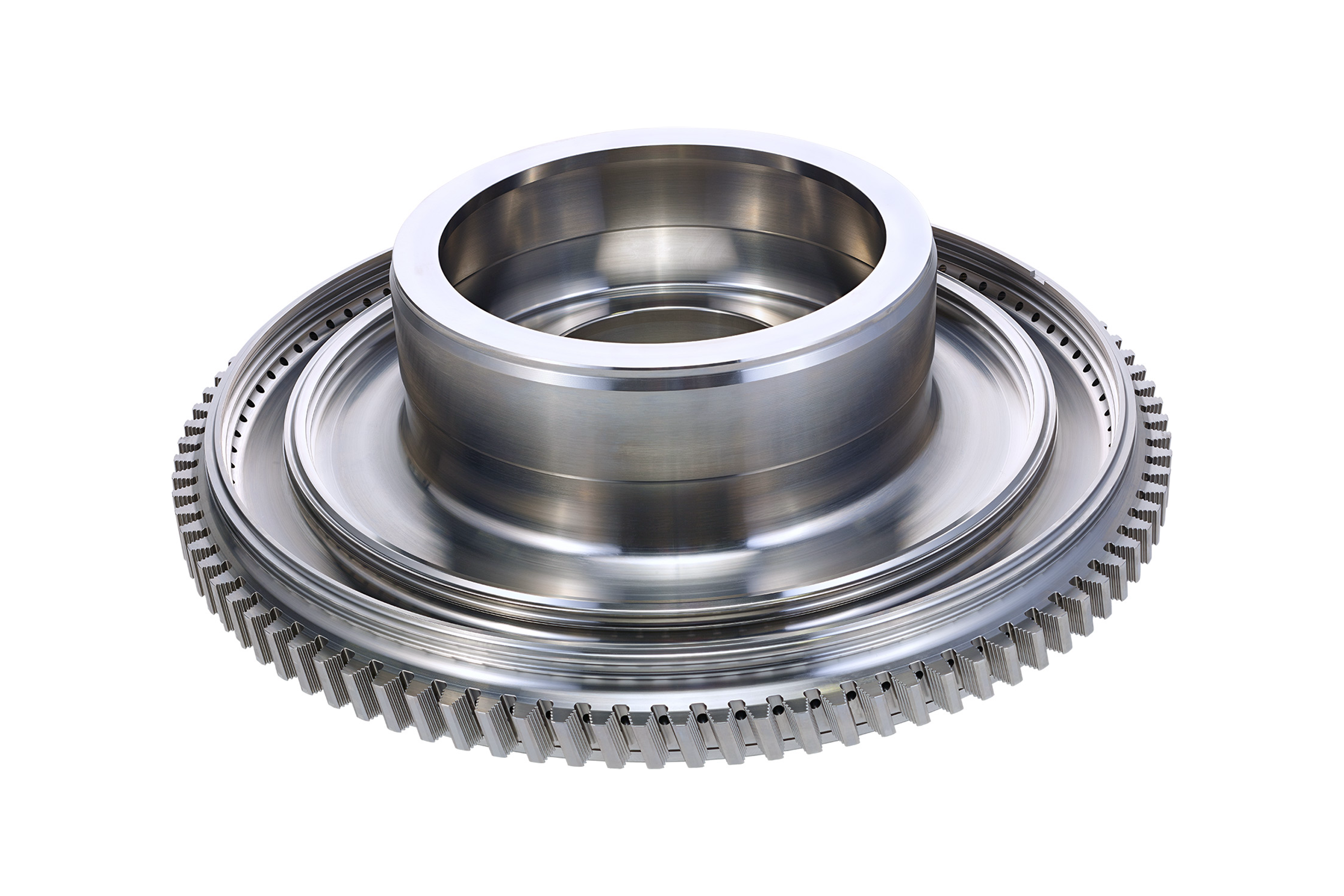
Tecnologia Central da Metalurgia do Pó de Superliga
Produção de Pó: Pós de liga de alta qualidade produzidos via atomização por gás, garantindo uniformidade do tamanho de partícula (10–100 µm) e pureza química controlada.
Compactação de Pó (HIP): Prensagem Isostática a Quente (HIP) consolida os pós sob alta pressão (100–200 MPa) e temperatura (1100–1200°C), eliminando porosidade.
Conformação de Forma Próxima ao Final: A conformação dos discos para uma geometria quase final reduz as sobremetalagens de usinagem para 2–5 mm, economizando tempo e custos de material significativamente.
Forjamento Controlado: Forjamento de precisão a temperaturas de 1050–1150°C refina as estruturas de grão, aumentando a resistência à fadiga e as propriedades mecânicas dos discos de turbina.
Tratamento Térmico: Ciclos de tratamento térmico personalizados (tratamento de solução a ~1150°C, envelhecimento a 760–800°C) otimizam as propriedades mecânicas e estabilizam a microestrutura.
Usinagem de Precisão: A usinagem CNC avançada alcança precisão dimensional final dentro de ±0,01 mm, garantindo integridade excepcional do componente.
Características dos Materiais de Superligas por Metalurgia do Pó
Propriedade | Especificação |
|---|---|
Ligas Comuns | Rene 95, Rene 88, Udimet 720, FGH97, Astroloy |
Resistência à Tração | 1200–1500 MPa |
Limite de Escoamento | ≥900 MPa |
Resistência à Fadiga | Excelentes propriedades de fadiga de alto ciclo |
Resistência ao Fluência | Alta resistência ao fluência a 700–750°C |
Resistência à Oxidação | Excelente, adequada para condições severas |
Temperatura de Operação | Até 750°C |
Precisão Dimensional | ±0,01 mm |
Estudo de Caso: Disco de Turbina de Superliga por Metalurgia do Pó
Contexto do Projeto
Um importante fabricante de motores aeroespaciais necessitava de discos de turbina de alto desempenho capazes de operar de forma confiável sob temperaturas superiores a 700°C com resistência à fadiga e ao fluência aprimoradas. Superligas por metalurgia do pó foram selecionadas para atender a esses requisitos rigorosos.
Modelos e Aplicações Comuns de Discos de Turbina
Discos do Compressor de Alta Pressão: Essenciais para motores aeroespaciais, operando de forma confiável a velocidades rotacionais superiores a 15.000 RPM e temperaturas em torno de 700°C.
Discos da Turbina de Baixa Pressão: Críticos para motores a jato comerciais de longa vida, mantendo integridade estrutural por mais de 30.000 ciclos operacionais a temperaturas acima de 650°C.
Discos de Gerador de Turbina a Gás: Projetados para usinas de energia, esses discos suportam alto torque e ciclagem térmica de até 750°C por longos períodos de serviço.
Discos de Turbina de Propulsão Naval: Otimizados para aplicações navais, oferecendo desempenho confiável em ambientes marinhos severos, operando continuamente em temperaturas elevadas.
Seleção e Características Estruturais do Disco de Turbina Típico
Superligas como Rene 95 e Udimet 720 foram selecionadas por sua superior resistência ao fluência, resistência à fadiga e resistência à oxidação. Os discos de turbina apresentam geometrias de furo otimizadas, estruturas de grão uniformes e fatores de concentração de tensão minimizados para maior durabilidade.
Solução de Fabricação do Componente Disco de Turbina
Atomização do Pó: Pós de liga atomizados em partículas esféricas (10–100 µm), garantindo composição química consistente e microestruturas controladas.
Prensagem Isostática a Quente: Consolidação sob pressão de 150 MPa e 1150°C garante densidade total e eliminação de porosidade (<0,1% de porosidade).
Forjamento e Conformação: Forjamento de forma próxima ao final a temperaturas em torno de 1100°C refina as microestruturas e alcança precisão dimensional dentro de ±0,5 mm.
Processo de Tratamento Térmico: Recozimento de solução a 1150°C seguido de envelhecimento a 760°C para alcançar alta resistência à tração (~1450 MPa) e resistência à fadiga ideal.
Usinagem CNC de Precisão: A usinagem final garante precisão dimensional dentro de ±0,01 mm e acabamentos superficiais superiores, reduzindo significativamente os concentradores de tensão.
Revestimento de Barreira Térmica (TBC): Aplicação de Revestimento de Barreira Térmica aumenta a capacidade de temperatura operacional e a proteção contra corrosão.
Ensaios Não Destrutivos (END): Inspeções abrangentes por ultrassom e radiografia (Raio-X) garantem zero defeitos internos.
Testes de Validação Final: Testes mecânicos, de fadiga térmica e de fluência rigorosos confirmam o desempenho e a durabilidade do disco de turbina sob condições operacionais simuladas.
Principais Desafios de Fabricação
Alcançar microestruturas uniformes com crescimento de grão mínimo
Controlar tolerâncias dimensionais dentro de ±0,01 mm durante a usinagem
Garantir remoção completa da porosidade interna (<0,1%)
Manter excepcional resistência à fadiga e ao fluência em altas temperaturas
Resultados e Verificação
Verificação Dimensional: Máquina de Medição por Coordenadas (CMM) confirmou todas as dimensões críticas dentro da tolerância de ±0,01 mm.
Validação de Propriedades Mecânicas: Alcançou resistências à tração de até 1500 MPa e limites de escoamento acima de 900 MPa, superando as metas do projeto.
Testes de Fadiga e Fluência: Os componentes demonstraram extensão da vida à fadiga em 30% e mantiveram integridade ao fluência por mais de 10.000 horas a 750°C.
Inspeções END: Passou em testes rigorosos de ultrassom e radiografia, garantindo estruturas internas livres de defeitos.
Testes Operacionais: Desempenho bem-sucedido em testes de motor verificou confiabilidade e vida útil estendida do componente em condições operacionais.
Verificação da Integridade Superficial: Rugosidade superficial consistentemente abaixo de Ra 1,6 µm melhorou significativamente a eficiência aerodinâmica e reduziu o potencial de desgaste.
Perguntas Frequentes
Quais vantagens os discos de turbina de superliga por metalurgia do pó oferecem em comparação com a fundição convencional?
Quais ligas a Neway AeroTech comumente usa para discos de turbina?
Como a Neway AeroTech alcança tolerâncias dimensionais apertadas em discos de turbina?
Quais métodos de ensaio não destrutivo são empregados para garantia de qualidade dos discos de turbina?
A Neway AeroTech pode personalizar discos de turbina para requisitos operacionais específicos?
