
Barreiras Térmicas Impressas em 3D de Liga Inconel para Proteção em Temperaturas Extremas
Introdução
As ligas Inconel são projetadas para oferecer resistência excepcional, resistência à oxidação e estabilidade térmica em temperaturas elevadas, tornando-as materiais ideais para aplicações de barreiras térmicas de alto desempenho. Na Neway AeroTech, somos especializados em serviços de impressão 3D para ligas Inconel, produzindo componentes de barreira térmica com geometrias complexas, integridade mecânica superior e resistência excepcional a ambientes térmicos extremos.
Ao aproveitar tecnologias avançadas de fusão em leito de pó, como Fusão Seletiva a Laser (SLM), fabricamos escudos térmicos leves e de alto desempenho em Inconel para as indústrias aeroespacial, de geração de energia e automotiva.
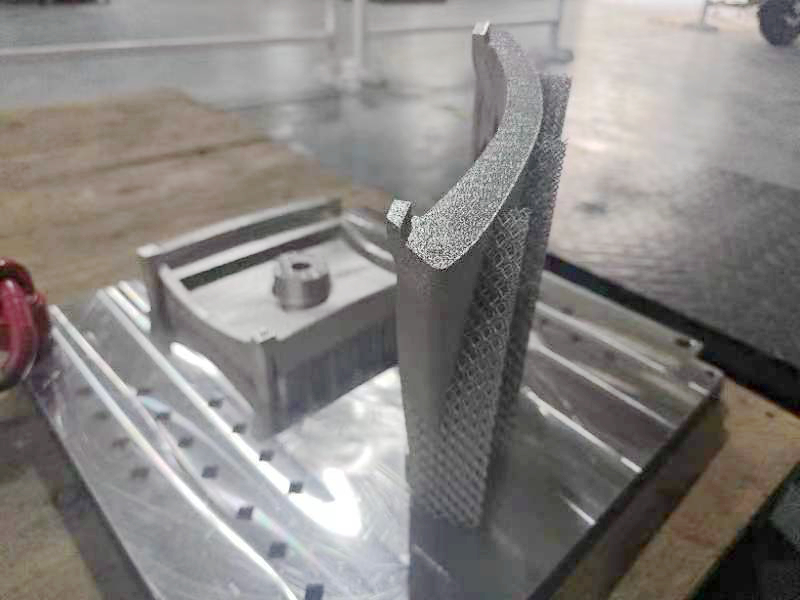
Principais Desafios de Fabricação para Barreiras Térmicas em Inconel
Produzir barreiras térmicas impressas em 3D a partir de Inconel 718 e Inconel 625 apresenta desafios únicos:
Controlar o estresse residual e a deformação devido aos altos gradientes térmicos durante a impressão 3D.
Alcançar construções de alta densidade (tipicamente >99,5%) para garantir resistência mecânica e à oxidação.
Manter tolerâncias dimensionais (±0,05 mm) em superfícies complexas de forma livre.
Obter acabamentos superficiais finos (Ra ≤5 µm) para melhor proteção térmica e desempenho à fadiga.
Processo de Impressão 3D de Liga Inconel para Barreiras Térmicas
O processo de fabricação aditiva para barreiras térmicas em Inconel inclui:
Preparação do Pó: Pós de Inconel de alta pureza com distribuição otimizada de tamanho de partícula para deposição de camada consistente.
Fusão Seletiva a Laser (SLM): Fusão camada por camada de pós de Inconel em atmosfera inerte para evitar oxidação.
Otimização dos Parâmetros do Processo: Controle fino da potência do laser, velocidade de varredura, espaçamento de hachura e espessura da camada (tipicamente 30–50 µm) para alcançar estruturas densas e livres de defeitos.
Remoção de Suportes e Pós-processamento: Remoção dos suportes de construção seguida de HIP (Prensagem Isostática a Quente) para eliminar qualquer porosidade residual.
Usinagem CNC de Precisão: Ajuste dimensional final para alcançar tolerâncias apertadas (±0,01 mm) e acabamentos superficiais suaves.
Tratamento Térmico: Tratamento de solução e envelhecimento para otimizar as propriedades mecânicas e de fadiga térmica.
Comparação de Métodos de Fabricação para Barreiras Térmicas em Inconel
Método de Fabricação | Precisão Dimensional | Acabamento Superficial (Ra) | Propriedades Mecânicas | Flexibilidade de Design | Eficiência de Custo |
|---|---|---|---|---|---|
Impressão 3D (SLM) | ±0,05 mm | ≤5 µm | Superior | Excelente | Média |
Fundição por Cera Perdida a Vácuo | ±0,1 mm | ≤3,2 µm | Boa | Moderada | Média |
Usinagem CNC (a partir de Sólido) | ±0,01 mm | ≤0,8 µm | Excelente | Limitada | Alta |
Estratégia de Seleção de Método de Fabricação
A escolha do método de produção ideal para barreiras térmicas em Inconel depende da complexidade, desempenho e custo:
Impressão 3D (SLM): Mais adequada para escudos térmicos leves com canais de resfriamento complexos, estruturas de treliça ou superfícies não lineares. Oferece liberdade de design superior e resistência mecânica confiável.
Fundição por Cera Perdida a Vácuo: Adequada para geometrias moderadamente complexas onde a extrema liberdade de design não é necessária.
Usinagem CNC: Melhor para escudos de formato mais simples e alto volume que exigem tolerâncias e acabamentos superficiais ultra-finos, embora a flexibilidade de design seja limitada.
Matriz de Desempenho de Liga Inconel
Material da Liga | Temperatura Máxima de Serviço (°C) | Resistência à Tração (MPa) | Resistência à Fadiga Térmica | Resistência à Oxidação | Aplicações Típicas |
|---|---|---|---|---|---|
700 | 1375 | Excelente | Superior | Escudos térmicos aeroespaciais, painéis de exaustão | |
815 | 965 | Boa | Superior | Escudos térmicos de turbo, carcaças de turbina | |
950 | 1200 | Excelente | Excelente | Barreiras térmicas de alta temperatura | |
900 | 1150 | Superior | Excelente | Escudos de seção quente, componentes aeroespaciais |
Estratégia de Seleção de Liga para Barreiras Térmicas
Selecionar a liga Inconel correta garante proteção máxima e vida útil prolongada:
Inconel 718: Preferida para escudos térmicos aeroespaciais e painéis de exaustão que exigem alta resistência à fadiga e estabilidade até 700°C.
Inconel 625: Ideal para escudos térmicos de turbocompressor e industriais expostos a gases corrosivos e altas temperaturas (até 815°C).
Inconel 713C: Selecionada para componentes que exigem resistência à tração superior (1200 MPa) e resistência à fadiga térmica em ambientes extremos (~950°C).
Inconel 939: Melhor para escudos de turbina de seção quente operando em temperaturas contínuas em torno de 900°C, exigindo excelente resistência ao fluência e à oxidação.
Principais Técnicas de Pós-processamento
O pós-processamento é crítico para otimizar peças impressas em 3D de Inconel:
Prensagem Isostática a Quente (HIP): Melhora a densidade (>99,9%) e elimina a porosidade interna.
Tratamento Térmico: Aumenta a resistência à tração, a resistência à fadiga térmica e as propriedades de fluência.
Acabamento CNC de Precisão: Alcança tolerâncias finais apertadas (±0,01 mm) e acabamentos superficiais suaves.
Revestimentos Superficiais Protetores: Aplicação de revestimentos de barreira térmica e anti-oxidação para prolongar a vida útil.
Métodos de Teste e Garantia de Qualidade
Todas as barreiras térmicas de Inconel passam por validação rigorosa de grau aeroespacial:
Máquina de Medição por Coordenadas (CMM): Verificação dimensional com precisão de ±0,005 mm.
Inspeção por Raios-X: Detecção de porosidade interna e defeitos estruturais.
Microscopia Metalográfica: Avaliação da estrutura de grão e consistência de fase.
Teste de Tração: Confirmação das propriedades de tração, escoamento e alongamento.
Nossos processos de produção e inspeção estão totalmente em conformidade com os padrões de qualidade aeroespacial AS9100.
Estudo de Caso: Escudos Térmicos Aeroespaciais Impressos em 3D de Inconel 718
A Neway AeroTech fabricou com sucesso escudos térmicos impressos em 3D de Inconel 718 para aplicações em motores aeroespaciais:
Temperatura de Serviço: Operação contínua a 700°C
Precisão Dimensional: ±0,05 mm alcançada em geometrias complexas
Acabamento Superficial: Ra ≤4,5 µm após pós-processamento
Certificação: Totalmente conforme com os padrões de fabricação aeroespacial AS9100
Perguntas Frequentes
Quais são as vantagens de usar impressão 3D de Inconel para barreiras térmicas?
Quais ligas Inconel são mais adequadas para aplicações de proteção em temperaturas extremas?
Quão precisas são as dimensões alcançadas com a impressão 3D de Inconel?
Quais métodos de pós-processamento melhoram o desempenho de peças impressas em 3D de Inconel?
Quais certificações de qualidade garantem a confiabilidade das barreiras térmicas de Inconel da Neway AeroTech?
