
Empresa de Fundição por Cera Perdida de Anéis de Bocal de Turbina em Ligas de Alta Temperatura Rene...
Introdução
Rene 77 é uma superliga à base de níquel projetada para excepcional resistência em alta temperatura (~1275 MPa), superior resistência ao fluência e excelente resistência à oxidação até 980°C. Com uma fase γ' finamente ajustada e excelente estabilidade estrutural, o Rene 77 é ideal para a fabricação de anéis de bocal de turbina que operam sob cargas térmicas e mecânicas extremas em turbinas a gero aeronáuticas e industriais.
Na Neway AeroTech, somos especializados na produção de anéis de bocal de turbina em Rene 77 através de fundição de precisão por cera perdida (investimento a vácuo), oferecendo qualidade superficial superior, precisão dimensional e integridade metalúrgica para aplicações críticas de turbinas de alto desempenho.
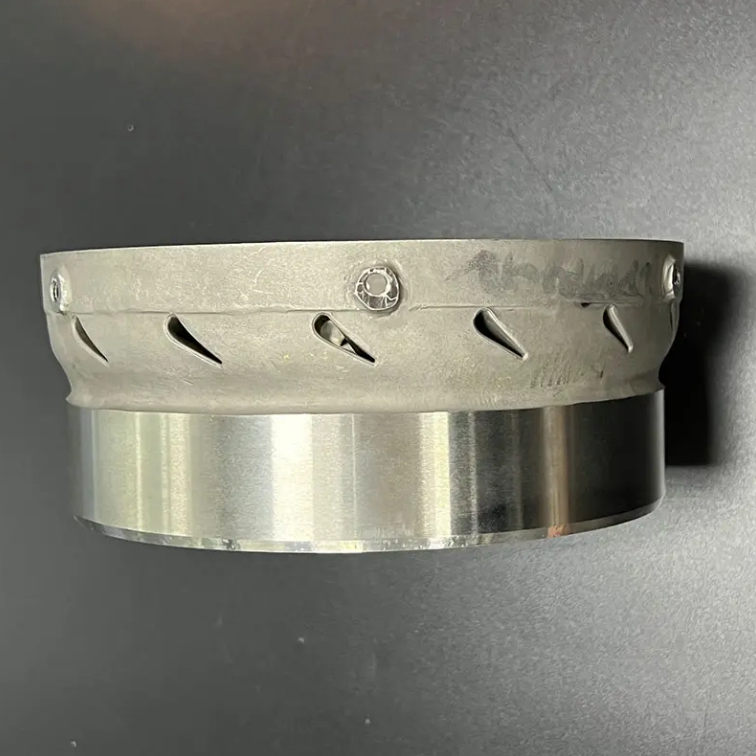
Principais Desafios de Fabricação para Anéis de Bocal Rene 77
Controle rigoroso da composição química (base Ni, Cr ~15%, Co ~14%, Mo ~4.2%, Ti ~3.8%, Al ~3.6%) para otimizar o desempenho em alta temperatura.
Taxas de solidificação controladas (~3–5°C/min) para prevenir microsegregação e garantir microestruturas de grão fino.
Alcançar tolerâncias dimensionais apertadas dentro de ±0,05 mm para consistência aerodinâmica.
Garantir acabamentos superficiais (Ra ≤1,6 µm) para otimizar o fluxo de gás e a eficiência da turbina.
Processo de Fundição por Cera Perdida (Investimento a Vácuo) para Anéis de Bocal Rene 77
O processo de fabricação inclui:
Produção do Modelo de Cera: Modelos de cera de alta precisão criados com repetibilidade dimensional de ±0,1%.
Construção do Casco Cerâmico: Aplicação de barbotinas cerâmicas e areias refratárias de alta pureza para moldes resistentes e à prova de fissuras.
Remoção da Cera (Dewaxing): Autoclave a vapor a ~150°C para remover a cera sem danificar o casco.
Fusão e Vazamento a Vácuo: Liga Rene 77 fundida a ~1420°C e vazada sob vácuo (<10⁻³ Pa) para prevenir oxidação.
Solidificação Controlada: Resfriamento lento promove grãos equiaxiais finos, melhorando o desempenho à fluência e fadiga.
Remoção do Casco e Acabamento: Remoção cerâmica, usinagem CNC e polimento garantem os perfis aerodinâmicos finais.
Análise Comparativa de Métodos de Fundição para Anéis de Bocal
Processo | Qualidade do Acabamento Superficial | Precisão Dimensional | Resistência Mecânica | Resistência à Alta Temperatura | Nível de Custo |
|---|---|---|---|---|---|
Fundição por Investimento a Vácuo | Excelente (Ra ≤1,6 µm) | Muito Alta (±0,05 mm) | Excepcional (~1275 MPa) | Excelente (~980°C) | Moderado |
Fundição de Cristal Equiaxial | Boa (Ra ~3 µm) | Alta (±0,05 mm) | Muito Boa (~1250 MPa) | Muito Alta (~950°C) | Moderado |
Fundição em Areia | Moderada (Ra ~12 µm) | Moderada (±0,5 mm) | Boa (~1000 MPa) | Moderada (~850°C) | Baixo |
Usinagem CNC a partir de Tarugo | Excelente (Ra ≤0,8 µm) | Muito Alta (±0,01 mm) | Excelente (~1275 MPa) | Excelente (~980°C) | Alto |
Estratégia de Fabricação Ideal para Anéis de Bocal Rene 77
A fundição por investimento a vácuo alcança Ra ≤1,6 µm, precisão de ±0,05 mm e alta resistência mecânica (~1275 MPa) para projetos de bocal complexos de paredes finas.
A fundição de cristal equiaxial oferece acabamento Ra ~3 µm, precisão de ±0,05 mm e forte resistência em alta temperatura (~1250 MPa) para componentes de estágio secundário.
A fundição em areia oferece baixo custo, superfície Ra ~12 µm, precisão de ±0,5 mm e resistência moderada (~1000 MPa) para peças estruturais não críticas.
A usinagem CNC a partir de tarugo alcança Ra ≤0,8 µm, tolerâncias de ±0,01 mm e máxima precisão para produção personalizada de anéis de bocal de alto valor.
Visão Geral do Desempenho da Liga Rene 77
Propriedade | Valor | Relevância para Aplicação |
|---|---|---|
Resistência à Tração | ~1275 MPa | Suporta cargas mecânicas e térmicas extremas |
Limite de Escoamento | ~1150 MPa | Alta durabilidade sob tensão sustentada |
Temperatura Máxima de Operação | ~980°C | Mantém resistência à oxidação e fluência |
Resistência à Fluência | Excepcional | Estende a vida útil em altas temperaturas de turbina |
Resistência à Fadiga | ~650 MPa | Resiste a severas tensões térmicas cíclicas |
Vantagens do Uso de Rene 77 para Anéis de Bocal
Resistência mecânica superior em alta temperatura mantém a integridade do bocal da turbina em temperaturas de até 980°C.
Resistência excepcional à fluência estende significativamente a vida operacional sob tensão térmica prolongada.
Resistência à oxidação excepcional protege contra erosão e corrosão por gases quentes.
Excelente resistência à fadiga melhora a vida útil sob cargas térmicas e mecânicas cíclicas.
Técnicas de Pós-processamento para Anéis de Bocal Rene 77
Prensagem Isostática a Quente (HIP): Densifica peças fundidas, removendo porosidade interna e melhorando a vida à fadiga em até 25%.
Tratamento Térmico de Solubilização e Envelhecimento: Refina a microestrutura e maximiza a fase de endurecimento γ'.
Usinagem CNC de Precisão: Alcança tolerâncias de ±0,01 mm e qualidade superficial aerodinâmica Ra ≤0,8 µm.
Polimento Superficial e Granalhamento: Melhora a resistência à fadiga e a suavidade da superfície.
Inspeção e Garantia de Qualidade para Anéis de Bocal
Máquina de Medição por Coordenadas (CMM): Inspeciona perfis aerodinâmicos críticos dentro da tolerância de ±0,05 mm.
Teste Ultrassônico (UT): Detecta defeitos e inclusões internas sem danificar a peça.
Teste por Líquidos Penetrantes (PT): Identifica trincas superficiais tão pequenas quanto 0,002 mm.
Análise Metalográfica: Verifica o tamanho de grão e a distribuição da fase γ' em conformidade com padrões aeronáuticos.
Aplicações da Indústria e Estudo de Caso
Os anéis de bocal Rene 77 fabricados pela Neway AeroTech são amplamente utilizados em motores aeronáuticos avançados, turbinas a gero industriais e turbinas de energia de alta eficiência. Em um projeto aeronáutico recente, os anéis de bocal Rene 77 operaram de forma confiável por mais de 12.000 horas de voo a 960°C, estendendo a vida útil em 35% em comparação com ligas convencionais e reduzindo significativamente os custos de manutenção do motor.
Perguntas Frequentes
Quais tolerâncias dimensionais a Neway AeroTech pode alcançar para anéis de bocal Rene 77?
Por que a fundição por investimento a vácuo é crítica para a fabricação de componentes de turbina Rene 77?
Como o Rene 77 se comporta em comparação com outras ligas à base de níquel em condições de alta temperatura?
Quais indústrias comumente usam anéis de bocal de turbina Rene 77?
Como a Neway AeroTech garante a qualidade metalúrgica e o desempenho das peças fundidas em Rene 77?
