
High-Temperature Alloys Rene 77 Turbine Nozzle Ring Lost Wax Casting Company
Introduction
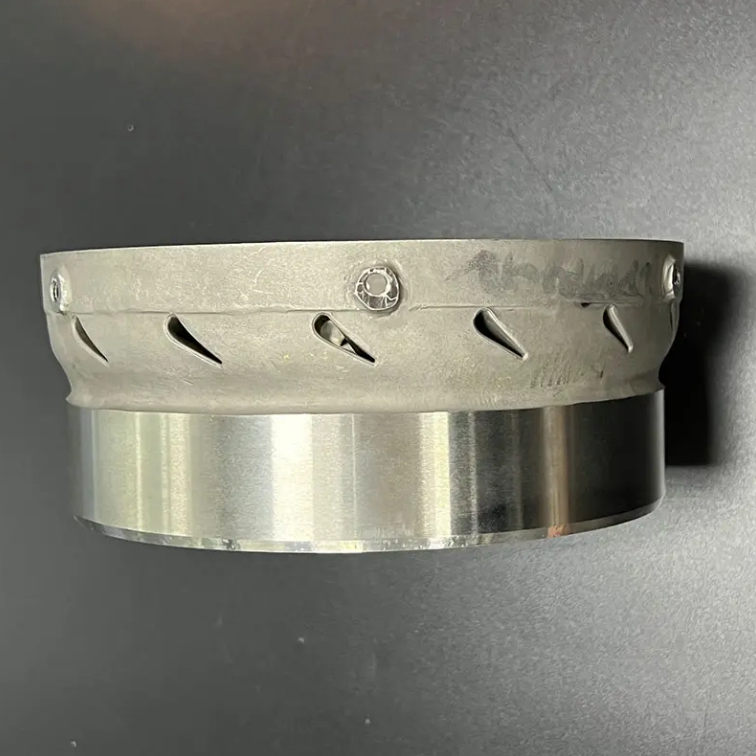
Rene 77 is a nickel-based superalloy engineered for exceptional high-temperature strength (~1275 MPa), superior creep resistance, and excellent oxidation resistance up to 980°C. With a finely tuned γ' phase and outstanding structural stability, Rene 77 is ideal for manufacturing turbine nozzle rings operating under extreme thermal and mechanical loads in aerospace and industrial gas turbines.
At Neway AeroTech, we specialize in producing Rene 77 turbine nozzle rings through precision lost wax (vacuum investment) casting, delivering superior surface quality, dimensional accuracy, and metallurgical integrity for critical high-performance turbine applications.
Key Manufacturing Challenges for Rene 77 Nozzle Rings
Strict chemical composition control (Ni base, Cr ~15%, Co ~14%, Mo ~4.2%, Ti ~3.8%, Al ~3.6%) to optimize high-temperature performance.
Controlled solidification rates (~3–5°C/min) to prevent microsegregation and ensure fine-grain microstructures.
Achieving tight dimensional tolerances within ±0.05 mm for aerodynamic consistency.
Ensuring surface finishes (Ra ≤1.6 µm) to optimize gas flow and turbine efficiency.
Lost Wax (Vacuum Investment) Casting Process for Rene 77 Nozzle Rings
The manufacturing process includes:
Wax Pattern Production: High-precision wax models created with ±0.1% dimensional repeatability.
Shell Building: Application of ceramic slurries and high-purity refractory sands for strong, crack-resistant molds.
Dewaxing: Steam autoclaving at ~150°C to remove wax without damaging the shell.
Vacuum Melting and Pouring: Rene 77 alloy melted at ~1420°C and poured under vacuum (<10⁻³ Pa) to prevent oxidation.
Controlled Solidification: Slow cooling promotes fine equiaxed grains, enhancing creep and fatigue performance.
Shell Removal and Finishing: Ceramic removal, CNC machining, and polishing ensure final aerodynamic profiles.
Comparative Analysis of Casting Methods for Nozzle Rings
Process | Surface Finish Quality | Dimensional Precision | Mechanical Strength | High-Temp Resistance | Cost Level |
|---|---|---|---|---|---|
Vacuum Investment Casting | Excellent (Ra ≤1.6 µm) | Very High (±0.05 mm) | Outstanding (~1275 MPa) | Excellent (~980°C) | Moderate |
Equiaxed Crystal Casting | Good (Ra ~3 µm) | High (±0.05 mm) | Very Good (~1250 MPa) | Very High (~950°C) | Moderate |
Sand Casting | Moderate (Ra ~12 µm) | Moderate (±0.5 mm) | Good (~1000 MPa) | Moderate (~850°C) | Low |
CNC Machining from Billet | Excellent (Ra ≤0.8 µm) | Very High (±0.01 mm) | Excellent (~1275 MPa) | Excellent (~980°C) | High |
Optimal Manufacturing Strategy for Rene 77 Nozzle Rings
Vacuum investment casting achieves Ra ≤1.6 µm, ±0.05 mm precision, and high mechanical strength (~1275 MPa) for thin-walled complex nozzle designs.
Equiaxed crystal casting offers Ra ~3 µm finish, ±0.05 mm precision, and strong high-temperature strength (~1250 MPa) for secondary stage components.
Sand casting provides low cost, Ra ~12 µm surface, ±0.5 mm precision, and moderate strength (~1000 MPa) for non-critical structural parts.
CNC machining from billet achieves Ra ≤0.8 µm, ±0.01 mm tolerances, and maximum precision for customized, high-value nozzle ring production.
Rene 77 Alloy Performance Overview
Property | Value | Application Relevance |
|---|---|---|
Tensile Strength | ~1275 MPa | Supports extreme mechanical and thermal loads |
Yield Strength | ~1150 MPa | High durability under sustained stress |
Maximum Operating Temperature | ~980°C | Maintains oxidation and creep resistance |
Creep Resistance | Outstanding | Extends service life at high turbine temperatures |
Fatigue Strength | ~650 MPa | Withstands severe cyclic thermal stresses |
Advantages of Using Rene 77 for Nozzle Rings
Superior high-temperature mechanical strength maintains turbine nozzle integrity at temperatures up to 980°C.
Exceptional creep resistance significantly extends operational lifespan under prolonged thermal stress.
Outstanding oxidation resistance protects against hot gas erosion and corrosion.
Excellent fatigue resistance improves service life under cyclic thermal and mechanical loads.
Post-processing Techniques for Rene 77 Nozzle Rings
Hot Isostatic Pressing (HIP): Densifies castings, removing internal porosity and improving fatigue life by up to 25%.
Solution and Aging Heat Treatment: Refines microstructure and maximizes γ' strengthening phase.
Precision CNC Machining: Achieves ±0.01 mm tolerances and Ra ≤0.8 µm aerodynamic surface quality.
Surface Polishing and Shot Peening: Improves fatigue strength and surface smoothness.
Inspection and Quality Assurance for Nozzle Rings
Coordinate Measuring Machine (CMM): Inspects critical aerodynamic profiles within ±0.05 mm tolerance.
Ultrasonic Testing (UT): Detects internal defects and inclusions without damaging the part.
Dye Penetrant Testing (PT): Identifies surface cracks as small as 0.002 mm.
Metallographic Analysis: Verifies grain size and γ' phase distribution compliance with aerospace standards.
Industry Applications and Case Study
Rene 77 nozzle rings manufactured by Neway AeroTech are widely used in advanced aerospace engines, industrial gas turbines, and high-efficiency energy turbines. In a recent aerospace project, Rene 77 nozzle rings operated reliably over 12,000 flight hours at 960°C, extending service life by 35% compared to conventional alloys and significantly reducing engine maintenance costs.
FAQs
What dimensional tolerances can Neway AeroTech achieve for Rene 77 nozzle rings?
Why is vacuum investment casting critical for manufacturing Rene 77 turbine components?
How does Rene 77 perform compared to other nickel-based alloys under high-temperature conditions?
What industries commonly use Rene 77 turbine nozzle rings?
How does Neway AeroTech ensure metallurgical quality and performance of Rene 77 castings?
