
Fabricante de Componentes de Palas de Motor Aeroespacial por Fundición a la Cera Perdida al Vacío St...
Introducción
Stellite 1 es una aleación a base de cobalto conocida por su excepcional resistencia al desgaste y estabilidad térmica hasta 980°C, ideal para aplicaciones aeroespaciales exigentes. Utilizando técnicas avanzadas de fundición a la cera perdida al vacío, fabricamos componentes de precisión para palas de motores aeroespaciales, logrando tolerancias dimensionales ajustadas dentro de ±0,05 mm y un refinamiento de grano óptimo para mejorar el rendimiento a fatiga.
Con una amplia experiencia en la fundición de superaleaciones, nuestra empresa proporciona palas de motor Stellite 1 duraderas y resistentes a la corrosión para aplicaciones críticas en la industria aeroespacial y de aviación.
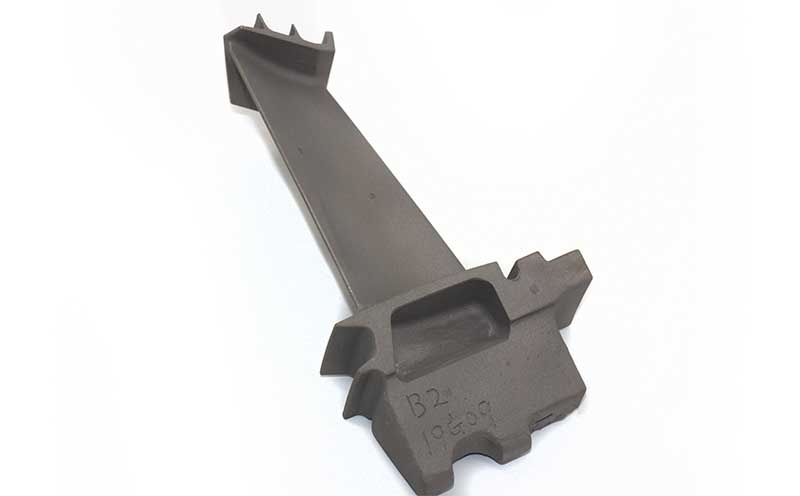
Tecnología Central: Fundición a la Cera Perdida al Vacío de Stellite 1
Nuestro proceso de fundición a la cera perdida al vacío emplea entornos de vacío controlados (≤10⁻³ torr) y temperaturas de fusión precisas (~1450°C) para producir palas aeroespaciales Stellite 1 con defectos mínimos. El precalentamiento preciso del molde (950–1050°C) combinado con tasas de enfriamiento cuidadosas (30–100°C/min) da como resultado microestructuras refinadas (tamaño de grano: 0,3–2 mm), logrando consistentemente niveles de porosidad por debajo del 1%, crucial para la fiabilidad de los componentes aeroespaciales.
Características del Material de la Aleación Stellite 1
La aleación Stellite 1 proporciona una resistencia excepcional al desgaste, estabilidad a la corrosión y dureza a temperaturas elevadas, ideal para aplicaciones de palas de turbina. Las propiedades clave incluyen:
Propiedad | Valor |
|---|---|
Rango de Fusión | 1260–1350°C |
Densidad | 8,80 g/cm³ |
Resistencia a la Tracción (temp. ambiente) | 760 MPa |
Límite Elástico (temp. ambiente) | 520 MPa |
Dureza (HRC) | 55–62 HRC |
Resistencia al Desgaste | Excelente (alta abrasión) |
Estabilidad Térmica | Hasta 980°C |
Estas propiedades posicionan a la aleación Stellite 1 como una opción de material premium para componentes críticos de motores aeroespaciales, particularmente palas de turbina.
Estudio de Caso: Componentes de Palas de Motor Aeroespacial Stellite 1
Antecedentes del Proyecto
Un fabricante global de motores aeroespaciales requería palas de turbina capaces de una resistencia superior al desgaste y a la fatiga térmica a temperaturas de operación continua alrededor de 950°C. Utilizando fundición a la cera perdida al vacío avanzada, nuestra empresa produjo palas de motor Stellite 1 de alto rendimiento que cumplen con los estándares aeroespaciales AMS 5894, satisfaciendo requisitos dimensionales y de propiedades mecánicas estrictos.
Modelos y Aplicaciones Típicas de Palas de Motor Aeroespacial
Palas de Turbina de Alta Presión (HPT): Palas Stellite 1 de fundición de precisión que ofrecen durabilidad óptima contra ciclos térmicos y erosión a temperaturas superiores a 900°C.
Álabes de Turbina de Baja Presión (LPT): Componentes específicamente diseñados para soportar ciclos operativos extendidos y entornos abrasivos comunes en motores de aviación comercial.
Palas del Ventilador: Palas robustas y resistentes a la corrosión que proporcionan un rendimiento confiable en condiciones de servicio severas, manteniendo la integridad contra daños por objetos extraños.
Palas del Compresor: Palas de fundición al vacío avanzadas que garantizan precisión dimensional y una resistencia mejorada a la corrosión y al desgaste a temperaturas intermedias.
Estos modelos de palas de motor mejoran significativamente la eficiencia, fiabilidad y vida útil del motor en aplicaciones aeroespaciales comerciales y militares.
Soluciones de Fabricación de Componentes de Palas de Motor
Proceso de Fundición La fundición a la cera perdida al vacío de precisión implica fundir la aleación Stellite 1 en condiciones de vacío alrededor de 1450°C. El precalentamiento preciso del molde (1000°C) y las tasas de solidificación controladas (aproximadamente 80°C/min) aseguran un refinamiento de grano uniforme (tamaño de grano: 0,3–2 mm) y una precisión dimensional de ±0,05 mm.
Postprocesado Las palas fundidas se someten a prensado isostático en caliente (HIP), realizado a aproximadamente 1200°C y una presión de 100–120 MPa para lograr niveles de porosidad consistentemente por debajo del 1%, mejorando significativamente la resistencia a la fatiga y las propiedades mecánicas.
Tratamiento de Superficie Las palas de motor reciben un recubrimiento de barrera térmica (TBC), típicamente circonio estabilizado con itria aplicado mediante proyección por plasma. Este recubrimiento reduce las temperaturas de la superficie de operación en aproximadamente 150–200°C, mejorando sustancialmente la vida a fatiga térmica y la resistencia a la corrosión.
Pruebas e Inspección Las palas se someten a pruebas exhaustivas que incluyen inspección radiográfica digital por rayos X, verificación de precisión dimensional mediante Máquinas de Medición por Coordenadas (CMM) y pruebas de tracción a temperaturas elevadas para garantizar el cumplimiento de los estándares de la industria aeroespacial.
Desafíos Centrales de Fabricación de Palas de Motor Aeroespacial
La producción de palas de motor aeroespacial a partir de Stellite 1 implicó abordar desafíos de fabricación críticos:
Lograr precisión dimensional dentro de ±0,05 mm para geometrías de palas complejas.
Mantener la porosidad por debajo del 1% para optimizar la integridad mecánica y la resistencia a la fatiga.
Asegurar propiedades del material consistentes mediante un control térmico y de vacío preciso durante la fundición.
Resultados y Verificación
Las palas aeroespaciales Stellite 1 completadas superaron los requisitos de rendimiento mediante:
Verificación de la precisión dimensional dentro de ±0,05 mm utilizando inspecciones CMM.
Confirmación del rendimiento mecánico, con resistencias a la tracción ≥760 MPa y dureza consistentemente dentro del rango de 55–62 HRC.
Extensas pruebas de durabilidad y fatiga térmica que demuestran una extensión de la vida útil de la pala de más del 20% en comparación con aleaciones convencionales.
Preguntas Frecuentes
¿Por qué la fundición a la cera perdida al vacío es ideal para las palas de motor aeroespacial Stellite 1?
¿Cómo se desempeña el Stellite 1 bajo condiciones extremas de motores aeroespaciales?
¿Qué procesos de garantía de calidad aseguran la integridad de las palas aeroespaciales?
¿Se pueden personalizar los componentes de palas de motor Stellite 1 para modelos específicos de motores aeroespaciales?
¿Qué tratamientos de superficie mejoran la durabilidad de las palas de motor aeroespacial hechas de Stellite 1?
