
Fundiciones de Cristal Equiaxializado: Mecanizado de Precisión Multieje en Superaleaciones
Fresado y Torneado de Precisión para Componentes de Superaleación de Cristal Equiaxializado
Las fundiciones de cristal equiaxializado se utilizan ampliamente en componentes complejos de turbinas de alta temperatura donde se requieren propiedades mecánicas isotrópicas. Estas superaleaciones, cuando se procesan mediante fundición de cristal equiaxializado, exigen mecanizado CNC multieje para lograr tolerancias precisas, contornos aerodinámicos e interfaces mecánicas seguras para álabes, toberas, boquillas y carcasas.
Neway AeroTech ofrece mecanizado CNC multieje de alta precisión para piezas de superaleación fundidas equiaxializadas fabricadas en Inconel 713C, Hastelloy X, Rene 77 y Nimonic 90.
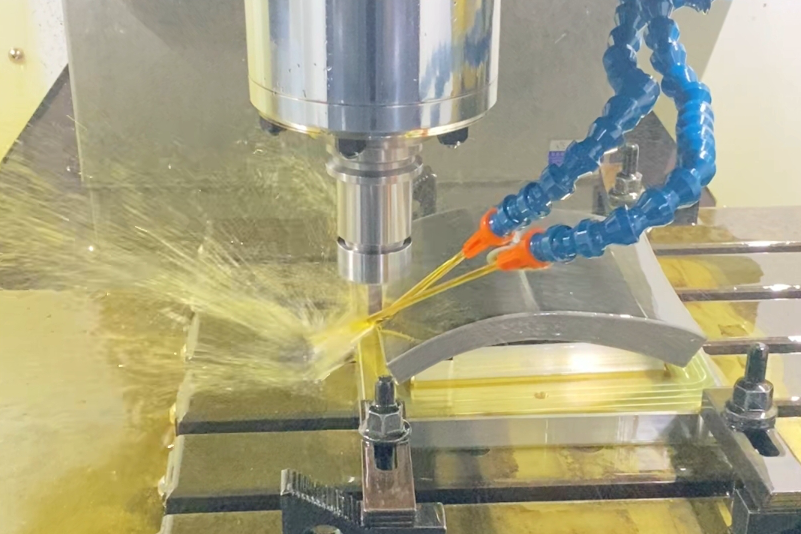
Capacidades Principales para el Mecanizado CNC de Fundiciones Equiaxializadas
El mecanizado de componentes fundidos equiaxializados requiere un control preciso de la superficie, una eliminación consistente del material y exactitud posicional en geometrías 3D complejas.
Fresado CNC simultáneo de 5 ejes para perfiles aerodinámicos de álabes y carcasas curvas
Torneado-fresado multieje para interfaces concéntricas, bridas y alineaciones de taladros
Optimización de trayectorias de herramienta utilizando perfiles de fundición escaneados y geometría derivada de CFD
Herramientas con refrigerante interno para la gestión térmica en aleaciones difíciles de mecanizar
Las soluciones de mecanizado cumplen con los requisitos de tolerancia de turbinas específicos del cliente, así como con las normas AS9100D y NADCAP.
Superaleaciones Comúnmente Mecanizadas a partir de Fundiciones Equiaxializadas
Aleación | Temp. Máx. (°C) | Límite Elástico (MPa) | Aplicación Típica |
|---|---|---|---|
950 | 760 | Álabes directrices de tobera, ruedas de turbina | |
1175 | 790 | Anillos de combustor, bastidores de escape | |
1040 | 960 | Segmentos de estator, conductos de transición | |
920 | 1265 | Guías de válvula, segmentos de turbina |
Estas superaleaciones ofrecen buena soldabilidad, resistencia a la oxidación y uniformidad de resistencia para cargas multidireccionales.
Estudio de Caso: Mecanizado CNC de un Conjunto de Segmentos de Tobera en Rene 77
Antecedentes del Proyecto
Un fabricante de equipos originales (OEM) de turbinas industriales contrató a Neway AeroTech para realizar el mecanizado de acabado de un lote de segmentos de tobera fundidos equiaxializados en Rene 77, con curvatura interna en los álabes y geometría de plataforma de precisión. Tolerancias requeridas: ±0,008 mm en superficies de perfil, Ra ≤ 0,5 μm y radios de borde de fuga de 0,2 mm.
Componentes Típicos Fundidos Equiaxializados y sus Aplicaciones
Componente | Aleación | Tolerancia | Industria |
|---|---|---|---|
Segmento de Tobera | Rene 77 | ±0,008 mm | |
Cubierta de Turbina | Inconel 713C | ±0,010 mm | |
Revestimiento de Combustión | Hastelloy X | ±0,012 mm | |
Anillo Estator de Turbina | Nimonic 90 | ±0,006 mm |
Cada pieza requiere acceso multieje para lograr un ajuste preciso, sellado y características de flujo adecuadas.
Desafíos del Mecanizado CNC en Piezas de Superaleación Equiaxializada
Tolerancia superficial dentro de ±0,008 mm en perfiles aerodinámicos de espesor variable
Control del desgaste de la herramienta en aleaciones con dureza superior a 40 HRC
Mantenimiento de Ra ≤ 0,5 μm en caras de sellado con herramientas de barril
Mantenimiento de la alineación de taladros en superficies fundidas de carcasas con múltiples características
Eliminación del exceso post-fundición preservando los puntos de referencia críticos
Soluciones de Mecanizado Multieje para Fundiciones Equiaxializadas
Generación de trayectorias de herramienta a partir de superficies escaneadas en 3D asegura una eliminación precisa en fundiciones de forma neta
Palpado después del desbaste restablece los marcos de referencia para mantener tolerancias posicionales inferiores a ±0,005 mm
Fresas de carburo con refrigeración interna mejoran el acabado superficial y reducen las rebabas en cortes de aleación
Mecanizado secundario por EDM utilizado para microcanales y bordes de fuga de alto radio
Tratamiento térmico post-mecanizado estabiliza la geometría antes de la inspección
Resultados y Verificación
Métodos de Fabricación
Las piezas se mecanizaron a partir de blanks fundidos al vacío de estructura equiaxializada utilizando centros de mecanizado de 5 ejes. Las trayectorias de herramienta se ajustaron mediante datos de escaneo óptico para coincidir con las desviaciones de fundición.
Acabado de Precisión
Se logró un acabado Ra ≤ 0,4 μm en las superficies de sellado y flujo de aire. Las herramientas de mezcla eliminaron cualquier cresta de transición y los radios en los bordes de ataque y fuga se mantuvieron en 0,2 mm.
Post-procesamiento
Todas las piezas se sometieron a HIP (Prensado Isostático en Caliente) y tratamiento térmico de alivio de tensiones. Se aplicaron recubrimientos de barrera térmica (TBC) opcionales en las superficies expuestas al gas según especificación.
Inspección
La inspección por MMC (Máquina de Medición por Coordenadas) confirmó las tolerancias superficiales y geométricas. Los rayos X verificaron la continuidad estructural interna. La MEB (Microscopía Electrónica de Barrido) validó la calidad de los bordes y la integridad microestructural.
Preguntas Frecuentes
¿Cuál es la tolerancia de mecanizado típica para piezas de turbina fundidas equiaxializadas?
¿Pueden mecanizar superficies de sellado hasta Ra ≤ 0,5 μm?
¿Qué aleaciones son las más comunes en piezas de turbina fundidas equiaxializadas?
¿Soportan tanto el mecanizado de desbaste como el de acabado en una sola configuración?
¿Cómo se manejan las desviaciones de la superficie fundida durante el fresado CNC final?
