
Corporación de Anillos de Toberas para Turbinas de Gas Fabricados por Fundición de Superaleaciones
Introducción
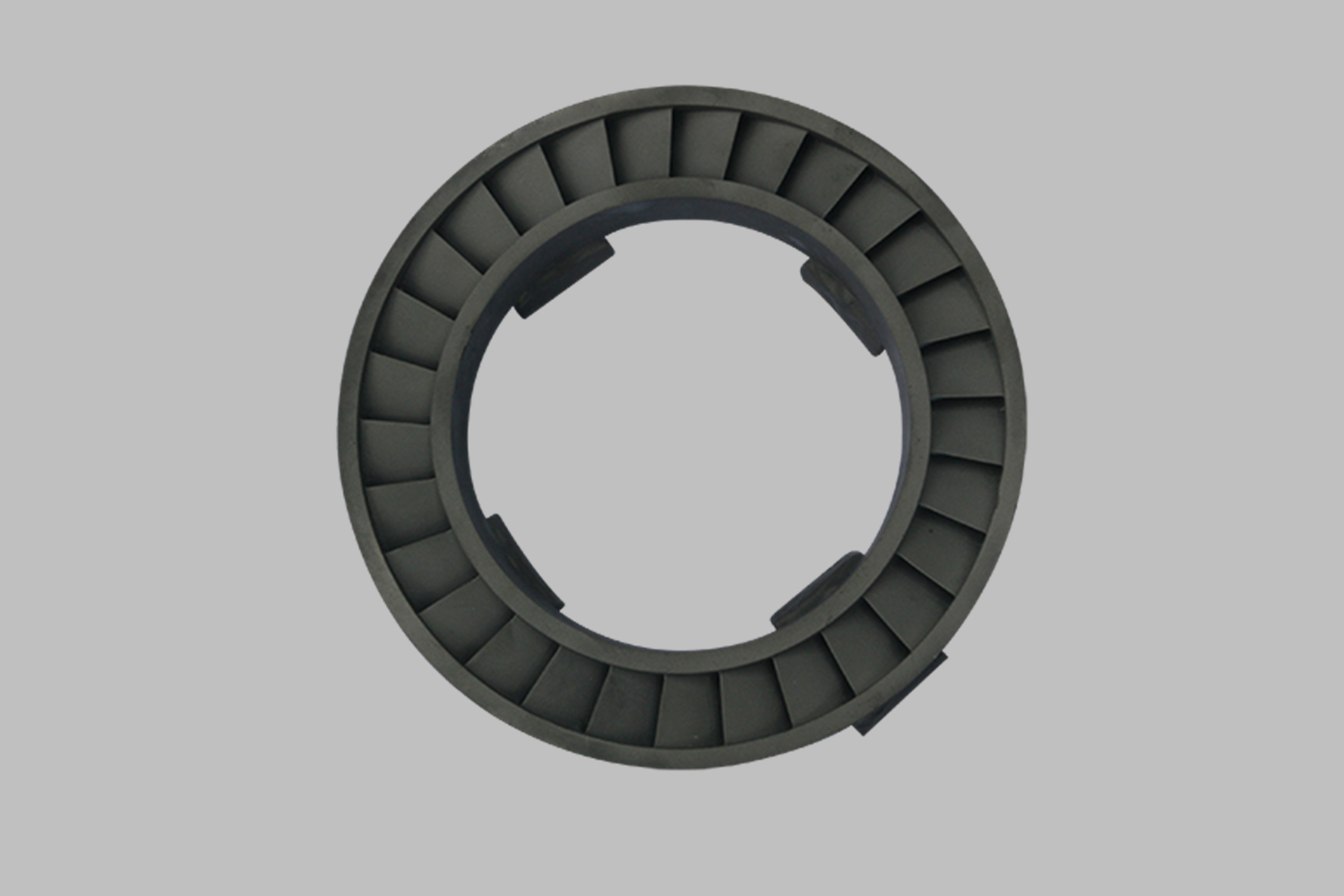
Neway AeroTech es una corporación especializada que proporciona anillos de toberas para turbinas de gas de precisión utilizando técnicas avanzadas de fundición a la cera de superaleaciones al vacío. Utilizando materiales de alto rendimiento como Inconel 713C y aleaciones monocristalinas como CMSX-4, logramos una precisión dimensional dentro de ±0,05 mm y acabados superficiales mejores que Ra ≤1,6 µm.
Nuestros anillos de toberas soportan de manera confiable temperaturas continuas superiores a 1100°C, cumpliendo con criterios de rendimiento estrictos esenciales para aplicaciones de turbinas aeroespaciales y de generación de energía.
Desafíos Principales de la Fundición de Anillos de Toberas de Superaleación
La fabricación de anillos de toberas para turbinas de gas a partir de superaleaciones como CMSX-4, Inconel 713C y Hastelloy X presenta desafíos técnicos distintos:
Control preciso de la estructura granular (monocristal, solidificación direccional, equiaxial).
Gestión de la fusión de la aleación a temperaturas extremadamente altas (1300–1450°C).
Mantener la precisión dimensional de ±0,05 mm para características aerodinámicas intrincadas.
Lograr una integridad superficial óptima (Ra ≤1,6 µm) crítica para la eficiencia de la turbina.
Proceso Detallado de Fundición a la Cera
El proceso de fundición de precisión para anillos de toberas de superaleación incluye:
Producción del Modelo de Cera: Se forman modelos de cera de alta precisión utilizando mecanizado CNC o fabricación aditiva.
Creación del Molde Cerámico: Aplicación secuencial de capas de suspensión cerámica y recubrimientos de arena refractaria sobre los modelos de cera.
Eliminación de la Cera y Preparación del Molde: Desencerado en autoclave a ~150°C y sinterización del molde a 1000°C.
Fusión de Aleación al Vacío: Superaleaciones de alta pureza fundidas en entornos de vacío (<0,01 Pa) para eliminar la contaminación.
Solidificación Controlada: Técnicas de solidificación controlada direccionalmente o monocristal para optimizar las propiedades mecánicas.
Eliminación Final del Molde y Acabado: Eliminación de precisión del molde y mecanizado CNC final para lograr las tolerancias y acabados superficiales especificados.
Comparación de Métodos de Fabricación para Anillos de Toberas
Método | Precisión Dimensional | Acabado Superficial (Ra) | Control de Estructura Granular | Rendimiento Mecánico | Eficiencia de Costos |
|---|---|---|---|---|---|
Fundición a la Cera al Vacío | ±0,05 mm | ≤1,6 µm | Excelente | Superior | Medio |
Metalurgia de Polvos | ±0,03 mm | ≤1,2 µm | Excelente | Superior | Alto |
Forja de Precisión | ±0,2 mm | ≤3,2 µm | Bueno | Bueno | Medio |
Mecanizado CNC | ±0,01 mm | ≤0,8 µm | Limitado | Bueno | Alto |
Estrategia de Selección del Método de Fabricación
La selección óptima del método de fabricación implica:
Fundición a la Cera al Vacío: Ideal para geometrías de toberas aerodinámicas complejas, precisión dimensional ajustada, excelente calidad superficial y estructuras granulares específicas.
Metalurgia de Polvos: Adecuada para anillos de toberas que requieren máxima resistencia y tolerancias más ajustadas, particularmente para aplicaciones aeroespaciales críticas.
Forja de Precisión: Mejor para diseños más simples que necesitan precisión moderada y mayor eficiencia de producción en volumen.
Mecanizado CNC: Apropiado para prototipos, series de producción limitadas u operaciones de mecanizado final que exigen extrema precisión.
Matriz de Rendimiento de Materiales de Superaleación
Aleación | Rango de Fusión (°C) | Temperatura de Servicio (°C) | Resistencia a la Tracción (MPa) | Resistencia a la Oxidación | Aplicaciones Típicas |
|---|---|---|---|---|---|
1315–1345 | 1150 | 1250 | Superior | Toberas de turbina monocristalinas | |
1310–1355 | 950 | 1200 | Excepcional | Toberas de turbina de gas de alta temperatura | |
1260–1355 | 900 | 860 | Superior | Toberas de combustor | |
1320–1360 | 950 | 1200 | Excelente | Segmentos de toberas para turbinas de gas | |
1320–1365 | 1150 | 1150 | Superior | Anillos de toberas aeroespaciales avanzados | |
1260–1350 | 800 | 870 | Excelente | Inserciones de toberas para válvulas y bombas |
Pautas de Selección de Materiales
Las pautas de selección de materiales para anillos de toberas de turbinas de gas incluyen:
CMSX-4: Preferida para anillos de toberas monocristalinos que requieren una resistencia a la fluencia extraordinaria y estabilidad a temperaturas de hasta 1150°C.
Inconel 713C: Óptima para anillos de toberas de turbina de alta temperatura que requieren una robusta resistencia a la oxidación y resistencias a la tracción (1200 MPa) a hasta 950°C.
Hastelloy X: Seleccionada para toberas de combustor debido a su excelente resistencia a la oxidación, resistencia mecánica moderada y rendimiento confiable a 900°C.
Nimonic 90: Ideal para segmentos de toberas que necesitan excelente resistencia, resistencia a la fluencia y estabilidad a la oxidación a 950°C.
Rene N5: Recomendada para anillos de toberas aeroespaciales avanzados que exigen una resistencia excepcional a la fluencia y a la fatiga a temperaturas de hasta 1150°C.
Stellite 6: Elegida para inserciones de toberas en válvulas y bombas que requieren una resistencia al desgaste superior y buenas propiedades mecánicas a temperaturas moderadas.
Tecnologías Esenciales de Postprocesamiento
Las operaciones clave de postprocesamiento incluyen:
Prensado Isostático en Caliente (HIP): Elimina la porosidad interna, mejorando significativamente la fiabilidad del componente.
Recubrimiento de Barrera Térmica (TBC): Los recubrimientos cerámicos (espesor de 100–250 µm) mejoran la resistencia térmica, prolongando la vida útil.
Mecanizado CNC de Precisión: Garantiza los requisitos finales de precisión dimensional y acabado superficial críticos para la eficiencia de la turbina.
Tratamiento Térmico Controlado: El recocido y envejecimiento personalizados mejoran las propiedades mecánicas y optimizan las microestructuras.
Métodos de Prueba y Garantía de Calidad
Neway AeroTech aplica métodos de prueba avanzados y una garantía de calidad rigurosa para asegurar la integridad de los anillos de toberas:
Máquina de Medición por Coordenadas (CMM): Garantiza una precisión dimensional dentro de ±0,005 mm.
Inspección por Rayos X: Detecta defectos internos y asegura la integridad estructural.
Microscopía Metalográfica: Evalúa las estructuras granulares y confirma la microestructura óptima.
Prueba de Tracción: Valida las propiedades mecánicas, incluyendo resistencias a la tracción y al límite elástico.
Todos los procesos de fabricación se adhieren estrictamente a los estándares aeroespaciales AS9100, asegurando una calidad y fiabilidad óptimas.
Estudio de Caso: Anillos de Toberas Monocristalinos de CMSX-4
Neway AeroTech entregó anillos de toberas de precisión de CMSX-4, logrando:
Servicio Continuo: hasta 1150°C
Mejora de la Vida a Fatiga: ~40%
Precisión Dimensional: ±0,03 mm
Certificación: Cumplimiento aeroespacial AS9100
Preguntas Frecuentes
¿Por qué la fundición a la cera al vacío es ideal para anillos de toberas de turbinas de gas?
¿Qué superaleaciones cumplen mejor con los requisitos de los anillos de toberas de turbina?
¿Qué tolerancias puede lograr la fundición a la cera para anillos de toberas?
¿Cómo mejoran los tratamientos post-proceso la durabilidad de los anillos de toberas?
¿Qué medidas de garantía de calidad aseguran la fiabilidad de los anillos de toberas?
