
Proveedor de Fundición de Cristal Único para Palas de Turbina de Superaleación Inconel 713
Introducción
Inconel 713, una superaleación a base de níquel, ofrece excelente resistencia a altas temperaturas, resistencia a la oxidación y resistencia a la fluencia, lo que la hace muy adecuada para la fabricación de palas de turbina. En Neway AeroTech, nos especializamos en servicios de fundición de cristal único para aleaciones Inconel. Entregamos palas de turbina de Inconel 713 con un rendimiento superior a la fatiga, precisión dimensional (±0,05 mm) y microestructuras optimizadas diseñadas para condiciones operativas extremas de turbinas.
Utilizando tecnología avanzada de solidificación direccional y crecimiento de cristal único, Neway AeroTech garantiza componentes de turbina de alta confiabilidad para los sectores aeroespacial, de turbinas de gas industriales y de generación de energía.
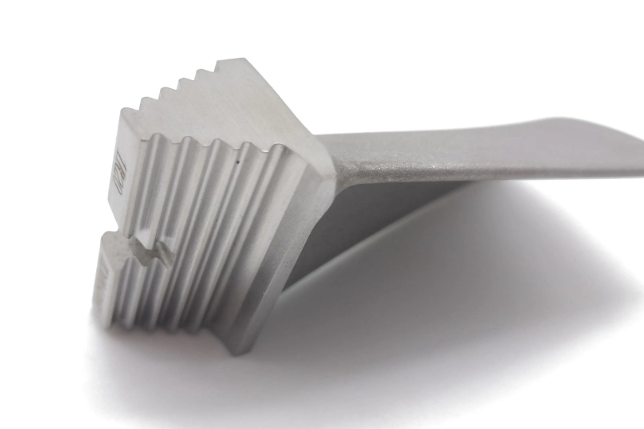
Desafíos Principales de Fabricación para Palas de Turbina de Cristal Único de Inconel 713
Producir palas de turbina de cristal único a partir de Inconel 713C implica varios desafíos técnicos:
Lograr estructuras de cristal único libres de defectos con orientación cristalográfica controlada (típicamente dirección de crecimiento <001>).
Eliminar los límites de grano que pueden servir como sitios para la iniciación de grietas por fluencia y fatiga.
Mantener tolerancias dimensionales precisas (±0,05 mm) en geometrías complejas de álabe y raíz.
Gestionar las tasas de solidificación y los gradientes térmicos durante la fundición para prevenir defectos como granos errantes o pecas.
Proceso de Fundición de Cristal Único para Palas de Turbina de Inconel 713
Nuestro proceso de fundición de cristal único altamente controlado incluye:
Creación de Patrón de Cera: Moldes de cera de alta precisión que replican los perfiles de las palas, producidos utilizando herramientas mecanizadas por CNC.
Construcción de Caparazón Cerámico: Recubrimientos cerámicos multicapa para crear un molde robusto y resistente al choque térmico.
Eliminación de Cera y Cocción del Caparazón: Eliminación de la cera a ~150°C, seguida de cocción a alta temperatura a ~1000°C.
Fusión al Vacío y Colada: Fusión de Inconel 713C en un entorno de alto vacío (<0,01 Pa) para preservar la pureza de la aleación.
Crecimiento de Cristal Único: Usando un cristal semilla, la solidificación direccional controlada a tasas de extracción precisamente gestionadas (~3–6 mm/min) asegura la formación de cristal único.
Eliminación del Caparazón y Tratamiento Térmico: Eliminación del caparazón cerámico seguida de tratamiento térmico de solución (~1120°C) y envejecimiento para optimizar la distribución de fases y las propiedades mecánicas.
Mecanizado Final CNC: Lograr dimensiones finales con tolerancias de hasta ±0,01 mm y acabados superficiales Ra ≤1,6 µm.
Comparación de Métodos de Fabricación para Palas de Turbina de Inconel 713
Método de Fabricación | Precisión Dimensional | Microestructura | Resistencia a la Fluencia | Resistencia a la Fatiga Térmica | Eficiencia de Costo |
|---|---|---|---|---|---|
Fundición de Cristal Único | ±0,05 mm | Cristal Único | Superior | Superior | Media-Alta |
Solidificación Direccional | ±0,05 mm | Grano Columnar | Excelente | Excelente | Media |
Fundición a la Cera Perdida Equiaxial | ±0,1 mm | Grano Equiaxial | Buena | Buena | Media |
Estrategia de Selección del Método de Fabricación
La selección depende de la temperatura operativa, la carga cíclica y los requisitos de vida útil:
Fundición de Cristal Único: Óptima para palas de turbina de primera etapa expuestas a tensiones térmicas y mecánicas extremas, eliminando los límites de grano para una máxima resistencia a la fluencia y vida a la fatiga.
Solidificación Direccional: Adecuada para etapas intermedias donde la resistencia direccional a la fluencia es importante pero el control de costos es una prioridad.
Fundición a la Cera Perdida Equiaxial: Adecuada para componentes estacionarios de turbinas y palas que operan a cargas térmicas más bajas.
Matriz de Rendimiento de Inconel 713C
Propiedad | Valor | Notas |
|---|---|---|
Temperatura Máxima de Servicio (°C) | 950 | Capacidad de operación continua |
Resistencia a la Tracción (MPa) | 1200 | Alta resistencia mecánica |
Resistencia a la Fluencia | Superior | Ideal para exposición prolongada a alta temperatura |
Resistencia a la Oxidación | Excelente | Resistente a la corrosión por gases calientes |
Resistencia a la Fatiga | Excelente | Resistencia a la fatiga de alto y bajo ciclo |
Ventajas de las Palas de Cristal Único de Inconel 713
El uso de palas de cristal único de Inconel 713 proporciona:
Eliminación de Límites de Grano: Reduce los riesgos de iniciación de grietas por fluencia y fatiga, extendiendo la vida útil de la pala en un 30–50% en comparación con las palas equiaxiales.
Resistencia Superior a la Fluencia: Permite operar a temperaturas más altas (hasta 950°C) sin degradación microestructural.
Integridad Mecánica Mejorada: Mejora la resistencia a la fatiga, reduciendo la probabilidad de propagación de grietas bajo carga cíclica.
Resistencia a la Fatiga Térmica Optimizada: Crítico para componentes expuestos a ciclado térmico repetido.
Técnicas Clave de Postprocesamiento
Las operaciones críticas de postprocesamiento incluyen:
Prensado Isostático en Caliente (HIP): Densifica la pieza fundida, eliminando microporos y mejorando la vida a la fatiga.
Tratamiento Térmico: Recocido de solución (~1120°C) y envejecimiento para mejorar las propiedades mecánicas y la estabilidad de fase.
Mecanizado CNC de Precisión: Acabado final para lograr tolerancias estrechas (±0,01 mm) y perfiles aerodinámicos.
Aplicación de Recubrimiento Superficial: Aplicación de TBC (Recubrimientos de Barrera Térmica) para extender la vida útil en las secciones calientes de la turbina.
Métodos de Prueba y Garantía de Calidad
Cada pala de cristal único de Inconel 713 se somete a rigurosas pruebas de grado aeroespacial:
Máquina de Medición por Coordenadas (CMM): Inspección dimensional de precisión con una precisión de ±0,005 mm.
Pruebas No Destructivas por Rayos X: Detección de defectos internos y porosidad.
Microscopía Metalográfica: Verificación microestructural de la integridad del cristal único.
Pruebas de Tracción y Fluencia: Verificación del rendimiento mecánico bajo carga a alta temperatura.
Todos los procesos cumplen plenamente con los estándares de calidad aeroespacial AS9100.
Estudio de Caso: Palas de Turbina de Inconel 713C Fundidas en Cristal Único
Neway AeroTech fabricó palas de turbina de cristal único de Inconel 713C para una aplicación de turbina de gas aeroespacial:
Temperatura Operativa: Uso continuo hasta 950°C
Precisión Dimensional: ±0,05 mm mantenida en todas las características
Vida a la Fatiga: Mejorada en un 40% en comparación con equivalentes fundidos equiaxiales
Certificación: Totalmente conforme con los estándares de calidad aeroespacial AS9100
Preguntas Frecuentes
¿Por qué se prefiere la fundición de cristal único para palas de turbina sobre la fundición equiaxial?
¿Cuáles son las ventajas de usar Inconel 713C para aplicaciones de palas a alta temperatura?
¿Cómo asegura la solidificación direccional una resistencia superior a la fluencia?
¿Qué tolerancias dimensionales se pueden lograr con la fundición de cristal único de Inconel 713?
¿Qué estándares de calidad aplica Neway AeroTech a la producción de palas de turbina?
