Wie steuert SLM thermische Spannungen in Edelstahl 316L?
Prozessparameteroptimierung
Die SLM-Technologie steuert thermische Spannungen in 316L hauptsächlich durch präzise Optimierung der Prozessparameter. Laserleistung, Scangeschwindigkeit, Hatch-Abstand und Schichtdicke werden sorgfältig ausbalanciert, um den Energieeintrag zu steuern und thermische Gradienten zu minimieren. Eine geringere volumetrische Energiedichte reduziert typischerweise Eigenspannungen, muss aber gegen die Erzielung vollständiger Verdichtung abgewogen werden. Moderne SLM-Systeme nutzen Echtzeitüberwachung und Regelkreise, um konsistente Schmelzbadcharakteristika aufrechtzuerhalten und lokale Überhitzung zu verhindern, die steile thermische Gradienten erzeugt – den Haupttreiber der Eigenspannungsbildung während des schnellen Erstarrungsprozesses.
Fortschrittliche Scanstrategien
Anspruchsvolle Scanstrategien stellen eine entscheidende Methode zum Spannungsmanagement dar. Anstelle kontinuierlicher langer Vektoren verwenden moderne Systeme Insel-Scanning, Streifenmuster oder zufällige Hatch-Rotationen zwischen den Schichten. Diese Ansätze verteilen die Wärme gleichmäßiger im gesamten Bauraum und verhindern die Akkumulation von Spannungen in bestimmten Richtungen. Durch häufiges Ändern der Scanrichtung und Aufteilung des Baubereichs in kleinere Segmente vermeidet die Technologie die Bildung kontinuierlicher Spannungspfade, die zu Verzug oder Rissen im finalen 316L-Bauteil führen könnten.
Bauplattformvorheizung
Die kontrollierte Vorheizung der Bauplattform auf 150-200°C reduziert thermische Spannungen in 316L-Bauteilen signifikant. Diese erhöhte Starttemperatur minimiert den Temperaturunterschied zwischen neu erstarrten Schichten und dem darunterliegenden Material, wodurch thermische Gradienten reduziert werden. Die Vorheizung senkt auch die Abkühlrate jeder gescannten Spur und ermöglicht mehr Zeit für Spannungsabbau durch plastische Verformung. Für besonders spannungsanfällige Geometrien verwenden einige fortschrittliche Systeme erhöhte Kammeremperaturen bis zu 500°C, um thermische Spannungen während des SLM-Prozesses weiter zu mindern.
Stützstrukturentwurf
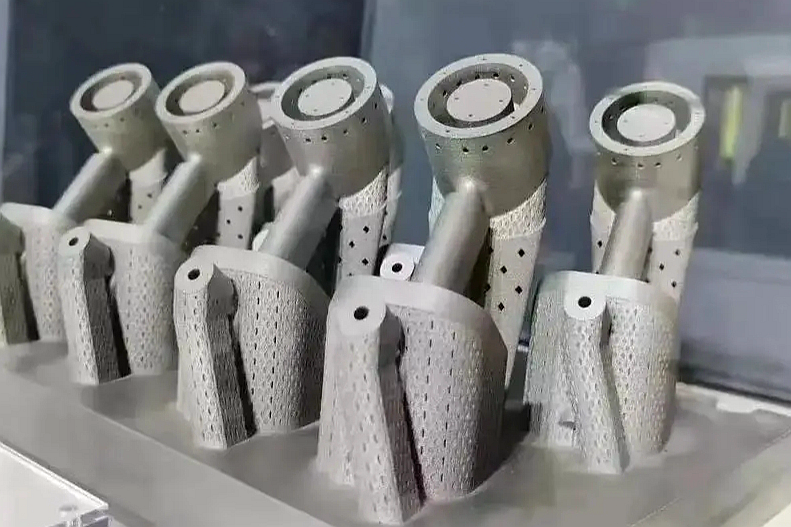
Strategischer Stützstrukturentwurf spielt eine entscheidende Rolle beim Management thermischer Spannungen. Stützen verankern das Bauteil nicht nur an der Bauplattform, sondern wirken auch als Wärmeleiter, die thermische Energie aus dem Schmelzbereich ableiten, um lokale Temperaturspitzen zu reduzieren. Die Dichte, das Muster und die Konnektivität der Stützen werden optimiert, um ausreichende Wärmeleitfähigkeit zu bieten und gleichzeitig den Aufwand für die Nachbearbeitungsentfernung zu minimieren. Für Überhänge und dünnwandige Abschnitte helfen spezielle Stützkonfigurationen, Wärme abzuleiten und das Bauteil während des Bauprozesses gegen thermische Verformungskräfte zu stabilisieren.
In-Prozess-Spannungsüberwachung
Fortschrittliche SLM-Systeme integrieren In-Prozess-Überwachungstechniken, um Spannungsentwicklung in Echtzeit zu erfassen und zu adressieren. Optische Tomographie, Thermografie und schichtweise Verzugsmessungen ermöglichen es dem System, Bereiche mit übermäßiger Spannungsakkumulation zu identifizieren. Wenn problematische Bereiche erkannt werden, kann das System automatisch Prozessparameter wie Laserleistung oder Scangeschwindigkeit anpassen oder lokale Spannungsabbau-Strategien zwischen den Schichten implementieren. Dieser adaptive Steuerungsansatz stellt sicher, dass thermische Spannungen während des gesamten Bauprozesses für 316L-Bauteile innerhalb beherrschbarer Grenzen bleiben.