
Empresa de Componentes de Reator de Alta Temperatura em Superliga Fundida Ti-6.5Al-1Mo-1V-2Zr (TA15)
Introdução
Ti-6.5Al-1Mo-1V-2Zr, conhecida como TA15, é uma liga de titânio quase-alfa desenvolvida para aplicações estruturais de alta temperatura que exigem excelente resistência ao fluência, estabilidade térmica e uma relação resistência-peso moderada. Como uma empresa especializada em fundição de superligas, fabricamos componentes de TA15 de precisão para sistemas de reatores de alta temperatura usando fundição por cera perdida a vácuo, alcançando tolerâncias apertadas (±0,05 mm) e porosidade abaixo de 1%.
As peças fundidas em TA15 são idealmente adequadas para sistemas de energia nuclear e aeroespacial, onde a resistência térmica de longo prazo, estabilidade dimensional e confiabilidade sob carga são críticas.
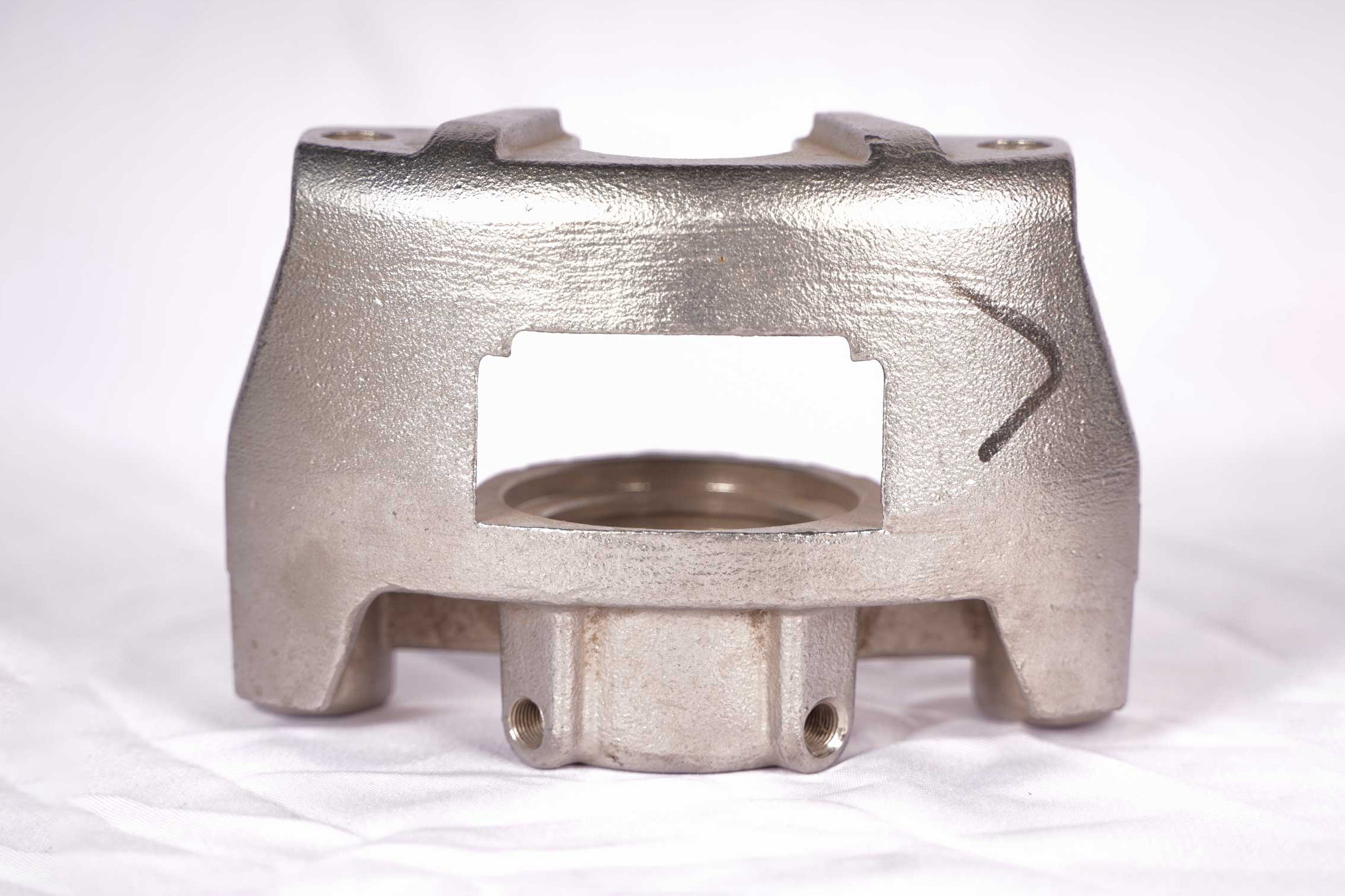
Tecnologia Central: Fundição por Cera Perdida a Vácuo de TA15
Os componentes de TA15 são produzidos usando fundição por cera perdida a vácuo para garantir integridade metalúrgica e controle de oxidação. A liga é fundida e vazada a ~1650°C em moldes cerâmicos de casca (8–10 camadas), com pré-aquecimento do molde a 1000–1050°C. Taxas de solidificação de 30–70°C/min garantem refinamento de grão (0,5–2 mm), minimizam defeitos de retração e eliminam contaminação por camada alfa.
Características do Material da Liga TA15
Ti-6.5Al-1Mo-1V-2Zr (TA15) é uma liga de titânio quase-alfa que apresenta resistência à oxidação em alta temperatura e excepcional resistência ao fluência. É comumente usada em estruturas de seção quente de equipamentos aeroespaciais e de energia. As propriedades principais incluem:
Propriedade | Valor |
|---|---|
Densidade | 4,55 g/cm³ |
Resistência à Tração Máxima | ≥950 MPa |
Limite de Escoamento | ≥880 MPa |
Alongamento | ≥10% |
Resistência ao Fluência (1000h @ 500°C) | ≥180 MPa |
Limite de Temperatura de Operação | Até 550°C |
Resistência à Oxidação | Excelente |
A retenção de resistência do TA15 em alta temperatura o torna ideal para internos de reator, invólucros estruturais e partes de blindagem térmica.
Estudo de Caso: Produção de Componentes de Reator em TA15
Contexto do Projeto
Um desenvolvedor de energia térmica nuclear necessitava de invólucros e componentes de flange em liga resistente ao fluência para um reator modular de gás de alta temperatura (HTGR). O TA15 foi selecionado por seu desempenho de longa duração acima de 500°C. Entregamos componentes fundidos a vácuo que atenderam às especificações nucleares RCC-M, com planicidade dimensional de ±0,05 mm e estrutura de grão otimizada através de tratamento térmico pós-fundição.
Aplicações Típicas em Reatores de Alta Temperatura
Flanges de Entrada HTGR: Flanges de TA15 projetados para conexões do circuito primário de refrigeração em reatores refrigerados a gás, como o HTR-PM, oferecendo excelente desempenho de vedação sob ciclagem térmica.
Escudos de Limite de Pressão do Reator: Painéis fundidos em TA15 usados para suportar e proteger os internos do vaso contra tensão térmica e induzida por nêutrons.
Componentes de Difusor de Gás Hélio: Estruturas fundidas resistentes à oxidação expostas a correntes de hélio de alta velocidade a >500°C em núcleos nucleares compactos.
Estruturas de Mecanismos de Manipulação de Combustível: Peças fundidas leves e dimensionalmente estáveis, fornecendo alinhamento de precisão sob gradientes térmicos variáveis em zonas de alto fluxo.
Essas peças mantêm o desempenho mecânico em ambientes de reator corrosivos e de alta temperatura com distorção mínima ao longo de longos períodos de operação.
Soluções de Fabricação para Componentes TA15
Processo de Fundição Modelos de cera são formados e investidos em cascas cerâmicas, depois fundidos a vácuo a ~1650°C. O pré-aquecimento do molde e as taxas de resfriamento são rigorosamente controlados para evitar trincas a quente e garantir o preenchimento completo de formas complexas.
Pós-processamento Prensagem Isostática a Quente (HIP) é realizada a ~920°C e 100 MPa para reduzir a porosidade. Ciclos de envelhecimento e recozimento são aplicados para estabilizar a microestrutura alfa para resistência ao fluência de longo prazo.
Usinagem Posterior Usinagem CNC é usada para flanges, interfaces de parafusos e superfícies de vedação. EDM e furação profunda são aplicadas para produzir canais de resfriamento de alta relação de aspecto ou portas de acesso.
Tratamento de Superfície Para melhorar a resistência à oxidação, as peças de TA15 podem receber anodização ou revestimentos de barreira térmica à base de cerâmica. Jateamento está disponível para aumentar a dureza superficial e a vida à fadiga.
Testes e Inspeção Todos os componentes passam por END por Raios-X, validação dimensional por MMC, testes de tração em temperatura elevada e inspeção metalográfica para confirmar microestrutura, orientação de grão e estabilidade de fase.
Principais Desafios de Fabricação
Alcançar peças fundidas de parede fina sem camada alfa ou trincas de retração.
Manter tolerâncias dimensionais em grandes painéis fundidos sujeitos a ciclagem térmica.
Garantir resistência ao fluência e proteção contra oxidação durante uma vida útil operacional de 20.000+ horas.
Resultados e Verificação
Planicidade e redondeza dimensional dentro de ±0,05 mm verificadas por varredura 3D em MMC.
Porosidade <1% alcançada pós-HIP, confirmada por inspeção radiográfica.
Resistência ao fluência ≥180 MPa a 500°C confirmada por testes de longa duração.
Uniformidade microestrutural validada via MEV e metalografia óptica.
Perguntas Frequentes
O que torna o TA15 adequado para aplicações nucleares e aeroespaciais de alta temperatura?
Como a formação da camada alfa é evitada durante a fundição de titânio?
As peças de TA15 podem ser personalizadas para projetos de reatores modulares como HTR-PM ou VHTR?
Quais capacidades de usinagem posterior estão disponíveis para peças fundidas em TA15?
Quais padrões de qualidade e procedimentos de teste são seguidos para componentes de TA15?
