
Fundição de Pás de Turbina IN713LC de Cristal Único
Introdução
As pás de turbina fabricadas por fundição de cristal único representam o padrão mais elevado em desempenho em alta temperatura e durabilidade. Ao contrário das fundições convencionais, as pás de cristal único não contêm limites de grão, melhorando significativamente a resistência ao fluência e a estabilidade à oxidação sob tensões extremas. O IN713LC, uma superliga à base de níquel, é bem adequado para este processo devido à sua excelente resistência em alta temperatura e estabilidade de fase.
A Neway AeroTech oferece serviços avançados de fundição de cristal único para pás de turbina de IN713LC, adaptados para uso em aeroespacial, geração de energia e aplicações de defesa. Nosso processo de fundição alcança solidificação direcional excepcional e precisão estrutural para componentes críticos da seção quente do motor.
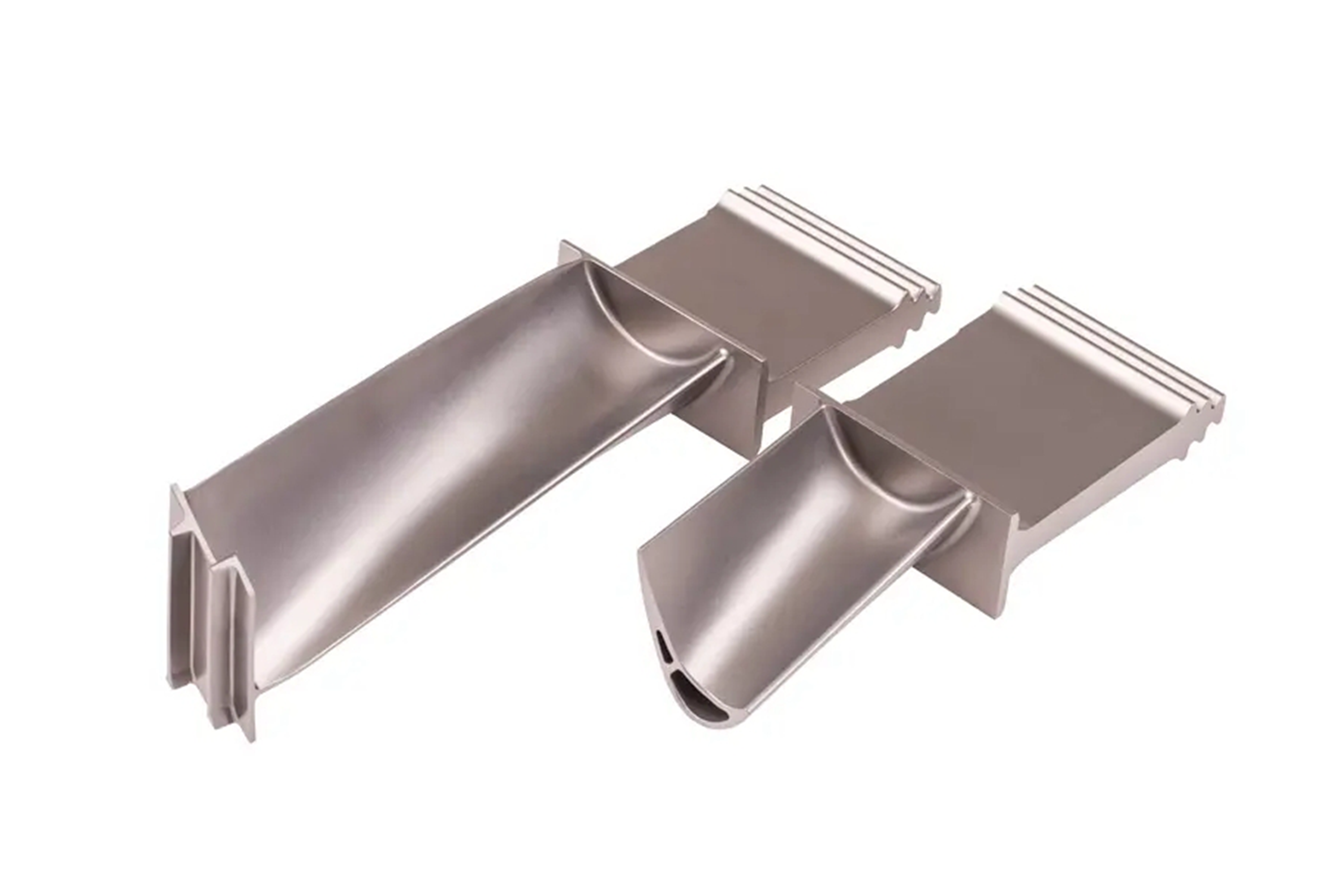
Tecnologia Central da Fundição de Pás de Turbina de Cristal Único IN713LC
Produção do Modelo de Cera Modelos de cera de precisão são fabricados com tolerâncias de ±0,05 mm para replicar a geometria aerodinâmica da pá e as estruturas internas de resfriamento.
Construção da Casca Múltiplas camadas de suspensão cerâmica e estuco refratário são aplicadas para criar moldes com resistência térmica e fidelidade dimensional de até 1200°C.
Projeto do Seletor de Grão Direcional Um seletor espiral ou iniciador de grão helicoidal é incorporado à base do molde para iniciar e controlar o crescimento do cristal único durante a solidificação.
Fusão a Vácuo e Vazamento A liga IN713LC é fundida a ~1450°C usando fusão por indução a vácuo sob um vácuo de ≤10⁻³ Pa, reduzindo óxidos e inclusões gasosas.
Solidificação Direcional O molde é retirado verticalmente de uma zona de alta temperatura a ~3 mm/min, produzindo uma estrutura de cristal único alinhada ao longo da orientação [001].
Remoção da Casca e Limpeza Após solidificação controlada, a casca é removida por jateamento de alta pressão, garantindo a preservação das intrincadas características de resfriamento.
Prensagem Isostática a Quente (HIP) As pás são tratadas sob 1150°C e 150 MPa em sistemas de HIP para eliminar microvazios e melhorar a integridade mecânica.
Tratamento Térmico Um tratamento de solução e envelhecimento em múltiplos estágios é aplicado para estabilizar a fase γ', melhorando o desempenho ao fluência e à fadiga.
Características do Material IN713LC para Aplicações de Cristal Único
Embora tipicamente usado para fundição equiaxial, o IN713LC pode ser adaptado ao processamento de cristal único para desempenho aprimorado:
Temperatura Máxima de Operação: 982°C (1800°F)
Resistência à Tração: ≥1034 MPa à temperatura ambiente
Limite de Escoamento: ≥862 MPa
Resistência à Ruptura por Fluência: ≥200 MPa @ 760°C, 1000 hr
Alongamento: ≥5%
Estabilidade de Fase: Fração volumétrica de γ' acima de 50% com carbonetos refinados e segregação mínima
Essas propriedades tornam o IN713LC viável para pás de turbina de alto ciclo operando em ambientes severos.
Estudo de Caso: Pá de Cristal Único IN713LC para Estágio HPT de Motor Aeronáutico
Contexto do Projeto
Um grande fabricante de motores aeronáuticos (OEM) encomendou à Neway AeroTech o desenvolvimento de pás de cristal único IN713LC para o estágio da turbina de alta pressão (HPT) de um turbofan militar. O projeto enfatizou a resistência à fadiga térmica de longo prazo e a estabilidade dimensional sob ciclos de carga sustentados.
Cenários de Aplicação
Pás de Turbofan Militar (ex.: motores F110): Críticas para o desempenho de empuxo e confiabilidade sob condições variáveis de missão.
Pás HPT de Turbina de Potência (ex.: LM2500+): Operam em serviço contínuo próximo a 950°C, exigindo resistência ao fluência de longo prazo.
Motores de Veículos Aéreos Não Tripulados: Requerem pás de turbina leves, de alta resistência e com alta durabilidade de ciclo.
Turbinas Geradoras de Gás (Motores de Helicóptero): Onde gradientes térmicos e ciclos de partida rápida induzem carregamento severo por fadiga.
Características Estruturais da Pá
Perfis aerodinâmicos projetados para escoamento em alto número Mach
Passagens internas de resfriamento serpentinas e por impacto
Formas da raiz: Fir-tree ou dovetail compatíveis com cubos de disco padrão
Anéis de vedação e trilhos da ponta para vedação de gás sob crescimento radial
Solução de Fabricação para Pás de Cristal Único IN713LC
Montagem de Cera & Engenharia do Molde Projeto integrado com análise CFD e otimização de resfriamento; o sistema de alimentação (gating) de cera suporta o fluxo adequado de metal e o alinhamento do seletor.
Fusão a Vácuo e Fundição Direcional Usando sistemas de fundição de última geração, o molde é baixado através de um gradiente térmico para iniciar o crescimento controlado do cristal único.
HIP e Tratamento Térmico Pós-Fundição O HIP elimina a porosidade residual; o tratamento térmico melhora a uniformidade da fase γ', crítica para a vida útil ao fluência de longo prazo.
Usinagem CNC & Acabamento Superfícies críticas e furos de resfriamento são finalizados através de usinagem CNC de superliga e EDM para controle dimensional.
Controle de Qualidade e END Cada pá é avaliada usando raio-X, CMM e inspeção metalográfica de acordo com AS9100 e NADCAP.
Principais Desafios na Produção de Pás de Cristal Único IN713LC
Evitar a formação de grãos desviados durante a retirada
Gerenciar a segregação da liga na seção da raiz
Alcançar precipitação γ' livre de defeitos pós-tratamento térmico
Usinar geometrias complexas de resfriamento sem distorção térmica
Resultados e Verificação
Raio-X e CMM verificaram 100% de conformidade com os critérios de geometria e defeitos
A metalografia mostrou orientação uniforme [001] e desvio <2°
O desempenho à tração excedeu 1034 MPa a 20°C, com comportamento superior à fadiga
Nenhuma falha por ruptura por fluência após 1000 horas a 760°C sob tensão de 200 MPa
Perguntas Frequentes
O IN713LC pode ser usado para a produção de pás de turbina de cristal único?
Qual método de fundição garante a orientação de grão [001] em pás de turbina?
Quais indústrias mais se beneficiam das pás de cristal único IN713LC?
Qual é a diferença entre pás equiaxiais e de cristal único?
Como a formação de grãos desviados é evitada na fundição de cristal único?
