
Fabricante de Bicos de Turbina de Motor a Jato por Fundição por Cera Perdida a Vácuo em Rene N6
Introdução
O Rene N6 é uma superliga de níquel monocristalina de terceira geração, projetada para componentes de turbina que operam nos limites extremos de temperatura e tensão mecânica. Ele oferece resistência ao fluência líder do setor, estabilidade à oxidação e integridade de fase em temperaturas superiores a 1150°C. Como um fabricante profissional de fundição por cera perdida a vácuo, produzimos bicos de turbina de motor a jato monocristalinos em Rene N6 usando solidificação direcional avançada, alcançando orientação precisa [001], precisão dimensional dentro de ±0,05 mm e porosidade abaixo de 1%.
Nossos componentes de bico de turbina em Rene N6 são implantados nas zonas mais quentes dos motores aeronáuticos modernos, onde durabilidade, resistência à fadiga térmica e precisão aerodinâmica são críticas para a eficiência de propulsão e confiabilidade do motor.
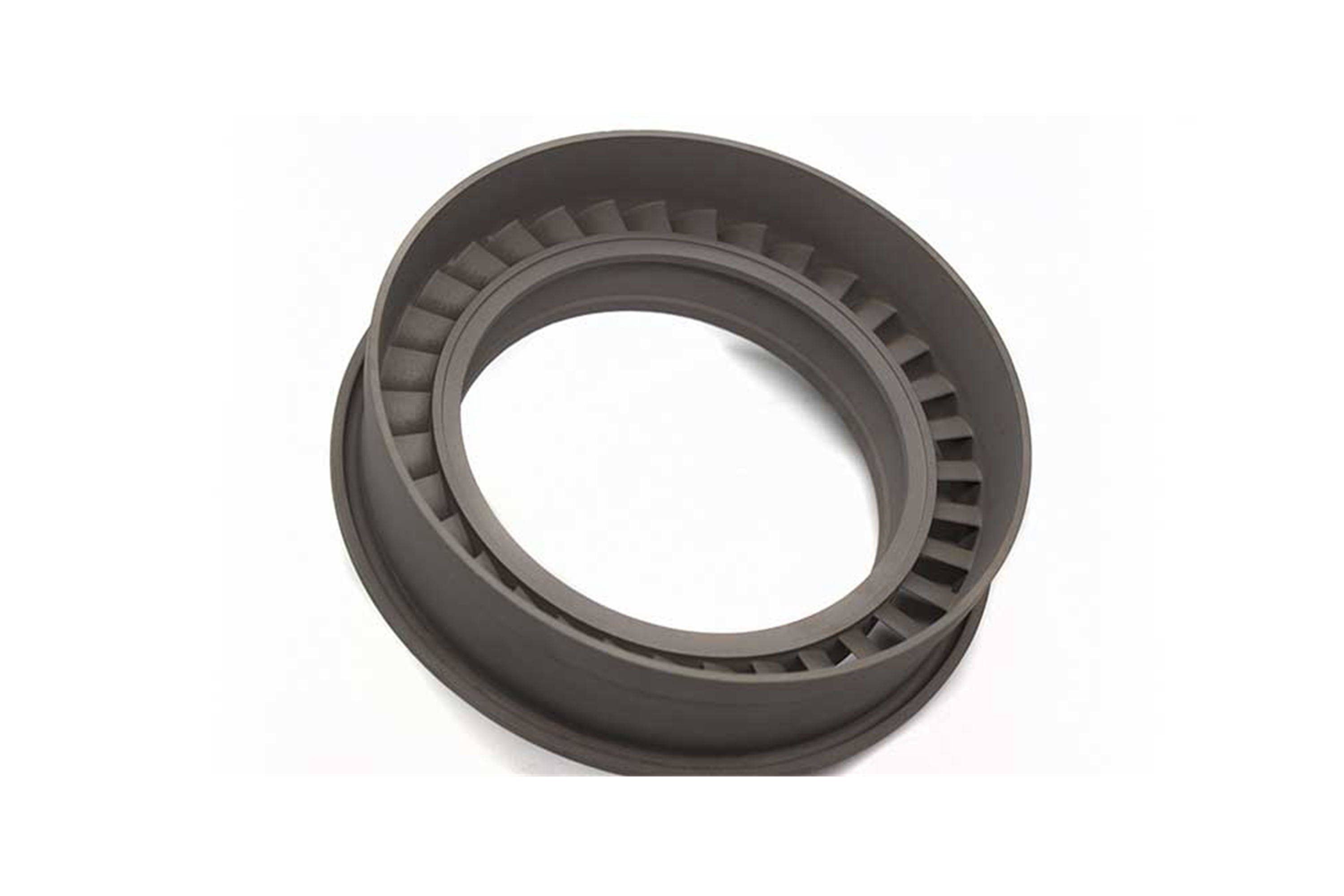
Tecnologia Central: Fundição por Cera Perdida a Vácuo de Rene N6
Aplicamos solidificação direcional a vácuo usando um processo Bridgman para fundir bicos de turbina em Rene N6 com orientação de grão monocristalino [001]. A liga é fundida a ~1460°C e vazada em moldes cerâmicos (8–10 camadas) pré-aquecidos a ~1100°C. Os moldes são retirados a 1–3 mm/min sob alto vácuo (<10⁻³ torr) para garantir solidificação unidirecional, eliminando contornos de grão e otimizando a resistência ao fluência nas geometrias de paredes finas dos bicos.
Características do Material da Liga Rene N6
O Rene N6 é uma superliga de níquel monocristalina com alta fração volumétrica de γ′ que fornece desempenho mecânico excepcional e estabilidade microestrutural em temperaturas elevadas. É amplamente utilizado em pás e bicos de primeiro estágio. As principais propriedades incluem:
Propriedade | Valor |
|---|---|
Densidade | 8,86 g/cm³ |
Resistência à Tração Máxima (a 980°C) | ≥1150 MPa |
Resistência à Ruptura por Fluência (1000h @ 1093°C) | ≥220 MPa |
Limite de Temperatura de Operação | Até 1200°C |
Resistência à Oxidação | Excelente |
Estrutura de Grão | Monocristal [001] |
Essas propriedades tornam o Rene N6 ideal para palhetas guia de bico e segmentos de estator submetidos a gradientes térmicos severos, flutuações de pressão e longos ciclos de serviço do motor.
Estudo de Caso: Projeto de Bico de Turbina de Motor a Jato
Contexto do Projeto
Um fabricante de motores aeroespaciais (OEM) necessitava de segmentos de palhetas guia de bico monocristalinos para a turbina de alta pressão (HPT) de um grande motor turbofan comercial operando em temperaturas de entrada superiores a 1150°C. O Rene N6 foi selecionado devido à sua resistência à ruptura por fluência e estabilidade à oxidação. Entregamos componentes totalmente usinados, tratados por HIP e revestidos por EB-PVD que atenderam aos requisitos de qualidade aeroespacial AMS 5959 e NADCAP.
Aplicações Típicas de Bicos de Turbina de Motor a Jato
Bicos de Turbina de Alta Pressão GE9X: Bicos monocristalinos em Rene N6 instalados na seção de turbina de primeiro estágio do motor GE9X, projetados para operar continuamente acima de 1150°C sob pressão extrema e alta velocidade de fluxo.
Palhetas Guia Pratt & Whitney PW1100G-JM: Usadas na arquitetura turbofan engrenada, as palhetas guia em Rene N6 fornecem alta resistência à fadiga térmica e controle dimensional rigoroso para fluxo de ar ideal para o rotor da turbina.
Segmentos Guia de Saída Rolls-Royce Trent XWB: Segmentos de bico em Rene N6 aplicados na região HPT para gerenciar a direção de exaustão, suportando ciclagem térmica agressiva e oxidação em condições de voo de longa distância.
Componentes de Bico do Estágio de Pós-Combustão F135 (F-35): Palhetas em Rene N6 usadas no bico do estágio de pós-combustão, onde a estabilidade monocristalina é essencial para choque térmico, fadiga por vibração e desempenho de vetorização de empuxo.
Essas aplicações específicas de motor demonstram o valor do Rene N6 em sistemas de propulsão modernos que exigem vida útil estendida, deformação mínima por fluência e máxima estabilidade térmica na seção quente da turbina.
Soluções de Fabricação para Bicos em Rene N6
Processo de Fundição Os conjuntos de cera são investidos em moldes cerâmicos e fundidos sob vácuo a ~1460°C. A retirada controlada do molde (1–3 mm/min) em um forno Bridgman garante o crescimento monocristalino com orientação [001]. Os perfis de resfriamento são otimizados para evitar grãos desviados e minimizar a distorção em geometrias complexas de palhetas.
Pós-processamento O Prensagem Isostática a Quente (HIP) a 1190°C e 100 MPa densifica a estrutura e elimina vazios de contração. O tratamento térmico de precisão desenvolve a morfologia da fase γ′ necessária para alta resistência ao fluência e à fadiga.
Usinagem Posterior A usinagem CNC é usada para refinar ajustes de raiz, flanges e superfícies de acoplamento. A EDM permite acabamento preciso de bordas e ranhuras. A perfuração profunda é usada para criar passagens de resfriamento intrincadas.
Tratamento de Superfície Revestimentos de barreira térmica (TBC) como YSZ são aplicados via EB-PVD para proteger a superfície do metal e reduzir a fadiga térmica. Revestimentos de difusão de alumineto ou platina-alumineto melhoram a resistência à oxidação e corrosão.
Testes e Inspeção Cada bico passa por END por raios-X, verificação dimensional CMM, testes de fluência e tração e inspeção metalográfica para confirmar orientação [001], estabilidade da fase γ′ e integridade superficial.
Principais Desafios de Fabricação
Manter a estrutura monocristalina [001] livre de defeitos em geometrias de bico de paredes finas e alta relação de aspecto.
Prevenir trincas térmicas e formação de grãos desviados durante a solidificação direcional e o pós-processamento.
Garantir a integridade das passagens de resfriamento e a tolerância dimensional sob especificações aeroespaciais rigorosas.
Resultados e Verificação
Difração de raios-X Laue verificou a verdadeira orientação cristalina [001].
Porosidade <1% confirmada pós-HIP via inspeção radiográfica.
Tolerância dimensional dentro de ±0,05 mm validada por varredura CMM de 5 eixos.
Ruptura por fluência ≥220 MPa a 1093°C validada em ciclos de teste de 1000 horas.
Nenhuma degradação por oxidação ou crescimento da fase γ′ após 1000 ciclos de fadiga térmica a 1200°C.
Perguntas Frequentes
Por que o Rene N6 é usado para componentes monocristalinos de bico de turbina de motor a jato?
Quais controles de solidificação direcional são usados para garantir a orientação cristalina?
Como são usinadas as passagens de resfriamento complexas nos segmentos de bico em Rene N6?
Quais revestimentos são usados para estender a vida útil dos bicos em Rene N6?
Quais métodos de inspeção garantem qualidade e durabilidade de grau aeroespacial?
